
“Some tourists think Amsterdam is a city of sin, but in truth it is a city of freedom. And in freedom, most people find sin.”
– John Green
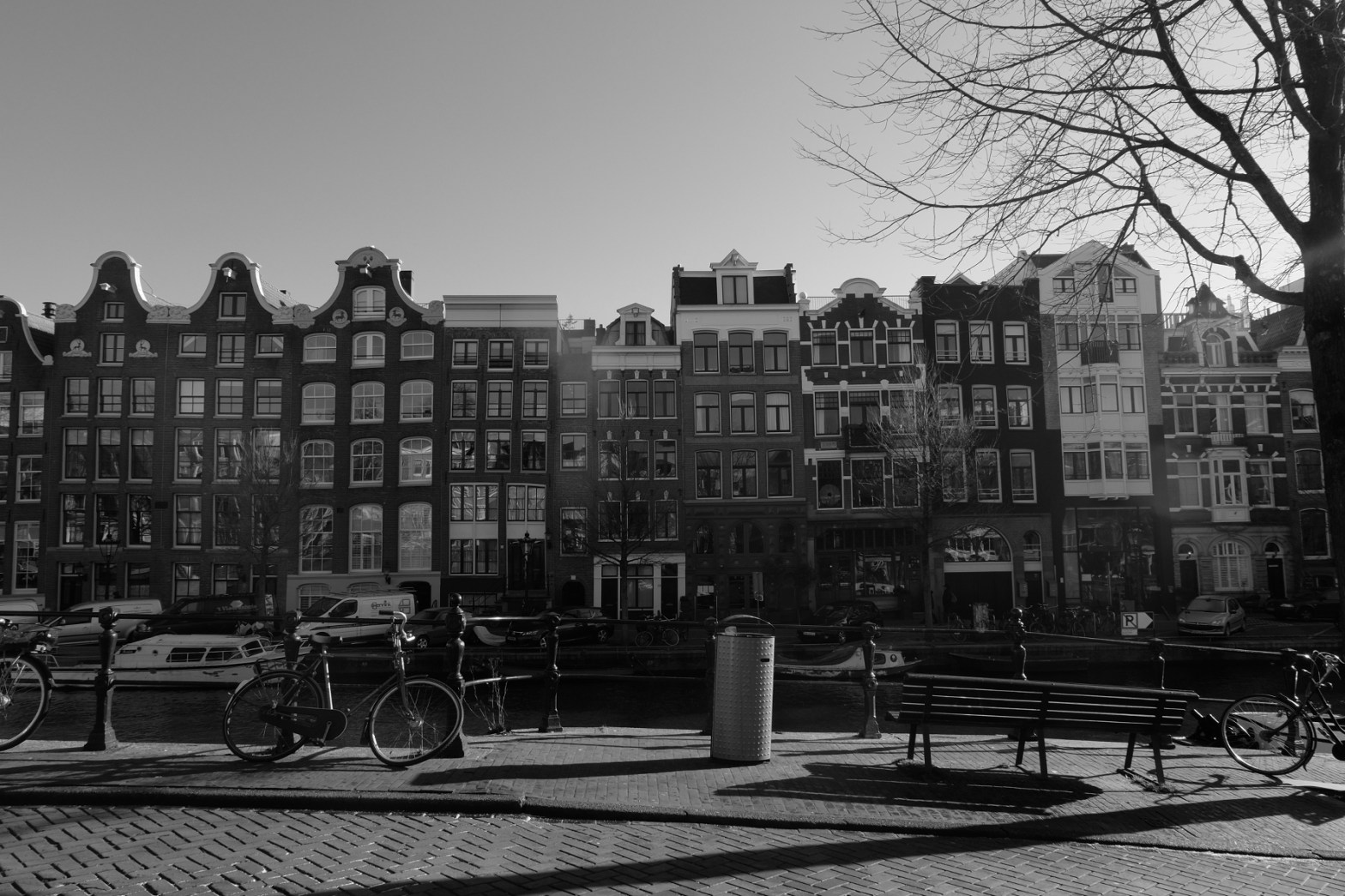
From the narrow canal walkways to the busy, bustling, bike filled streets of the Museumkwartier; Amsterdam is one of the places you may have always wished to visit or may have witnessed from the images printed on a film plotline but have always wanted more of.
From the first visit, the whole aesthetic of the normalcy of cycling everywhere and stopping into small, independent coffee shops or less renowned ‘coffee shops’ to walking the dimly lit, paved streets of the Speigelkwartier looking into crooked shop windows filled with smaller blue and white painted versions of the same houses you walk past, is one of the greatest feelings.
Feeling like an observer to a way of life you’re not used to, yet at the same time a participator in a lifestyle you want to live.
On my way to the Stedelijk Museum, I passed the Museumplein which hosted the world-renowned ‘I amsterdam’ structure which was emboldened by the dozen or so people hanging off the red and white 3D letters and taking pictures surrounded by the bare but beautiful skeletons of the trees in Febraury that lined the central promenade. Those letters and behind them, the imposing yet powerful structure of the Rijksmusem, reflected the winter sunlight.
Although, despite the infamous nature of the museums inside Amsterdam’s central canal network, the less confining quarters of the buildings and institutions on the banks of the Oosterdok are a sight to behold.
After hiring bikes for a number of days, I decided that avoiding the busy lanes of the Red Light District and Museum Quarter warranted a search further afield to the cycle lanes bordering the larger flows of water of the outflowing Noordseekanaal to visit the immense, glistening glass panes of the Amsterdam Conservatory and Amsterdam Openbare Library, next door.
We left our bikes on the stainless, stone promenade overlooking the impressively sloping roof of the Nemo Science Museum and along the Oosterdok to the large Amsterdam Centraal Train Station. Inside the library, we ascended to the top floor cafe and grabbed a drink before hastily catching a window table overlooking, what seemed to be, the whole city.
It was magnificent.
The day wore on then into a sun-setted evening spent cycling and sampling the best canal side streets Amsterdam had to offer. With some quaint flower baskets hanging from the old – now repainted – pully hooks used in the hoisting of grain from the boats to the third floor grain stores back in the day, the streets held an endless supply of sights to see. Some streets varied from the old, red-shuttered beauty associated with old Amsterdam and the trade that defined many of the houses functions to the more commercial streets, bustling with pedestrians and cyclists alike, looking for presents or souvenirs or beverages from modern, white-painted coffee shops that seem to have been pulled straight from the pages of a housing catalogue showing rooms that have yet to be furnished. All white, lacking furniture but no less off in character since the walls are simply decorated in pictures and art, thus giving many places the loose term ‘gallery’ rather than coffee shop.
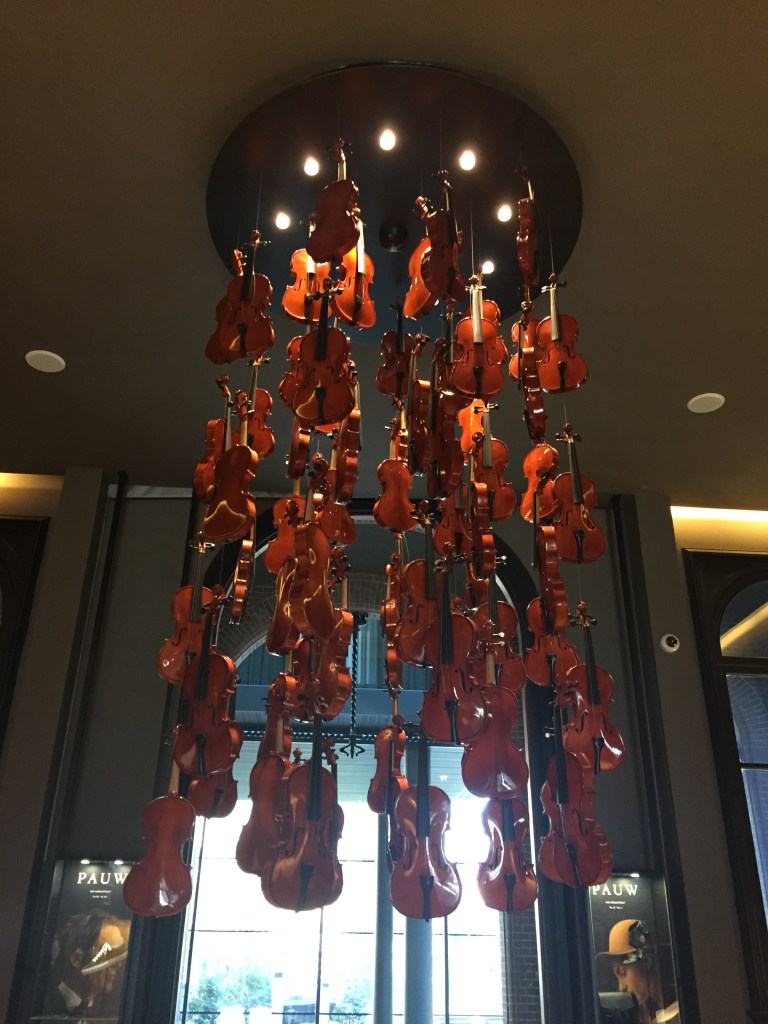
On this journey we ducked into a few hotel lobbies, not only to see what kind of hotels our money couldn’t afford a stay in but also the effortless style that goes into the setting up of window displays and hanging chandeliers through circular staircase spirals.
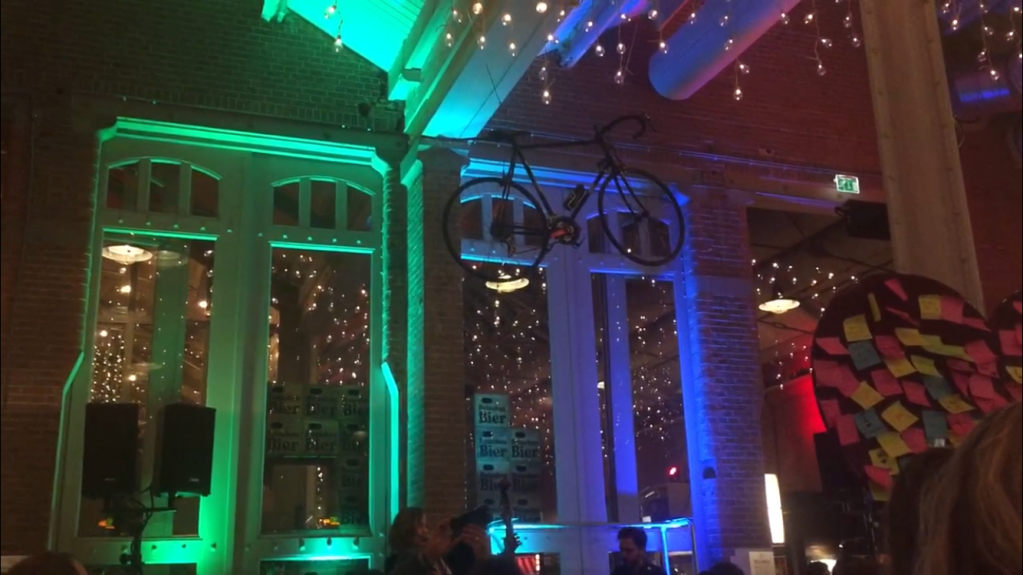
The evening was then spent in the Oud-West and the multi-coloured walls of De Hallen, a series of halls unlike any other. This large, repurposed factory building, rennovated in 2013 after a years of developing Amsterdam’s tram network and then a few years spent in dilapidated status, is a hub of creativity, mulit-culturalism and the arts all collected into one. As we entered the food hall section, we were immediately engulfed by the colour of the lights, criss-crossing the ceiling and the chatter of people seated at a dozen different bars surrounded by four-by-four metre restaurants in blocks scattered across the hall, each cooking dishes from different regions of the world.
After finding a seat near the curved glass windows at one end, we settled into a Vietnamese meal while listening to the sultry tones of a female jazz singer, singing songs from Ella Fitzgerald to Gershwin.
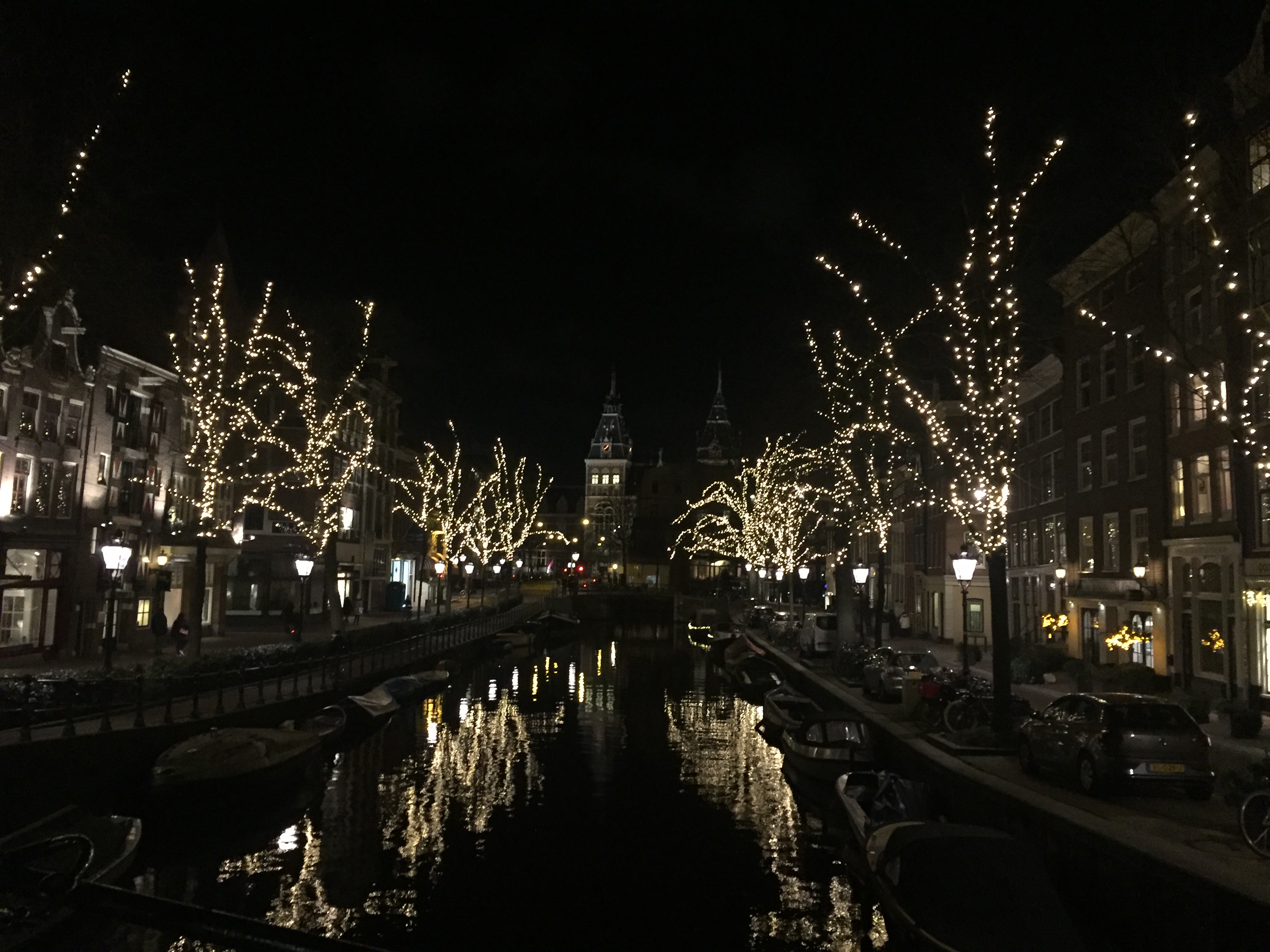
The whole experience felt surreal as we unlocked our bikes from outside, switched on our headlights and buttoned our coats against the clear-skied chill of the evening to then cycle up the road and back into the Nieuwmarkt and the repetitive dips and hills of the canal bridges and tree-rooted streets. Then, upon turing a corner, the street was no longer dim, but overshadowed by millions of fairy lights that clung to the trees overlooking the canalpath.
Millions of tiny stars more visible than the ones in the inky black above.
Amsterdam is a city of people as much as it is a city of structures, each with their own history. You may choose to go for the sights others all want to see, such as the Anne Frank House or the Van Gogh Museum – both of which are still worth a visit. But take a second or an hour to look deeper and find the smaller, less noticeable parts of this canal city to see the beauty in the normal and seemingly unspectacular. A beautifully painted canal boat, a house that is especially crooked or a bookshop dedicated to selling old books on architecture and nature.
You might just find the best things where no one bothers to look.
 For Wanderers and Wonderers