
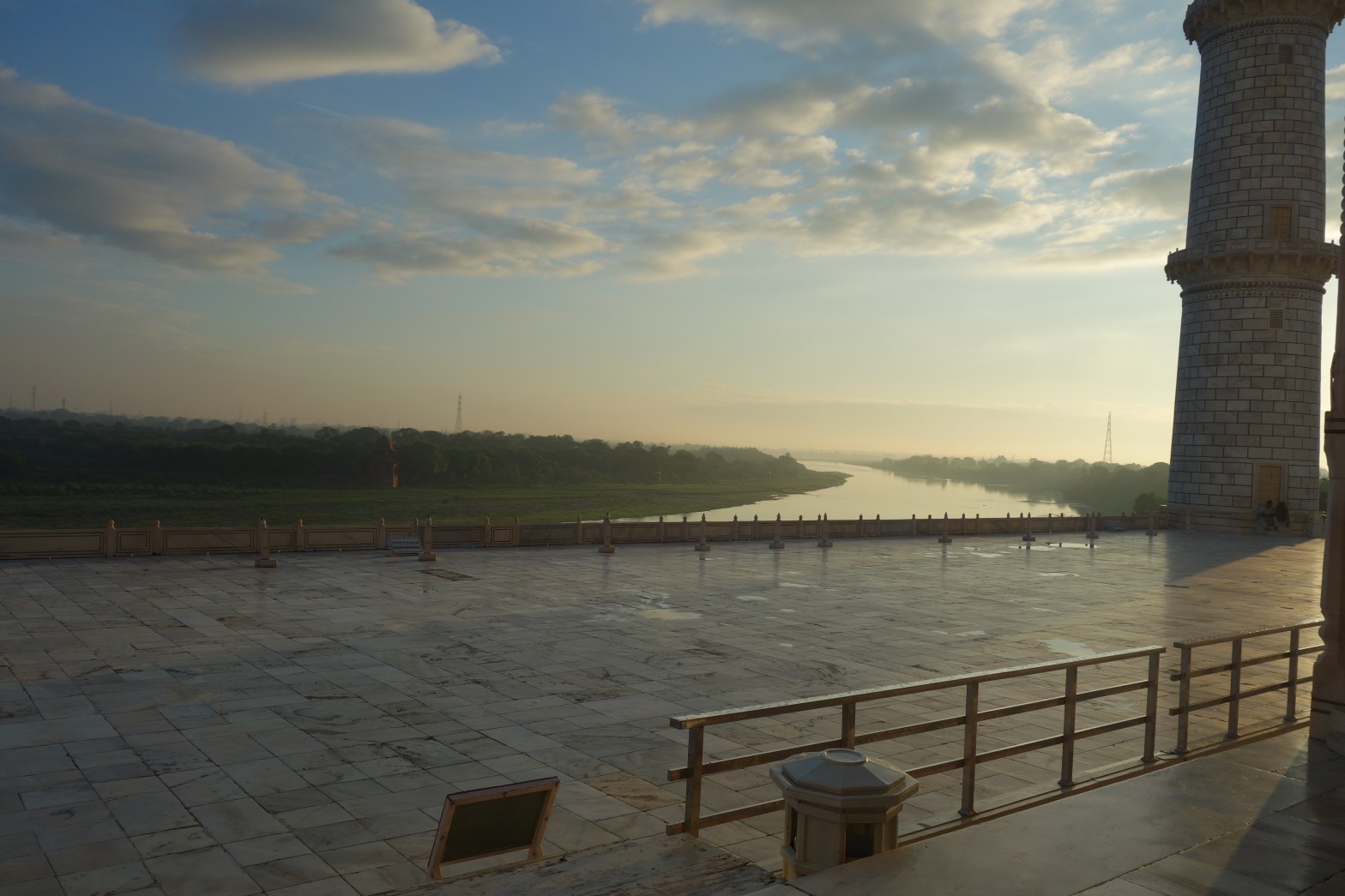
I’m writing this from the perspective of someone who has been to other countries and seen first-hand the differences between people’s experience of place vs. people’s perception of place.
And also because the first question people always asked me after I visited India was “Was there a lot of poverty and people living on the streets?”
“What you see and what you hear depend a great deal on where you are standing. It also depends what sort of person you are. “
– C.S. Lewis – the magician’s Nephew
The world view on Asia, Africa and much of the Middle East is outdated.
People are unaware that these incredible countries are no longer the war-ridden, famine-rife, unhygienic places that documentaries from the 1990s to early 2000s painted them as, or relief aid organisations generalised as being. They are places of rich culture, rich economies and rich landscapes. Although, all it has taken is negative news portrayals and these places have become prime examples of countries people shove under the umbrella term ‘third-world country’ – as if this deems them as lesser or less evolved in comparison to the more financially wealthy countries of the western hemisphere.
For example, India has often been perceived from the perspective of the ways films, such as ‘Slumdog Millionaire’, have portrayed it as a dirty, famine, slum-rife country where the quality of life is far lesser than the quality of life others have.
This is where the problem starts.
Simply because a country has a different quality/style of life to yours does, by no means mean, that it is any worse off. A different lifestyle or quality of life could mean that one community or region lives a simpler version of the life you’re used to, however, this doesn’t make it wrong or make the people there poor for not having the same elements to everyday life that you have. Often it is the opposite.
The Ladakhis up near Leh in northern India lived a fully sustainable lifestyle and had an incredibly high quality of life due to the fact that no one went hungry, no one was ‘poor’ and everyone had enough food/land to live off. Then, when western consumerism came to the area in the 1970s, this lifestyle changed drastically and people began viewing their own culture and living standards as poor because western media and consumerism labelled it as such since the quality of life was different. The Ladakhis began to view their own lifestyles as poorer and thereby bought into the western idea by selling western products on the idea that this would make them richer, when in fact their earlier lifestyle was fully sustainable, without hunger or drought or inequality or plastic landfills – which now exist because, as usual, the western lifestyle is idealised to the point that it harms people who were previously much better off without it.
With this, often comes the loss of language as well, since knowing how to speak English is also a requirement for living a westernised lifestyle – which is ridiculous. Language is an enormous part of cultures all over the world as it gives an identity that cannot be taken away but rather instils an exclusivity to the culture that means that identity remains sacred to that particular culture.
This is why Perception of Place is so important in today’s society because as humans we have a nasty habit of instantly comparing our lifestyles to those in other cultures or countries and if it doesn’t match up, see it as lesser or problematic.
What would you think when I say ‘Africa’ to you?
Would you think of starving children or mothers carrying water jugs on their heads for miles or malnourished individuals sat on the pale green sheets of hospital beds in pain due to the life-threatening effects of malaria?
Yes, these have been and still are realities.
But let me tell you what I also think of, when I think ‘Africa’.
A rich, diverse range of countries that span from the great peaks of the Atlas Mountains to the beige-brown sands of the Sahara, to the great green Congo River Basin, the immense East African Rift Valley and all the way south to the Cape of Good Hope and the waters where the Atlantic and Indian Oceans meet. I think of rich economies and farmland initiatives that are investing more into agroforestry in rainforest basins to preserve wildlife and agricultural practices, cities that are pioneering new technology to reduce slum dwellings and increase sustainable living, growing, waste removal and learning in places that are at risk from rising sea levels.
That is what I think of.
But I’m not you. And for me there is still so much to discover as there is for you too.
So it is time to educate ourselves more on the goings-on in the world and the things we may be missing out on because the mindset that suggests that the western lifestyle is the ideal lifestyle is outdated and wrong. Why would you want to aspire to a style of life that threatens any hint of culture, originality or sustainability?
That’s like believing in an updated version of ‘The American Dream’ from the 1930s which essentially helped us discover that the only lifestyle to live is the one you make for yourself based on your beliefs, that furthers your own happiness and isn’t copying or influenced by the white-washed, on-the-surface-perfect lives that 0.001% of people on earth live.
It’s time to learn to look for solutions in unlikely places.
Learn to be tolerant and even embrace the idea that we can learn from other countries and cultures as they can offer different insights and don’t let outdated media norms affect the way you view countries, communities or individuals.
You’ll enjoy discovering more of what the world has to offer that way.
Because let me tell you. It offers so much.
 For Wanderers and Wonderers