If we were meant to stay in one place, we’d have roots instead of feet.
– Anon
Physically, I’m sat at home in fluffy socks and a large jumper.
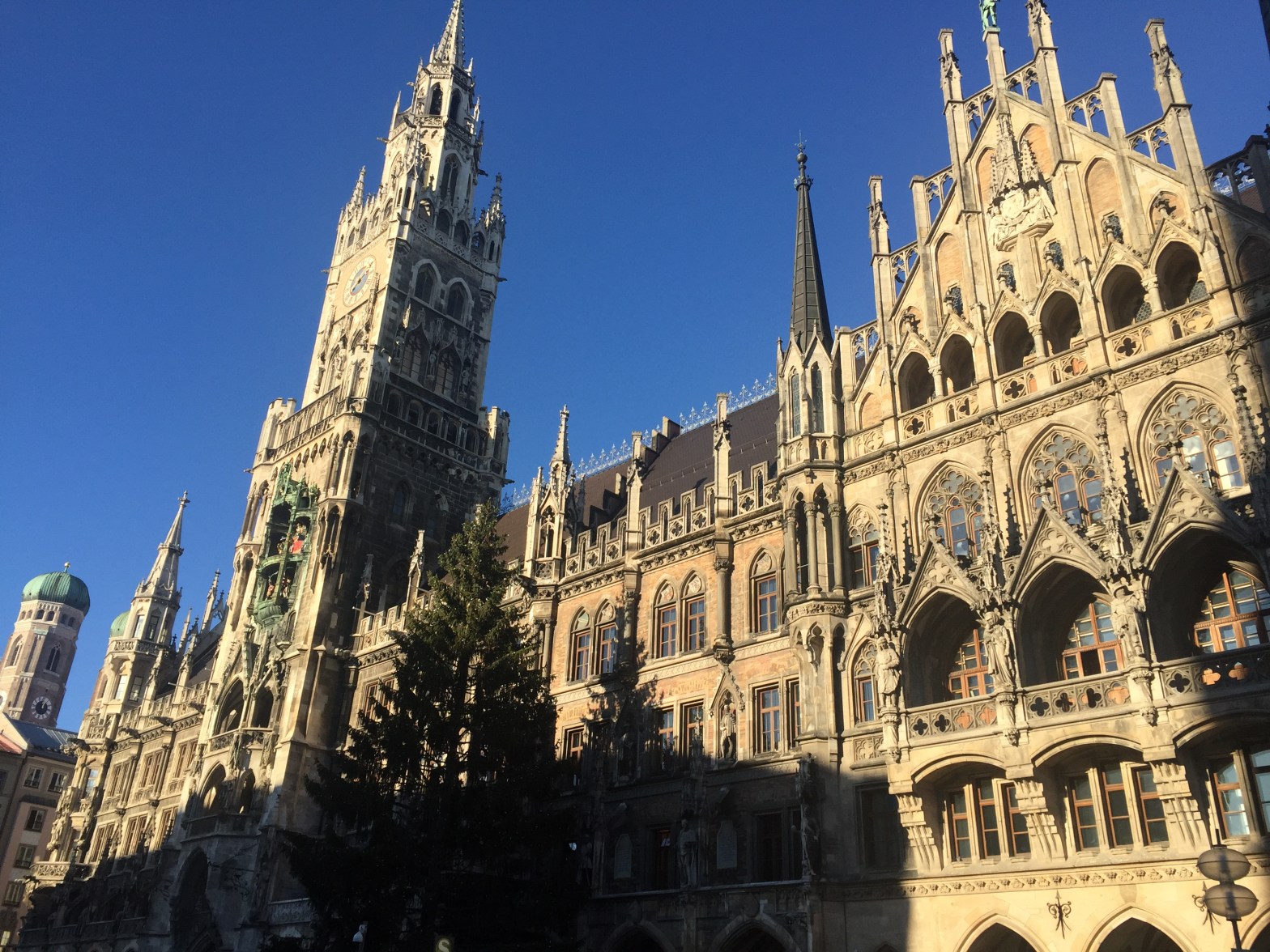
Mentally, I’m stood in the bustling central Munich streets, listening to the chimes of the Rathaus Clocktower in the large open-spaced Marienplatz and looking out for the nearest place to buy a pretzel or a Radler; depending on the time of day.
This city is not one to be ignored.
Sure, if you think of Germany you immediately think of Berlin, or maybe Angela Merkel or maybe the pride taken in their recycling systems or sustainable energy solutions. Maybe you think of some other places such as those with famously foodie names such as Hamburg or Frankfurt, or go for Dresden or Cologne that have more historical significance.
For me, I think of Munich. Bavaria’s Capital.
This city is one of culture and brightness all year round with an endless supply of stunning architecture, beautiful greenery and a plethora of museums that just keep coming.
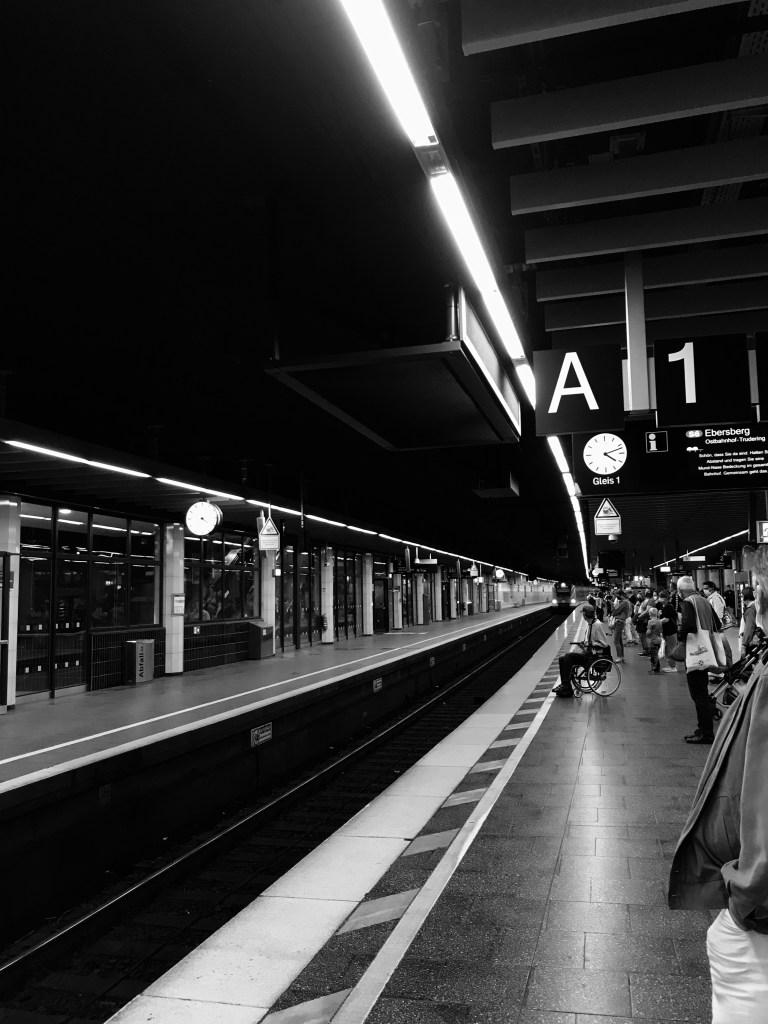
From the very outskirts and farmed fields an hour’s drive from the Austrian Alps comes the ease of travel you find with the S-Bahn that takes roughly 20 minutes to get onto the very central line of the Munich Underground. With a day ticket to all zones, you can travel as many times as you want and even venture to the U-Bahn and the older train cars decorated with varnished wood and benches that remind you of the trams of old; all the while whizzing at speed underneath this incredible city and its Isar river.
Once in the centre, you can travel Ost to West, through the Isartor and the Deutsches Museum, housing all manner of artefacts from bi-planes to visible electricity demonstrations, to astrology and a planetarium, to the earliest examples of medical and engineering tools used in Munich’s rich history. Then maybe onto the Marienplatz and the infamous gothic style Rathaus that houses the renowned turning clock figures when the clock sounds at midday or into the side streets to visit the hidden high ceilings of the Peterskirche or the incredible Michaelskirche – the largest renaissance church north of the Alps.
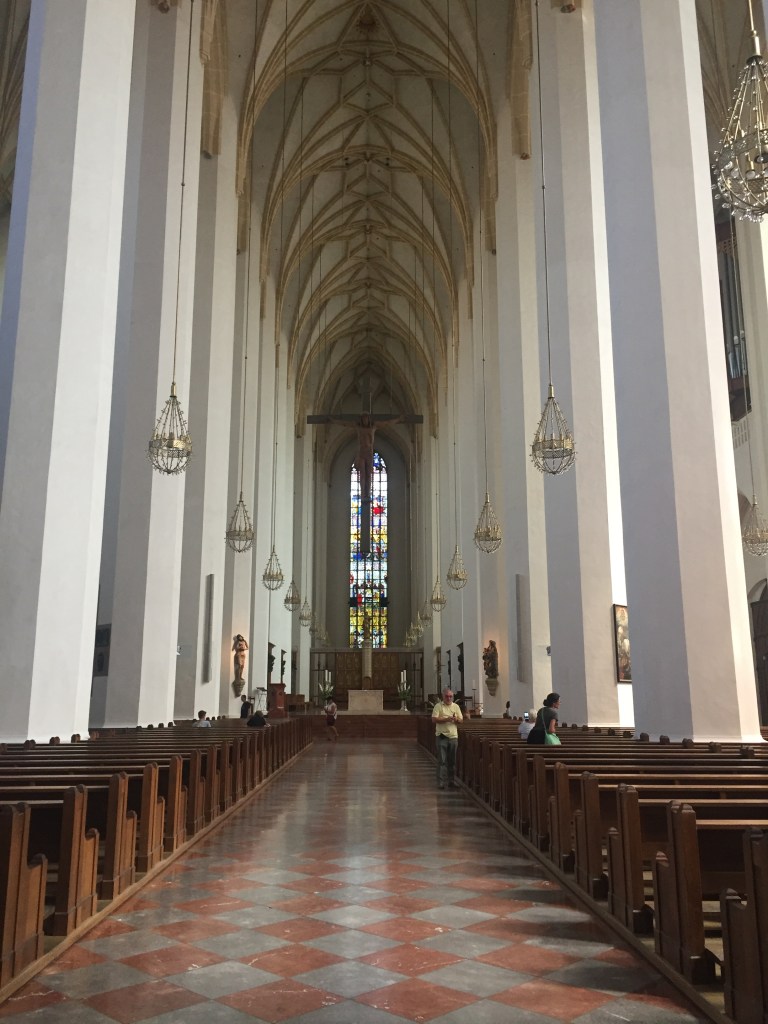
Just a short walk from here is also one of Munich’s most famous sky-line defining structures; The Frauenkirche. Known for it’s two tall towers, it’s Munich’s tallest monument and is a deliberate staple ensuring that no building may be built higher that it’s two steeples (109m). It’s well worth the possible neck pain from looking up at the arches high above to understand it’s sheer size.
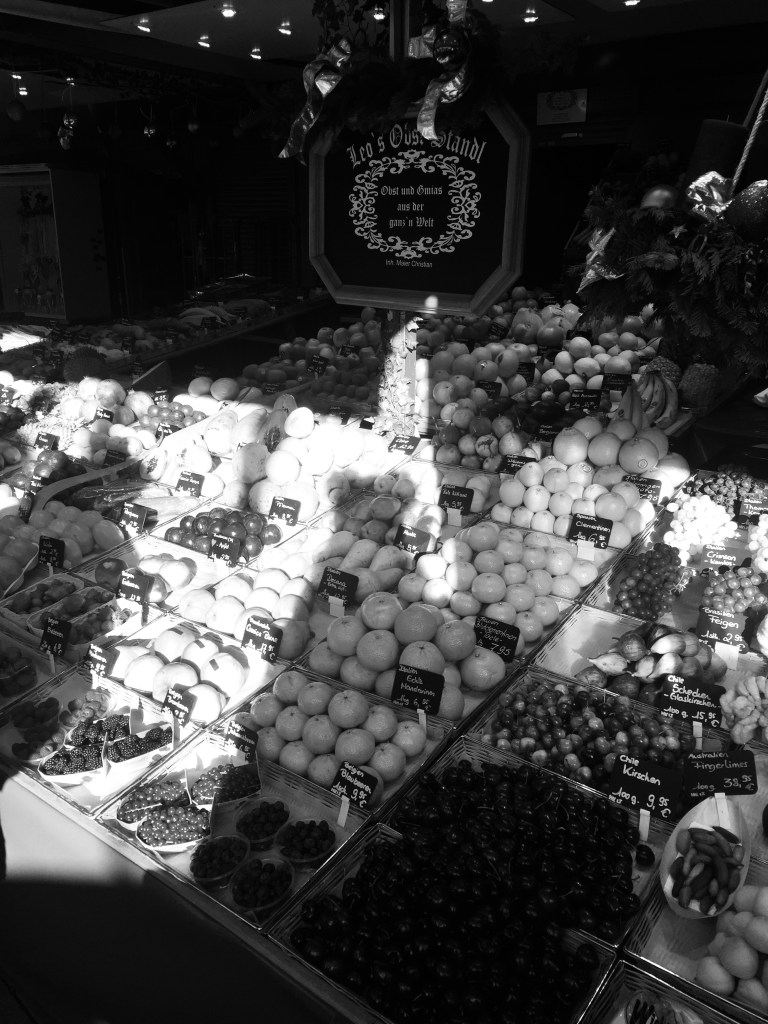
From there, along the road, is the beautiful and often bustling Viktualienmarkt (just off the Marienplatz) which hosts a vast array of pop up restaurants, street food sellers and markets selling all from silverware to Bavarian sausages, fresh bread to tables filled with fresh fruit. Any chance you may have during the day is worth spending here, in the company of friendly sellers and tourists alike who are out early collecting groceries for the day ahead, to flowers, to out a night in search for the finest local beer you can buy – Munich is the Oktoberfest capital after all.
If Museums and Churches aren’t your vibe, then a gander along the U-bahn to the Universität Station leads you out into beautiful open streets surrounded by large pale white buildings filled with students and ground floor bookshops and artists cafes that leave you wanting to explore more. The bookshops cater to all student types and most languages while the cafe’s can be from the most simple chains to independent internet cafe’s with abstract art decorating the walls and piles of books and magazines lying around to read at your leisure while you sip your coffee. Along this route you may bumb into several intersting clothes shops too, some of which may intrigue you more than others.
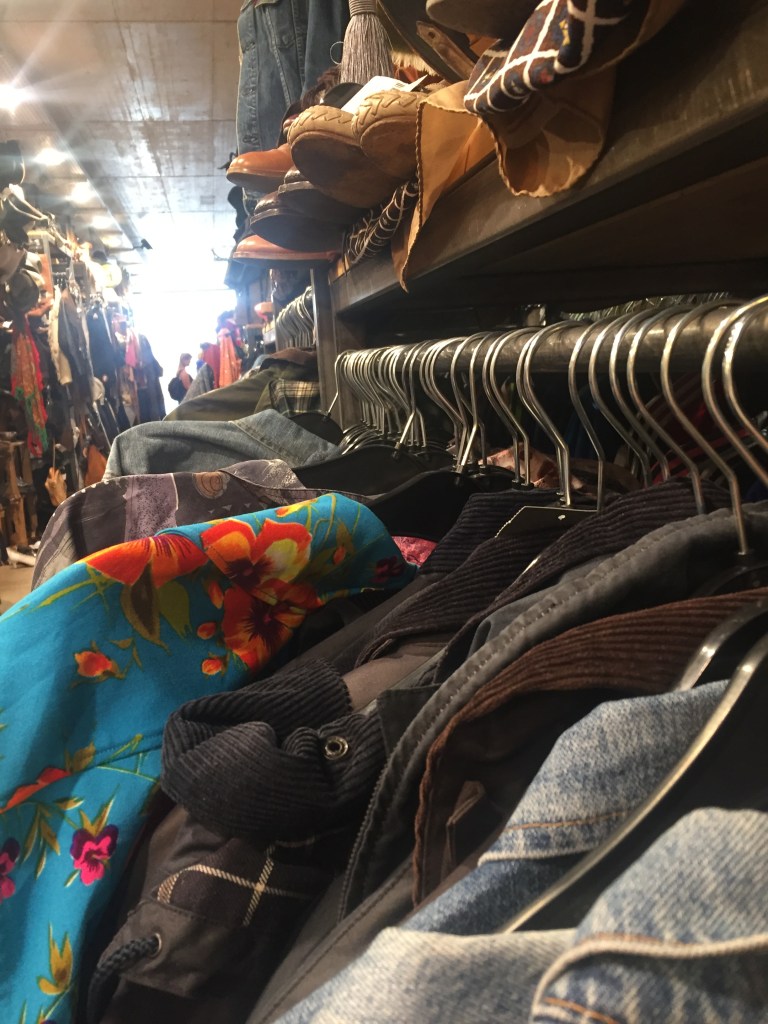
Pick ‘N’ Weight is a chain of vintage kilo sale – type shops that house all manner of styles but has the exception that with a colour coded system, you pay for clothes by weight and material type. What’s even better is that none of the clothes are ordered by size but rather by colour so you always know which section to check. Coming in from the street, it feels a little like entering hipster Narnia.
Munich’s beauty isn’t only in it’s inhabitants (37.7% of which are foreign) and buildings but also in it’s greenspace and nature.
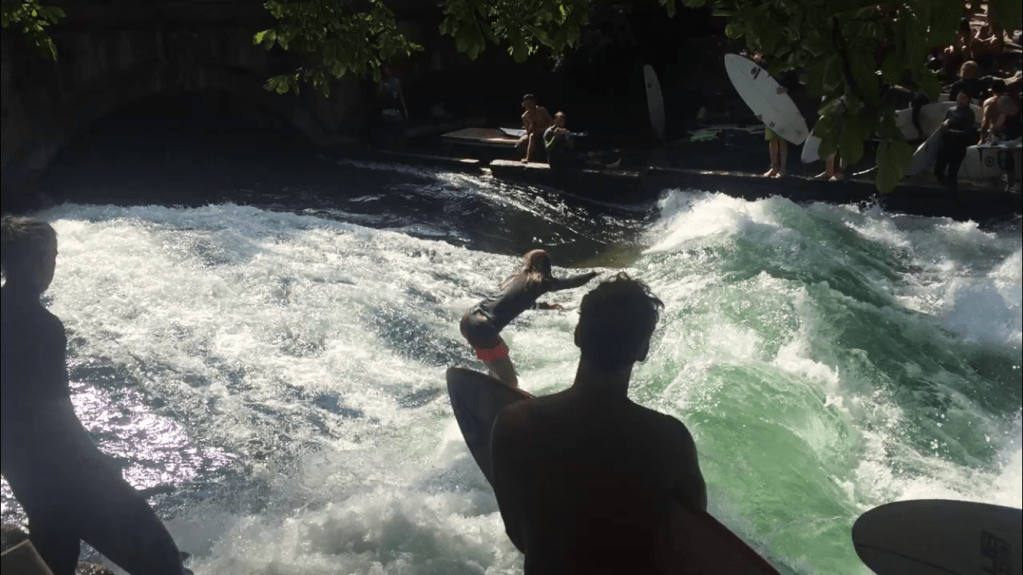
The Englishen Garten – yes that is it’s name – is one of the world’s largest urban parks and is the perfect place to escape the busy streets while never actually leaving the centre of the city. From the pristine Japanese Tea House to the multitiered Chinese Tower, this park is split in two by the man-made Eisbach (Ice River) which flows rapidly in one end and out the other. In summer it’s common for people to jump in and be happily swept downstream as the river flows out into the open meadows of the park which are often flanked by dozens of sunbathers – some nude and some not. At the southern end of the Park, though, is one of the best and certainly coolest attractions the English Garden offers.
Surfing.
Yes, you heard right. Due to designing the river with an underwater curve, a constant surfing wave flows at the base of the entrance of the Eisbach to the Park and in summer, you’ll find dozens of experienced to beginner surfers waiting for their chance to jump onto the wave before wiping out and drifting downstream; their multi-coloured boards bobbing up and down.
I’m not sure if you’ve ever seen a German cyclist with a surfboard strapped to their bike, cycling in the centre of a large landlocked European city before, but I couldn’t help but laugh the first time I saw it. Then I realised that Munich was exactly that kind of city.
A city of unexpected things. You’ll be caught out. Don’t worry.
Once outside of the centre, though, Munich still doesn’t disappoint. The Olympic Park still hosts a multitude of activities from open-air cinema nights to the largest open-air flea market Europe has to offer. From there, since it is Bavaria, you can find beer-gardens on most corners across Munich and the smaller towns and hamlets you enter as you near the Bavarian Alps and then Austria.
Munich may be a city of the past in many respects, from the part in played in the Nazi Party beginnings to the Bavarian sovereignty and palaces of the southern kings; it is now a city of rich culture, modern ideas and architecture, research universtities, museums and galleries.
There’s a reason why so many people who choose to visit, end up staying, because despite it’s rapidly growing size and progress in all things finance, IT and engineering, it’s the kind of place you go to visit for the history and the beautiful things people have created living there. The art and music, the parks and cycle routes, the vintage bookshops and clothes you won’t find elsewhere and the monuments that inspired so many works of poetry and literature.
You won’t regret it.
I promise.
 For Wanderers and Wonderers