“Prague changes like a precious stone to reflect the weather, the time of day and the season of the year. “
– Christian norberg-shulz
The summer I visited Prague was one I’ll commit to memory for the rest of my life.
Despite being there for only a few days it was enough to make me realise that this city was one I wanted to visit again and again just to be able to see it in all four of its seasons.
From the wide-laned streets with red-roofed trams gliding away to the narrow, balcony-lined alleys of the Old-Town, Prague is a wondrous mix of old and new that fascinated the beholder with the sheer history and culture packed into those passages.
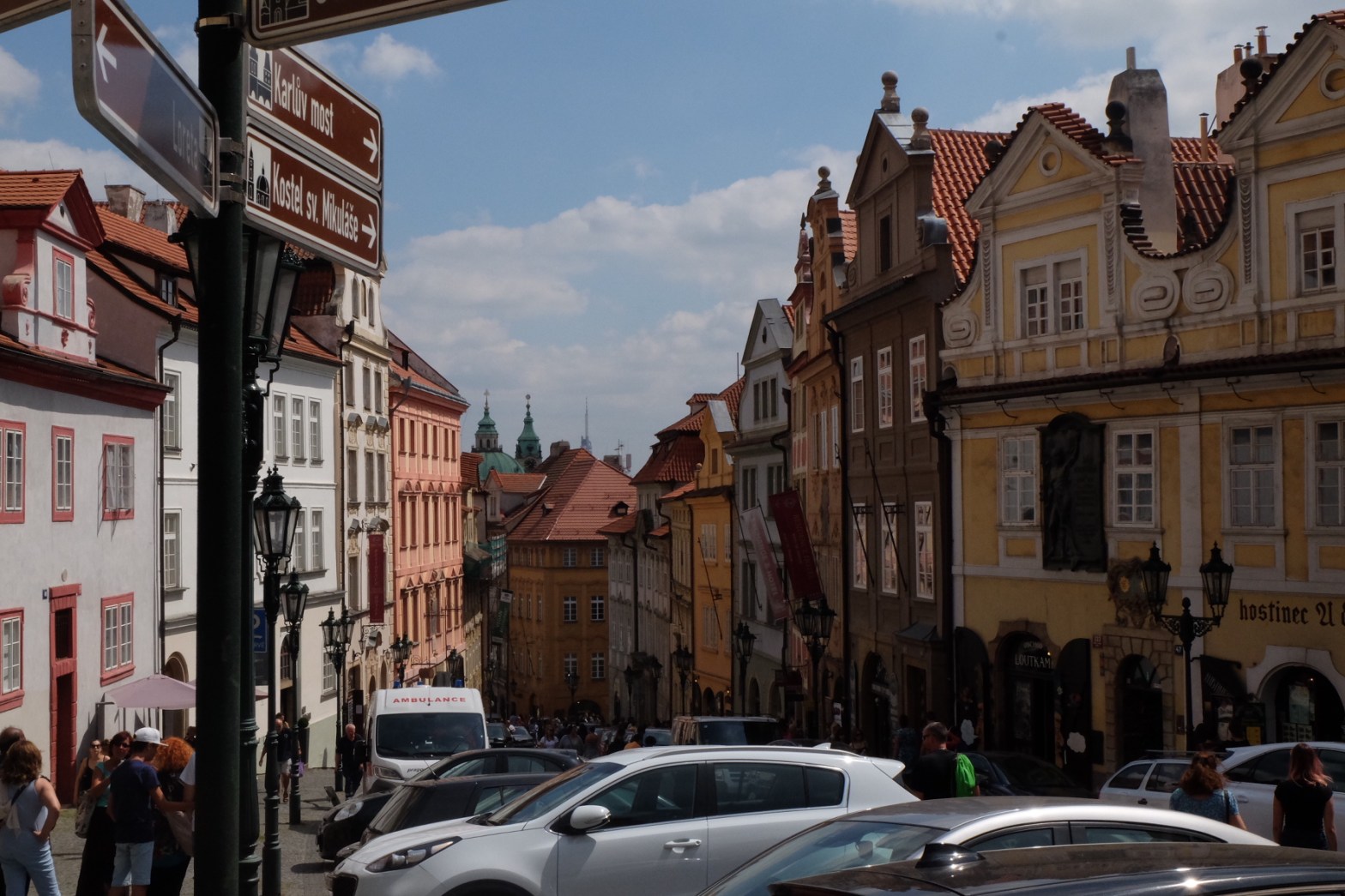
I remember entering the bustling Old-Town where the houses notably change in architecture, from the wide, window-clad office blocks and modern shops to the exposure of wooden beams in the sunshine, carved archways into jewellery shops and incredibly detailed garlands overhanging large French windows looking down onto small plazas where restaurant tables spilled out into the square. On from there, came the slightly grander Prague we see in many-a-picture with its yellow to blue sandstone facades with domed windows sloping up to gleaming earthy-red roofs, that from a bird-eye view would have looked like red poppies dotting a dry-sandy field.
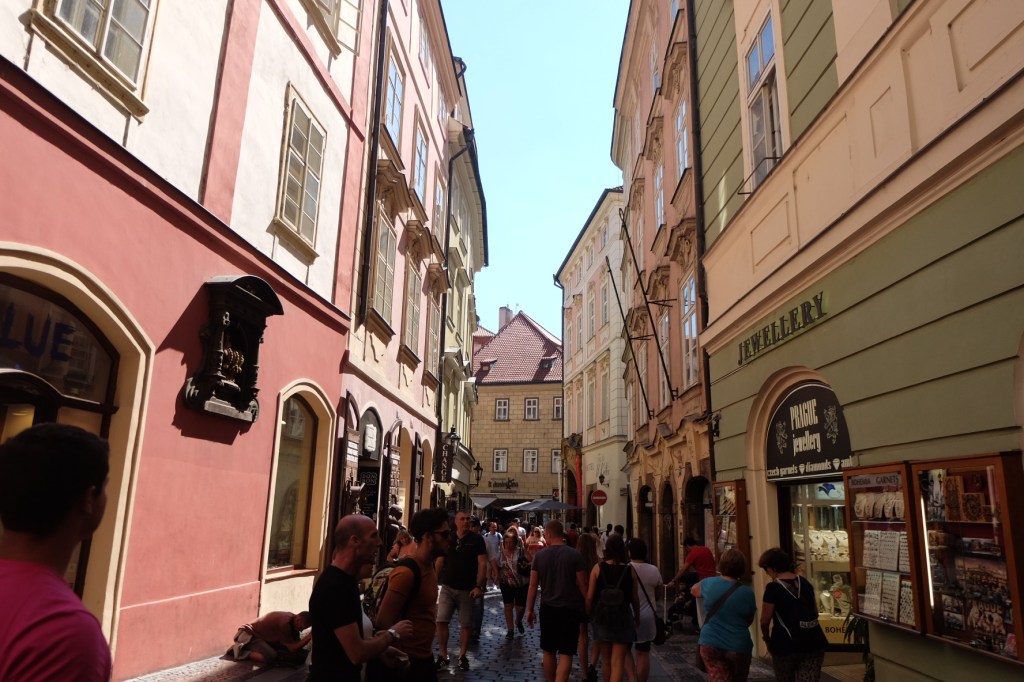
Another thing that surprised me though, as I wandered through the Old-Town into the New was the sheer variety of colours on the buildings. Burgundy sat alongside light green and blue was decorated with pale yellow striped pillars. You’d definitely have reached all the colours of the rainbow and then some by the time you’d reached the banks of the Vltava River in all it’s blue glory; floating restaurants and solar tourist boats dirsupting its flow towards its eventual end in the Elbe.
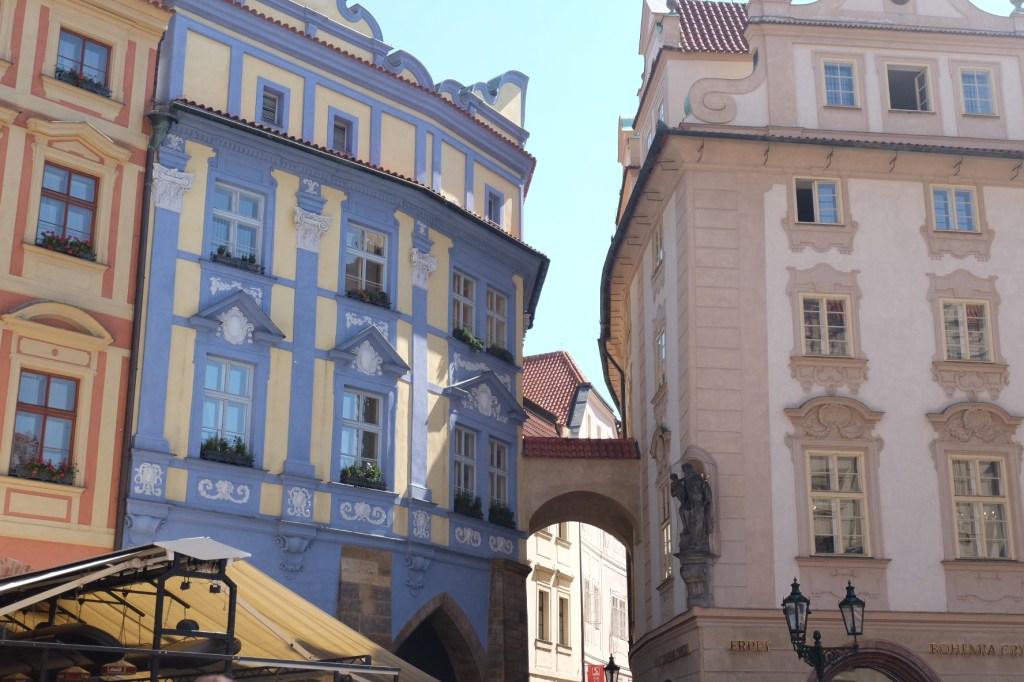
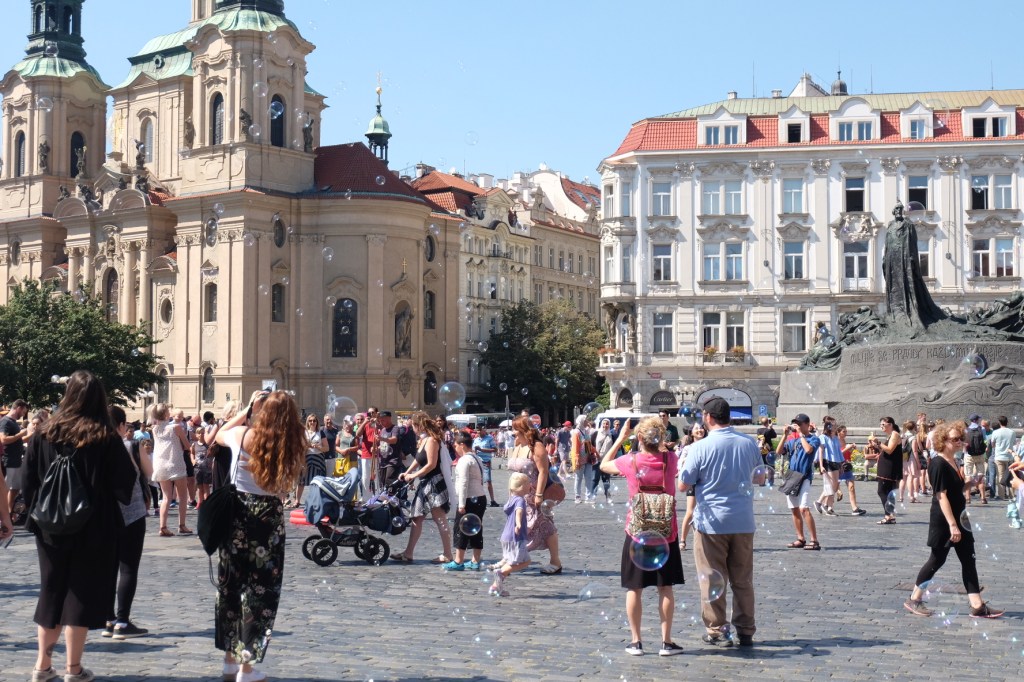
The Old Town square was a sight to behold as I adjusted my sunglasses against the glare of the sun on the paved stones and held tightly to the stick of fried, spiralized Potato I’d bought with the other; this didn’t make taking pictures any easier.
The narrow street gave way to a large expanse of stone surrounded on all sides by the respective Baroque and Renaissance architectural styles of the town houses and some large museums that border the square, while a man with string and a soapy bucket sent bubbles flying across while children ran after them. From the centre of the square the atmosphere was quite something, since I couldn’t point out a single person not having an good time staring up at the Art Noveau curling spires of the upper building windows, overshadowed by the greatly different sharp and dark spires of Prague’s many churches. Maybe that’s the reason why this place is so special, because the city feels as though it is a culmination of many different eras thrown together with only cobbled streets separating the Habsburg influence from the dark, Gothic 13th century church doors and the modern, large-windowed art galleries from the faulty-beamed old town houses with faded tapestries painted across the whole front facade.
Now I could sit here and talk about art for quite a few hours but the next best thing about Prague was the sheer diversity of the people there while I wandered around.
Italian, English, Spanish, French, Polish, Russian, Vietnamese. The languages spoken were endless and all thrown together as a ventured across the impressive Charles Bridge over the Vltava while families stopped to grab pictures and children raced to watch boats pass underneath the arches and emerge in a flurry of red umbrellas and cigarette smoke from the restaurant patrons sat on top deck.
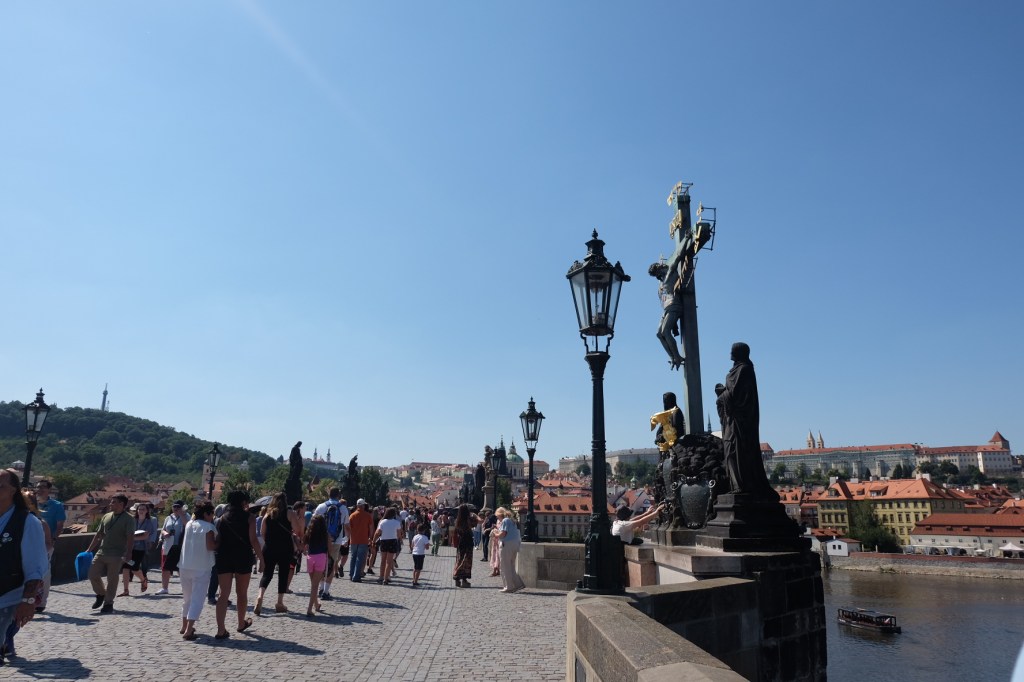
The bridge then gave way to a wider promenade lined with trees, nearby the river, where I then turned right into the first glimpses of the luscious green Petřín Gardens (Petřínské sady) which leads upwards towards a beautiful view of the Old Town side of Prague and beyond. Instead though, I headed back the way I had come towards, what was perhaps my favourite unconventional monument in Prague: the John Lennon Wall.
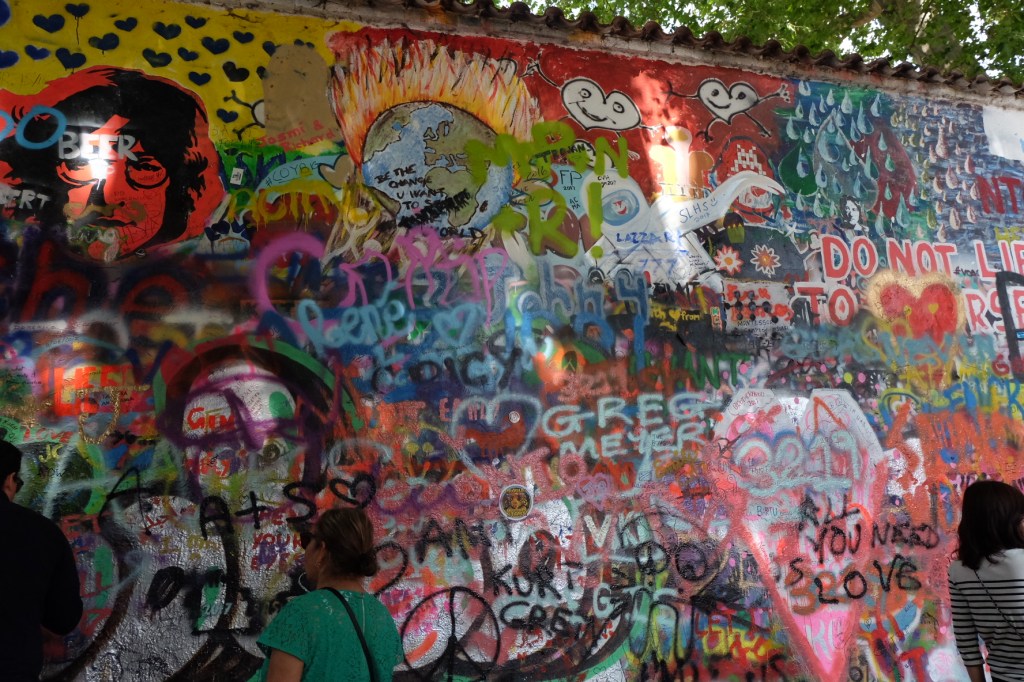
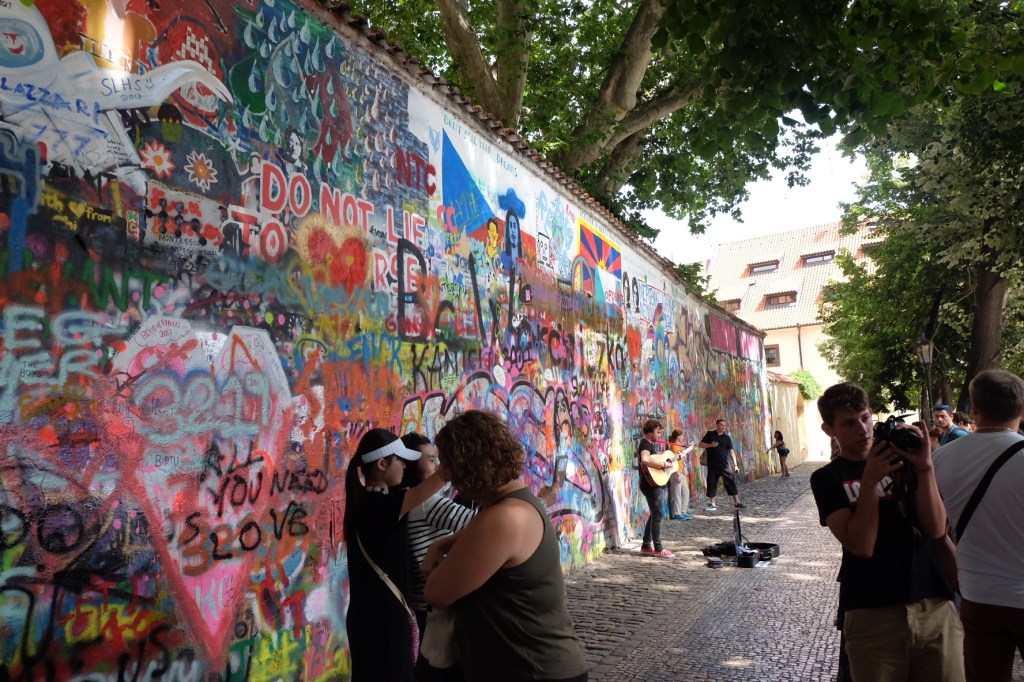
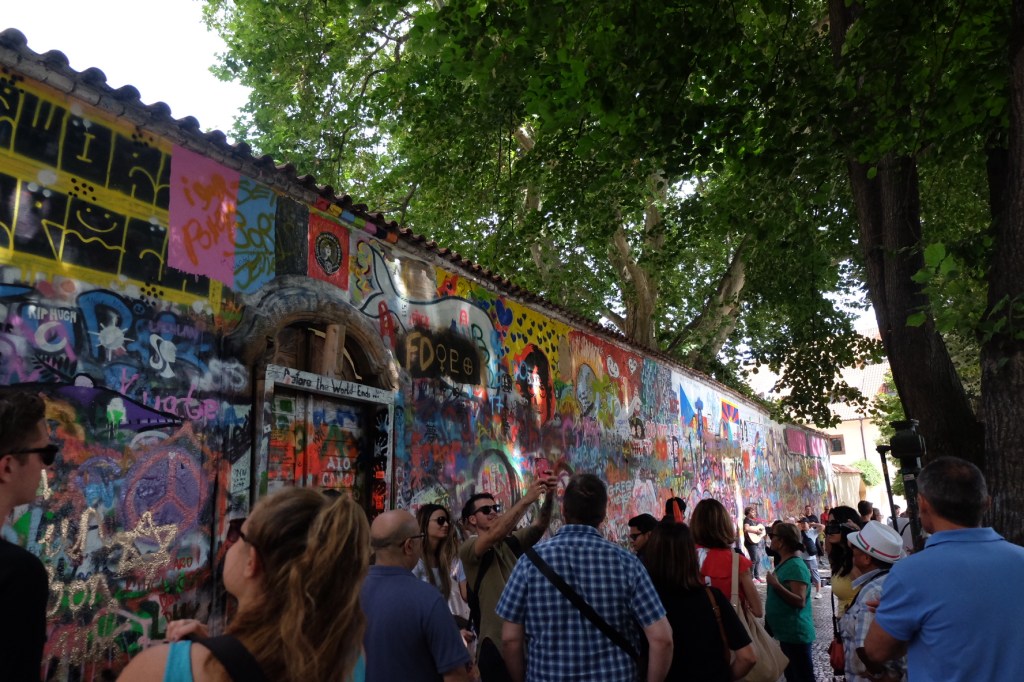
This wall, having been inspired by John Lennon and the works of the Beatles, has become an unmissable attraction on a tour of Prague. The expanse of stone in covered from head to toe in artwork, quotes, paintings or simply words written by locals and travellers alike since its origin. Sitting in a small square just opposite the French Embassy, the wall first displayed John Lennon in 1988 as a symbol of western culture, freedom and political struggle. Since then it has changed drastically over the years into a mass of colour and life and beauty all bound together representing freedom, life, culture and music of a styles in a way to express creative freedom for everyone.
And to think it all started with one unknown artist creating an image of John Lennon with a few lyrics painted beside was all it needed to start an art revolution.
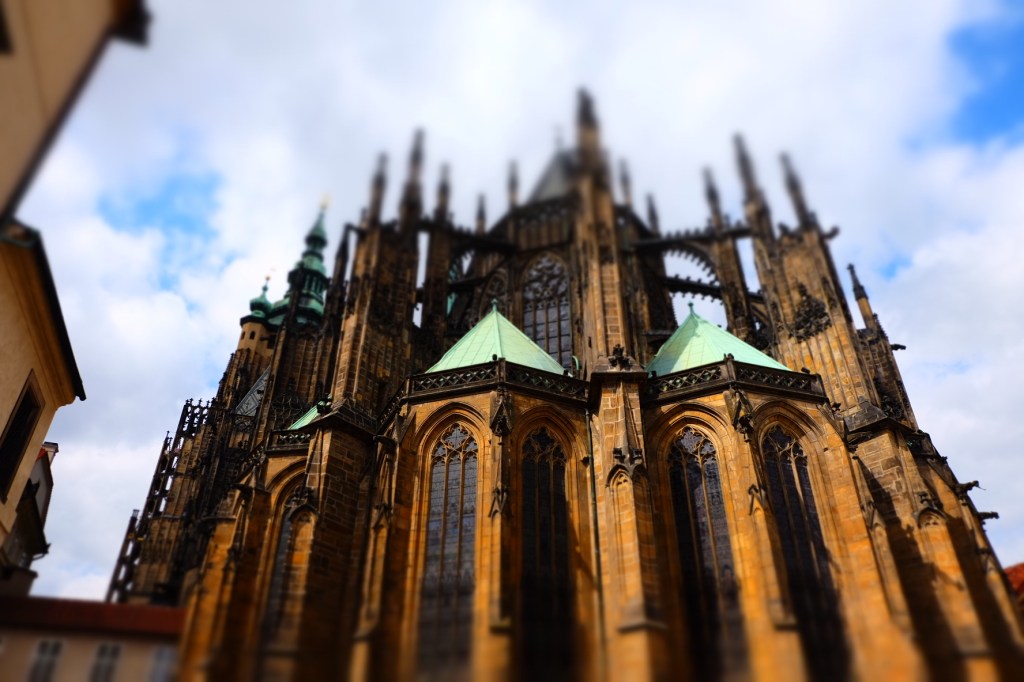
Onto Prague Castle, after a walk up a cobbled street and into the wide open courtyard in which stands another incredible Czech landmark: the St. Vitus Cathedral. This Cathedral (the most important in the country) is home to the tombs of Bohemian Kings and Holy Roman Emperors while showing off its incredible sharp, dark and tall, gothic exterior which stretches high above the plainer sandy-walled castle buildings.
While heading back out the castle entry-way, the view over Prague is one that takes whatever breath you have, away. You can see the large curving Vltava River winding away into the distance, cut-through by Prague’s many bridges and boats while the church spires and multi-coloured houses of the Old and New Towns shine at you from across the water, is a view that is still in my mind now, years later.

Prague is a city of different time periods that somehow work in harmony to create a place that emanates both a rich history but also a prosperous future. There are both dark, graffiti’d corners, wide-modern tram roads, new busses, imposing museum structures and old crumbling wooden houses but together it’s something you’ll never grow tired of seeing.
So see it as much as you can with your own eyes.
Because beauty may be in the eye of the beholder, but Prague is beautiful no matter whose eyes you see it through.
 For Wanderers and Wonderers