
In a few words or less, Jaipur is unlike any city on the planet.
From the reddish hues of the buildings to the bustle of over 3.1 million inhabitants moving every which way, dodging roadside fruit-sellers and cows alike, this place is one that is easy to lose yourself within.
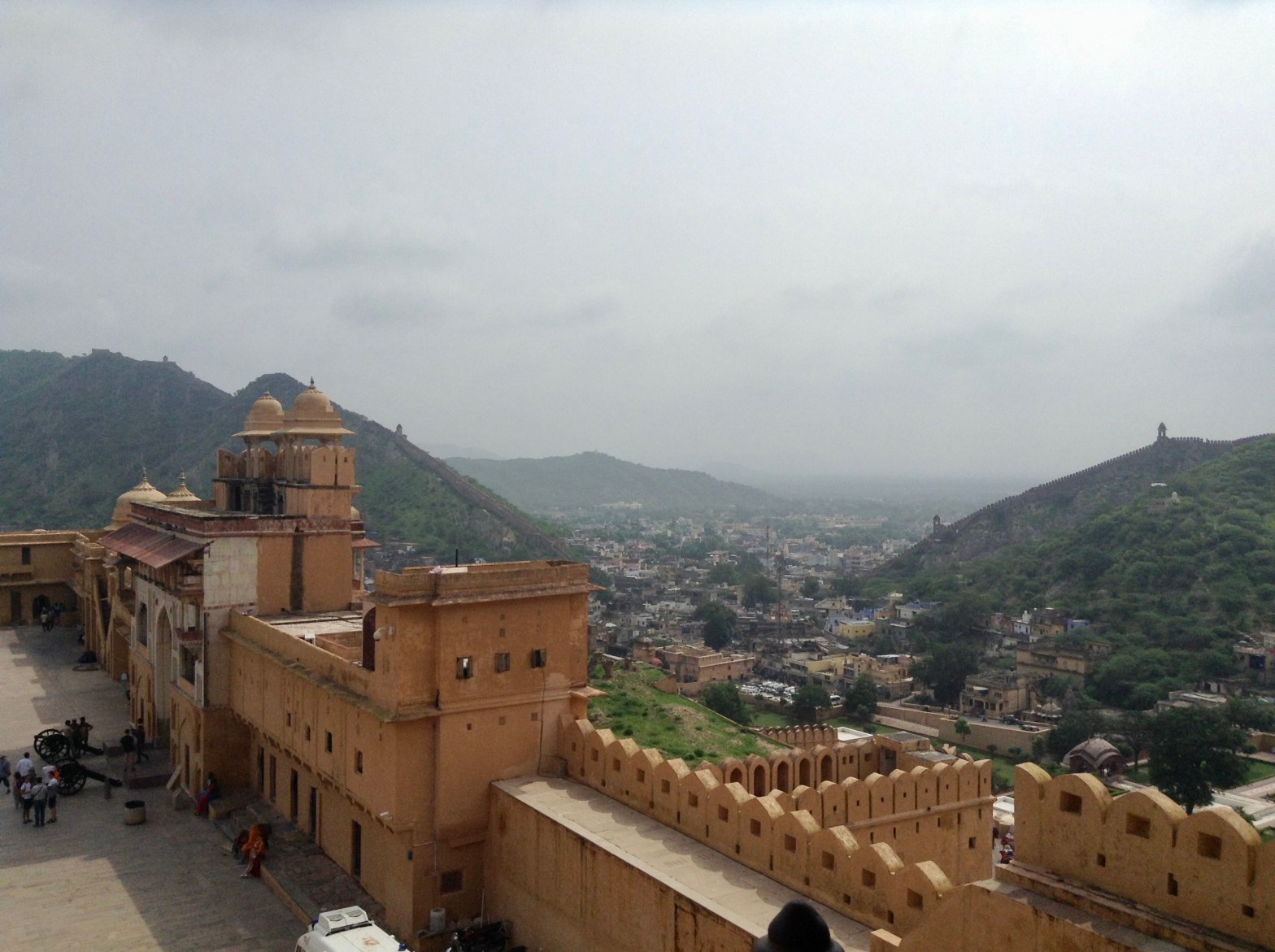
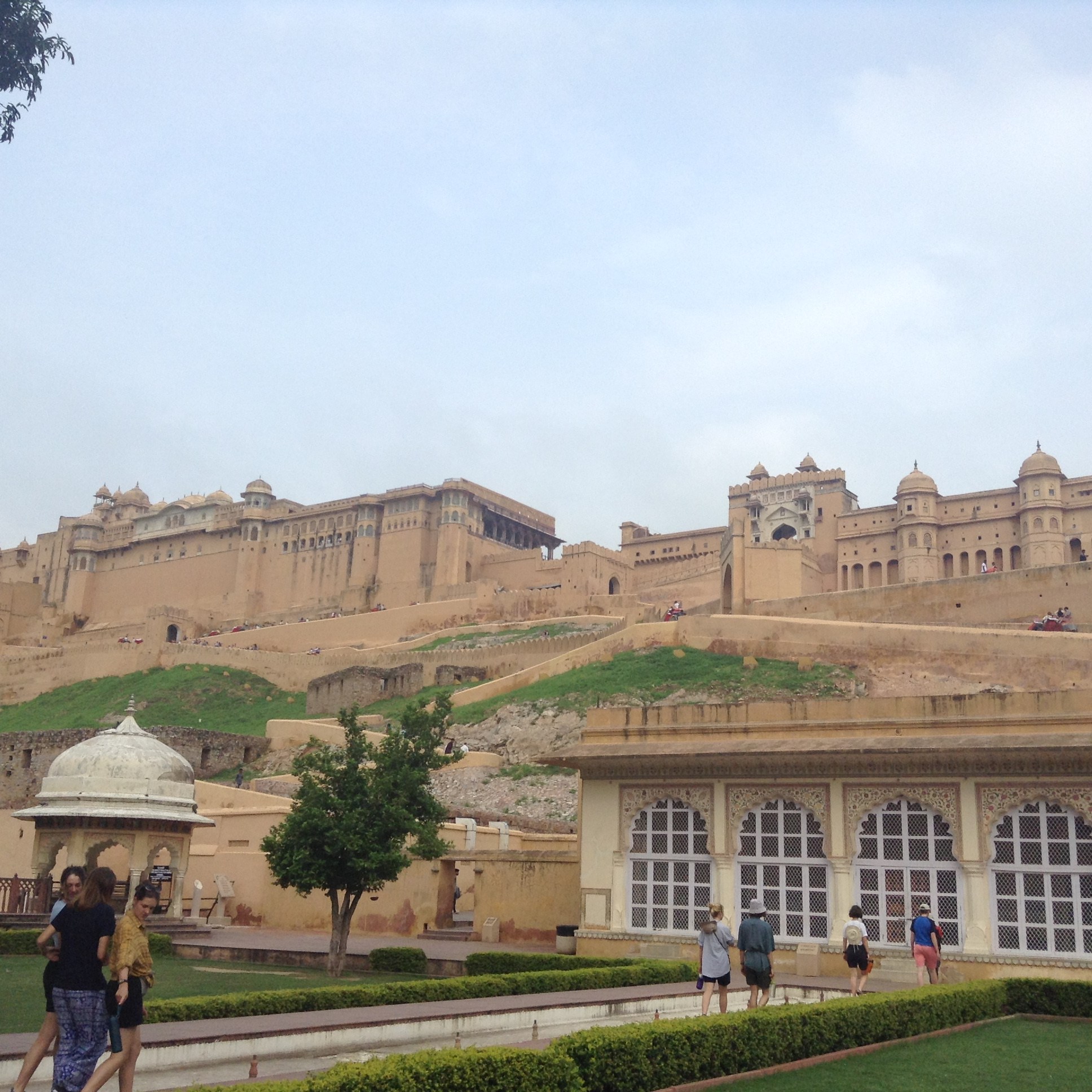
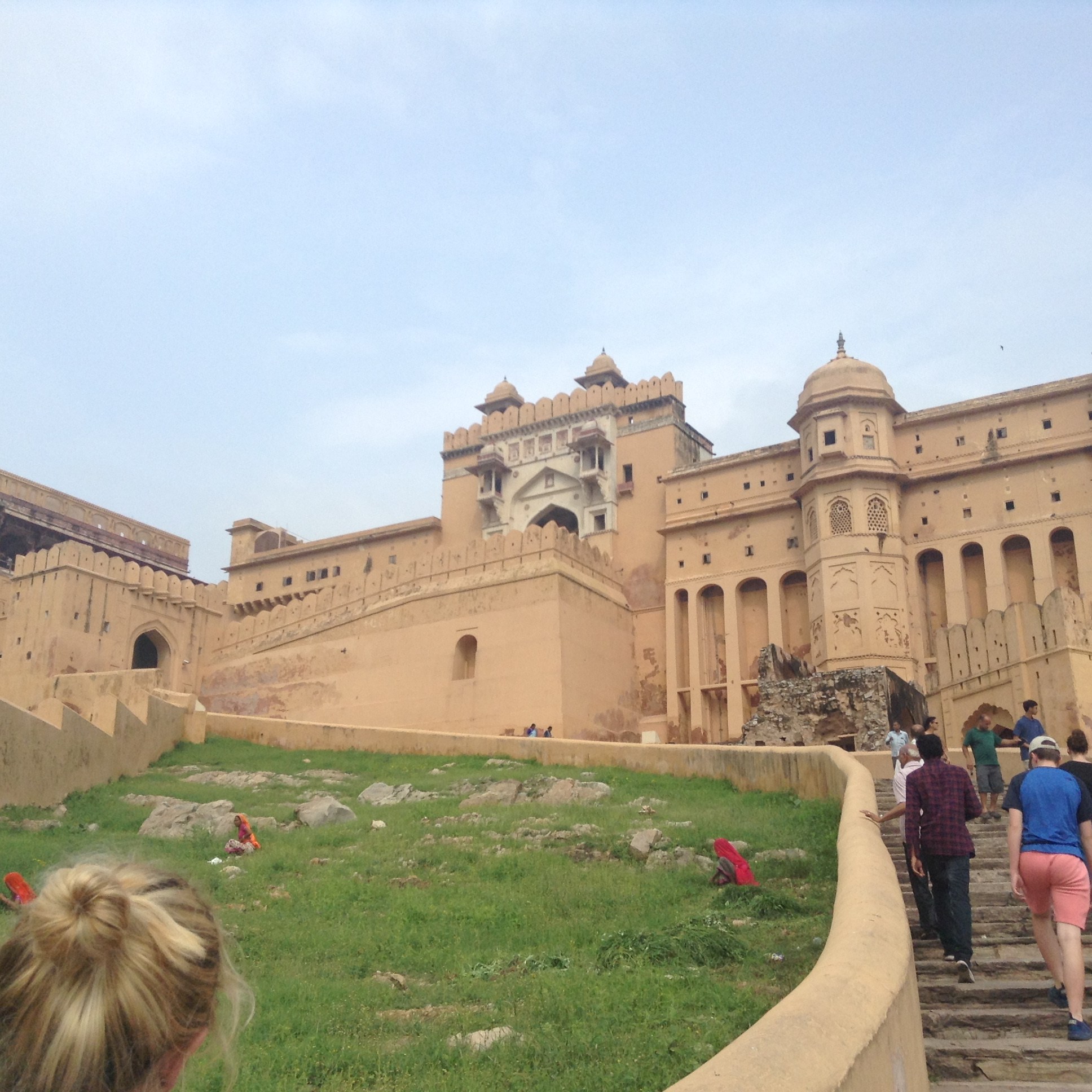
On the first leg of my day in the hot air of the city, I ventured a visit to the Amber (pronounced Amer) Fort; sitting as a regal reminder of the power this city holds throughout India with its amber, reddish hues that starkly contrasted the blue August sky I visited it under. This magnificent example of Rajput architecture actually sits around 11km from the city itself but is nonetheless worth the bus ride since once you’ve left behind the crowded, dusty streets, the landscapes give way to massive, rolling, green hills covered in trees as far as the eyes can see.
Another attraction you may witness on the way to this spectacular hillside fort is the stunning Jal Mahal (floating palace) which sits on the Man Sagar Lake near the centre of the city. This beautiful yet mysterious converted palace has five floors, four of which sit underwater, which conceal much of the perceived size of the palace. Unfortunately, the inner workings of this floating palace aren’t open to the public but there is hope for its future since it centres around a larger project to promote visits to the palace and de-pollute the surrounding lake.
On arrival in the shadow of the great Amber Fort, I set off up the steps past various smaller walled gardens and beautiful fountains, forged with the same pink and yellow sandstone that gives the fort its signature colour; blending nicely with the surrounding greenery and hill-covered trees. It’s a short walk to the Suraj Pol (sun gate), through which most people pass on foot while those in cars usually pass through the Chad Pol (moon gate) into the impressive Jaleb Chowk (main courtyard). The space around me was incredibly flat and bustling with foreigners and locals alike, all in awe of the grandeur of the curling copper roofs and regimented rows of smaller trees bringing the courtyard to life.
This entry into another part of history, however, was interrupted by my first up-close encounter with Indian elephants in all their glory. Trunks swinging in the wind, the elephants themselves were beautiful to witness up close for the first time but it also hit me then how wrong it was to see these beautiful animals in this stony and dusty setting, the harsh sun beating down onto their backs and their cracked feet being made to carry (mainly white) tourists up the zig-zagging road to the Suraj Pol. It was heartbreaking to watch the industry up close since I hadn’t been exposed to its reality until then.
So before I go further with the beautiful setting I had walked into, remember to refuse to ride. The damage being done to these elephants and elephants all across India in the tourism industry should not be ignored for the sake of riding somewhere that could easily be walked. Elephants shouldn’t be ridden but instead be given the freedom to live healthy lives, un-damaged by hot asphalt, a rider’s whip or the strain of performing to, or carrying, others.
They are animals that should be protected.
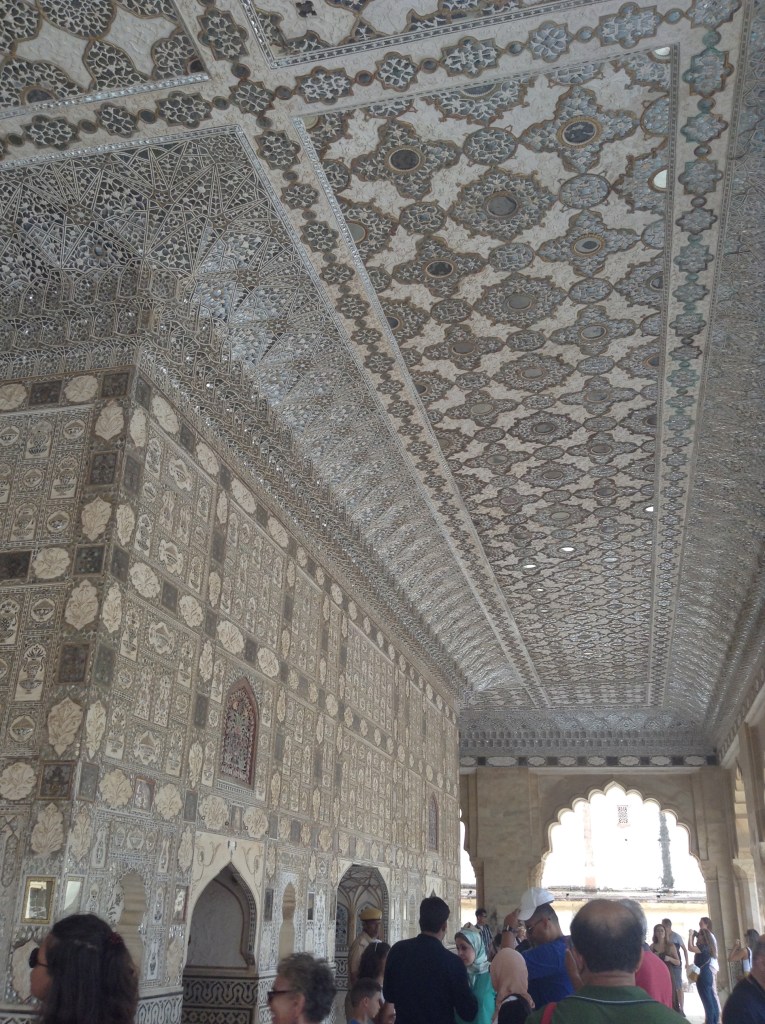
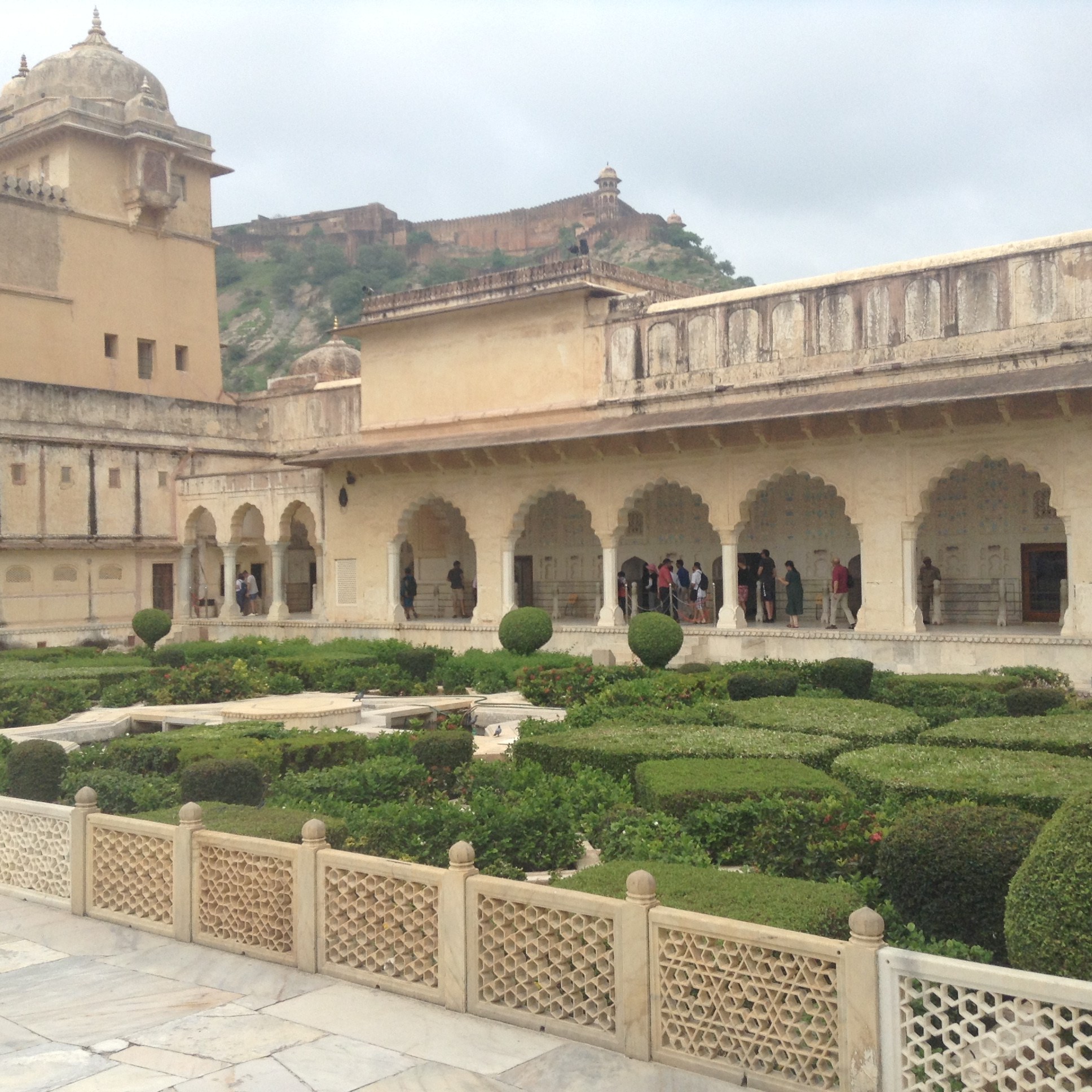
After I’d wandered through the main courtyard of trees and passageways on the side-alleys to shield from the dry heat, I found a guide to show me every wonderful crevasse of this beautiful fortress. After three courtyards that got smaller the closer to the mountaintop we got, I was entirely speechless at the sandstone architecture, the painted walls, frescoed arches of the Ganesh Pol and multiple smaller palaces that decorated these courtyards, courtesy of the Maharajah Man Singh in 1592. The most impressive, though, is the Jai Mandir or Hall of Victory which is also known as the Palace of Mirrors. Every inlaid stone or surface displayed a mirror that shone in the blistering August sunshine.
In total, the four courtyards of the Amber Fort beautifully showed the fort throughout the ages, from its first and oldest courtyard housing the Maharajah himself to the main, more modern courtyard which welcomed visitors and warriors alike to the gates of one of Indias greatest landmarks.
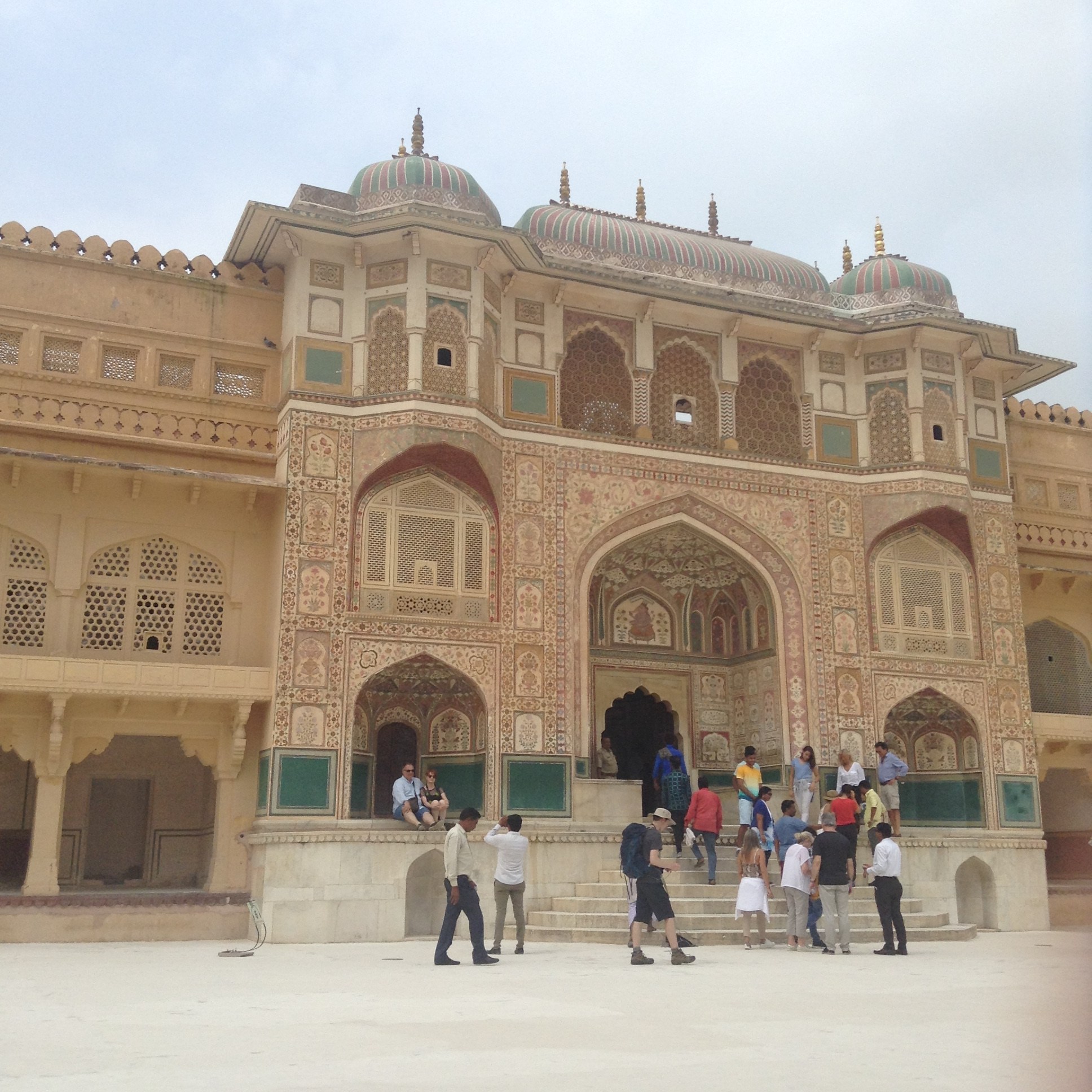
By midday, it was time to re-hydrate and head back to the city for a glimpse into the heart of the bustling and chaotic atmosphere of Rajasthan’s state capitol and with it, the City Palace. Once we’d entered the palace’s coppery red gates under a grandiose white detailed archway (at a considerably higher price as such is the burden of being a foreign tourist in India is paying a higher entry fee) we visited both the textile museum and armoury which boasted the greatest in through-the-ages fashion worn by the Maharajah’s, to the impressive knife and sword collection displayed in great wheels of metal and gold handles.
At that moment, on exiting one of the many buildings that made up the City Palace, the sky turned black and after the first few enormous droplets started to fall from the sky it really hit home that we were in the height of monsoon season in India.
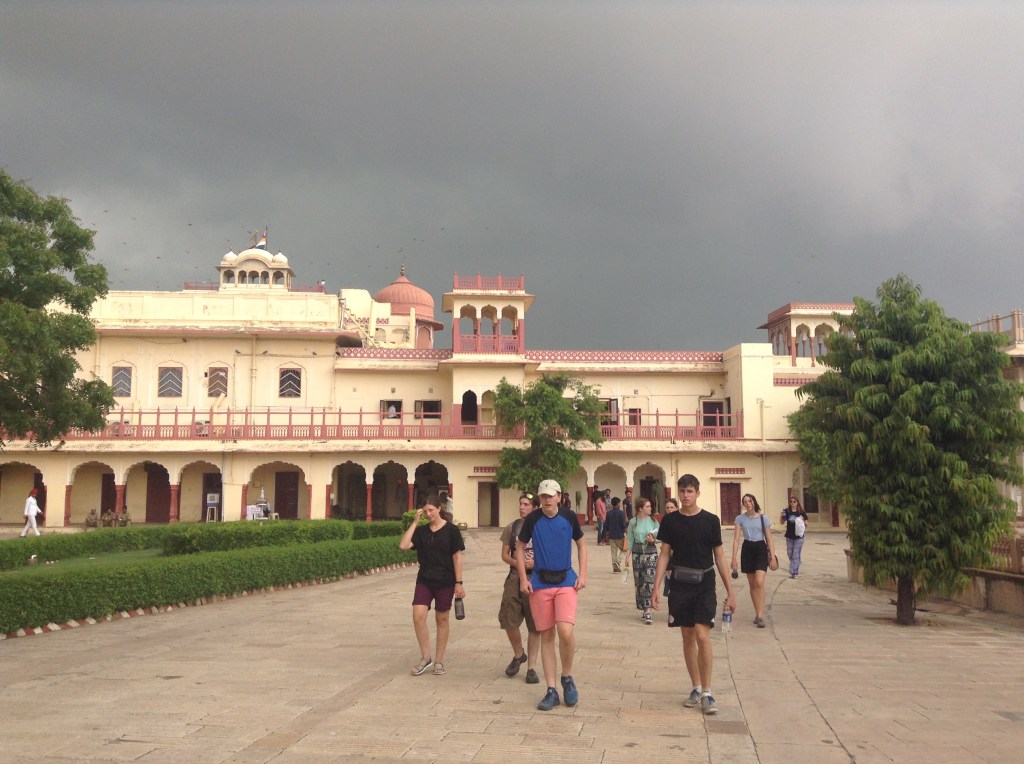
The heavens, literally, opened and it began to pour in bucketfuls so that you were soaked from your head to the base of your sandals in moments. Quickly, I sought shelter in the nearby gift shop and was greeted with welcoming smiles and the familiar chill of the air-conditioning. The shop itself was unlike your average gift shop though, as plastic nick-nacks were replaced by beautiful clay paint sets, colourful Sari cloth and scarves of silk and cashmere. Then, upon wandering around, I was pulled into a painting demonstration by one of the staff who showed us how long the paint could last on one brush strong before, free-handing an elephant and handing it to me as a gift.
To this day it is still one of my most prized possessions.
After exiting though, the rain still hadn’t let up so instead I decided to embrace the moment, ran out into the deluge – sans my bag of course – and danced in the rain while other tourists looked on as though we were crazy. The sky had since lightened and the rain was just as heavy but that didn’t matter because here I was, in Jaipur, in August, dancing under the warm monsoon rain with my eyes closed not caring who stared but instead basking in the moment of just being alive. That’s also when I decided to lie on the cobbled ground and just enjoyed the feeling of the rain falling.
It was one of those moments you know you’ll remember for the rest of your life because while it was happening all I could think was, there’s nowhere on earth I would rather be right now than here.
So, still soaking wet, I left the copper arches and full armouries of the City Palace and walked a short distance to one of Jaipur’s other, one-in-a-million, attractions: the Jantar Mantar.
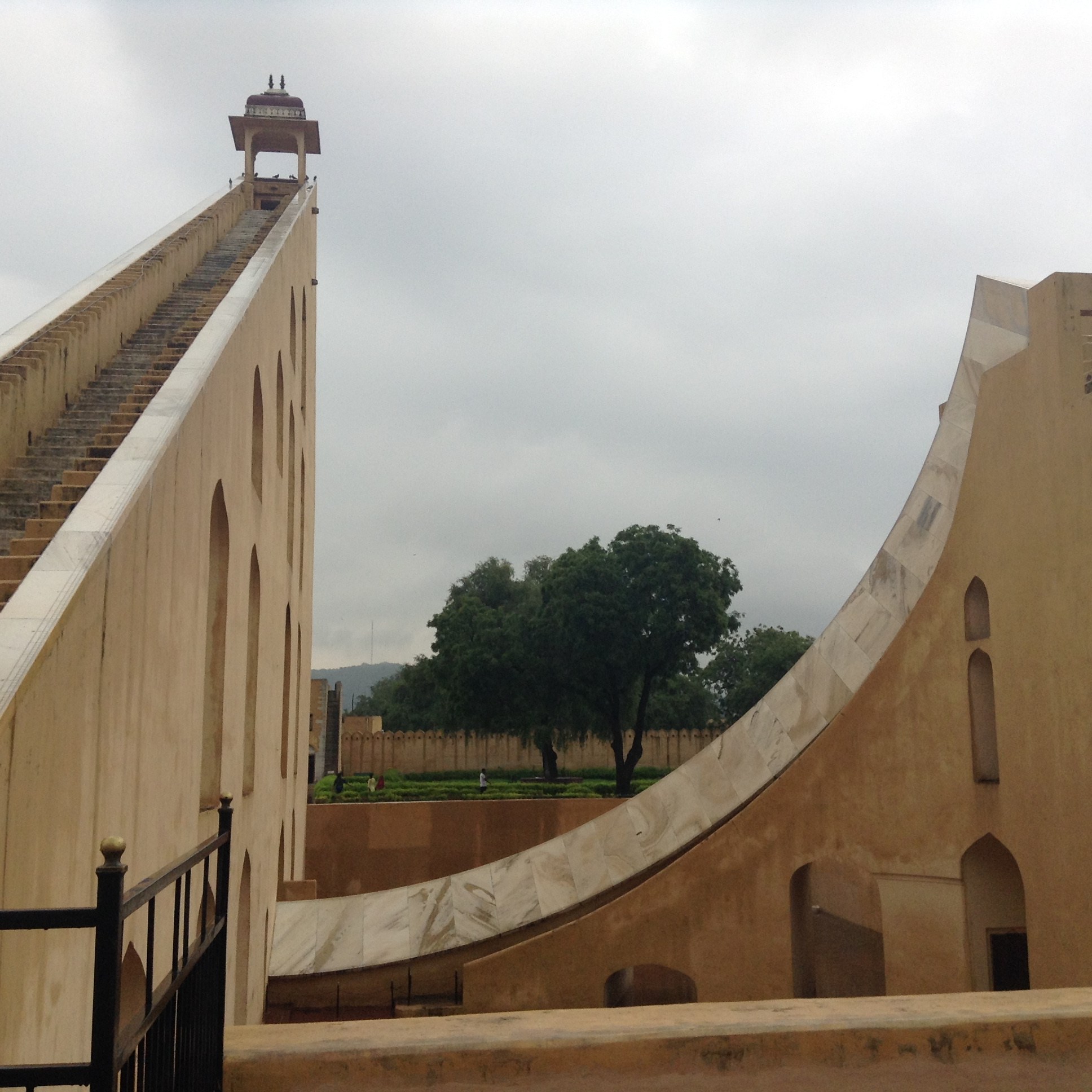
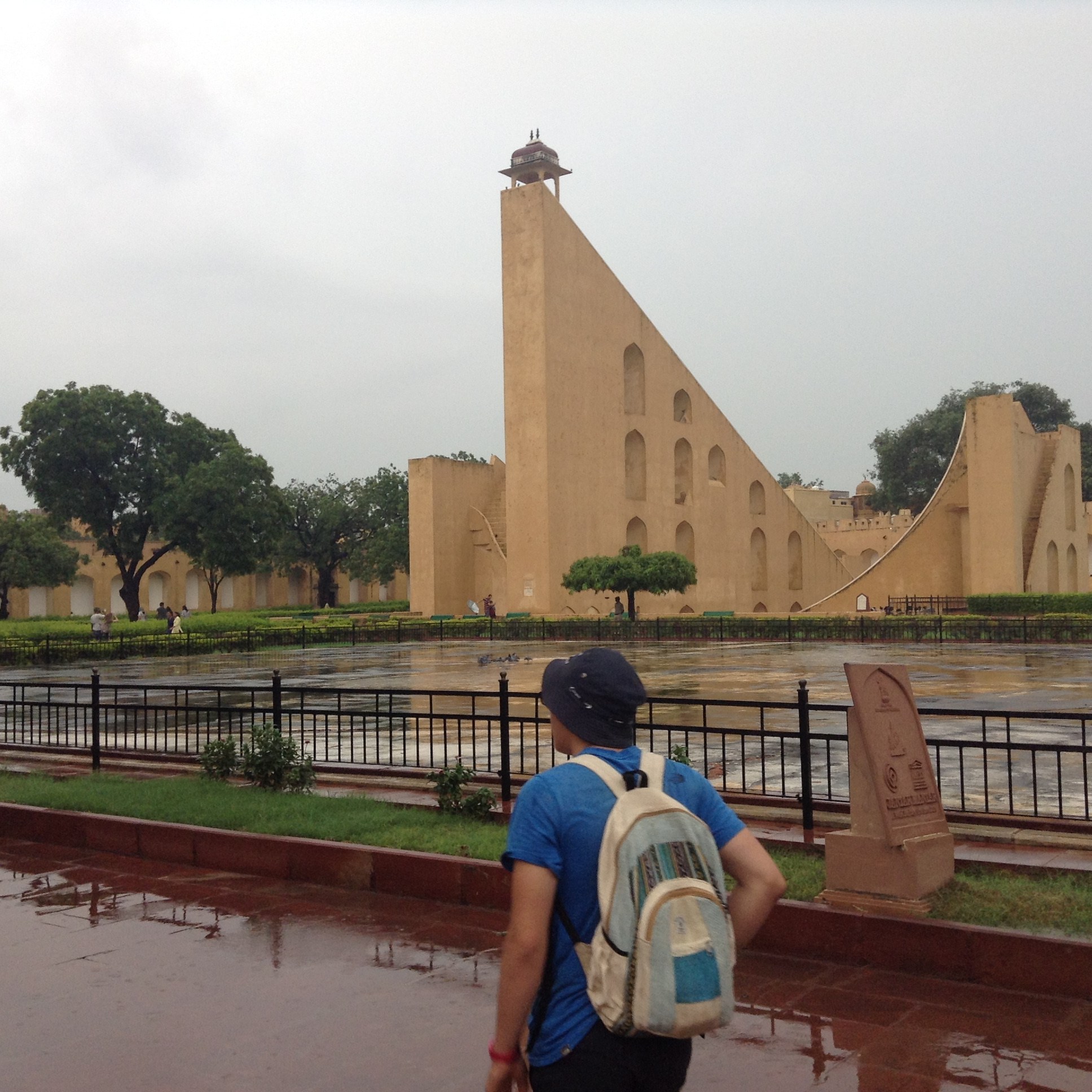
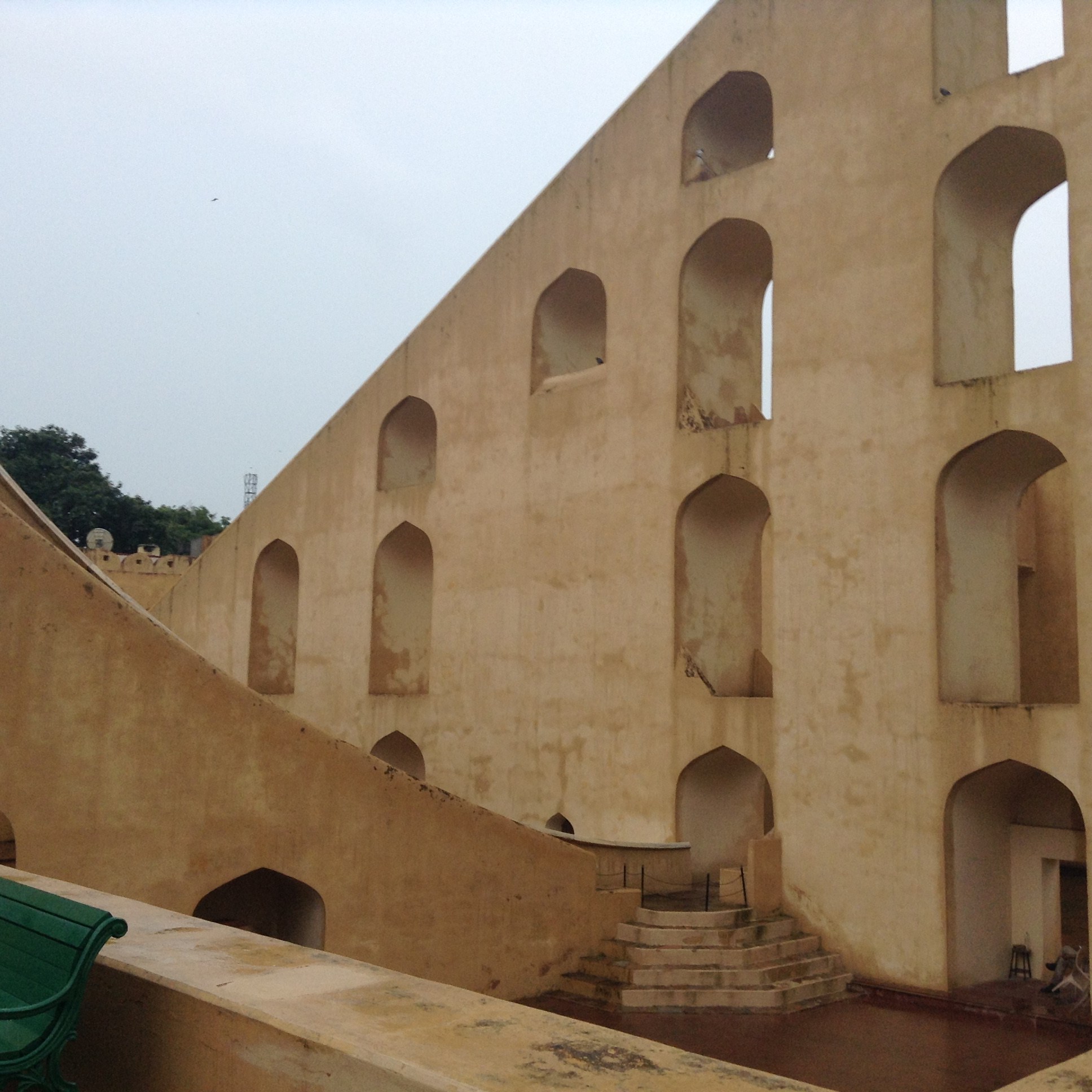
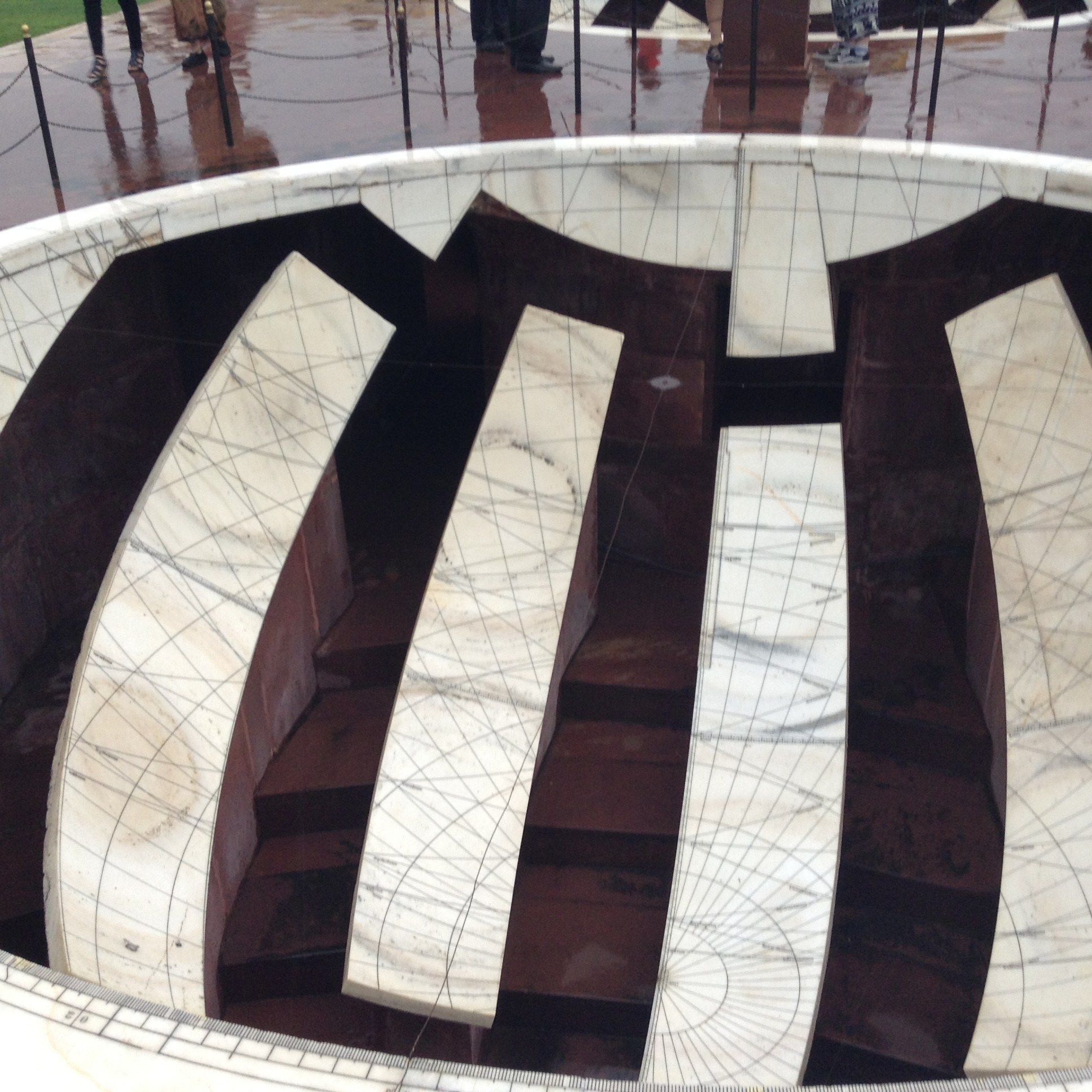
At first glance, the Jantar Mantar is but an open-air park filled with dozens of obscure structures, although once you realise these structures have a purpose its quite incredible to realise you’ve just walked into an enormous observatory, filled with sun-dials and instruments to measure the heavens but on a scale, you can only dream of. Enormous yellow sandstone structures stand high above, measuring the sun and placement of the constellations along the cosmos which is incredible enough before knowing that the observatory was built in 1728 by Jai Singh II. Despite the weather and lack of sun, it was still completely worth the visit wandering around the curved stone dials and impressive concave star map near the centre, in squelching sandals and resembling something not too far fetched to a drowned rat.
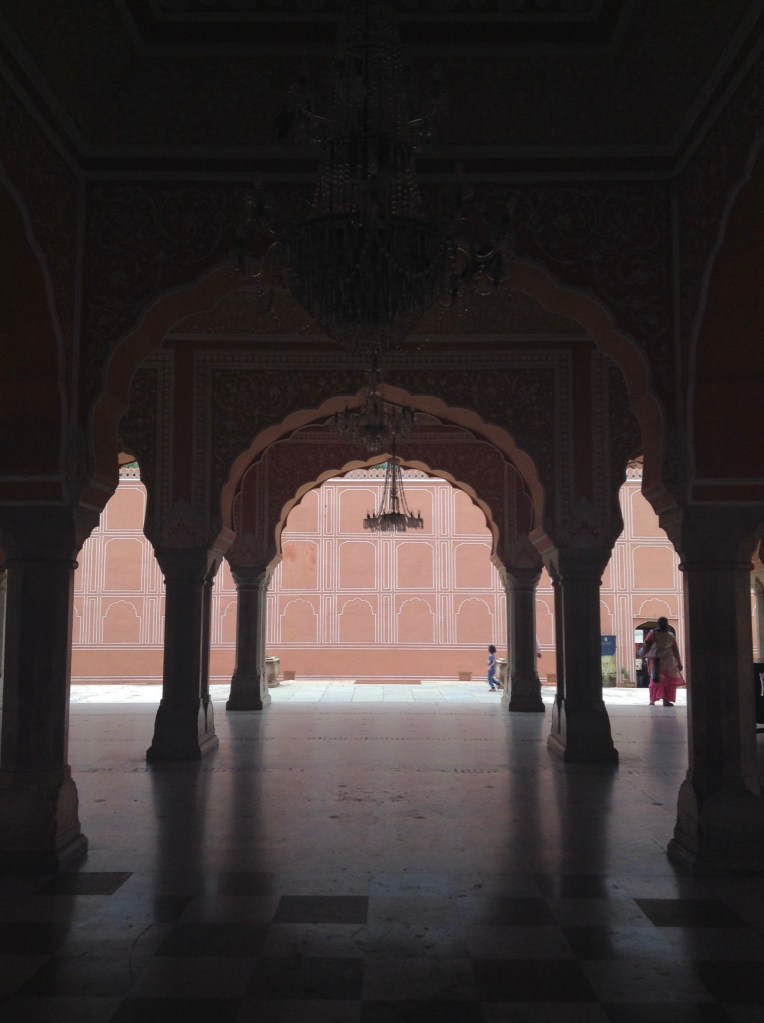
Jaipur.
Known as the pink city, thanks to Maharajah Ram Singh’s order to paint it to welcome, the later, King Edward VII in 1876, is a whole other world to step into and should you get the chance; don’t hesitate.
Yes, it comes with its hectic pace, sometimes dangerous traffic and all-consuming atmosphere but it also boasts some of the greatest experiences you can have. Witnessing Fortresses on a scale never seen before, meeting incredible local people that have unforgettable stories to share and wondrous food to try around every corner.
It is truly a place you can’t imagine yourself in until you’re there, in the thrall of the culture and society and people and then you wonder why you didn’t visit sooner.
There’s a reason why they painted the city the colour of hospitality.
To Hannah,
your all days
happy days.
accompanying note to a painting of an elephant in the Jaipur city palace gift shop.
Quote and painting by rayesh 6/8/19
 For Wanderers and Wonderers