
“Certain things catch your eye, but pursue only those that capture the heart.”
– Ancient Indian proverb
There are few Indian cities that boast the delights that Agra seems to have been bestowed with over the centuries. With its forts, endlessly interesting ancient ruins and one of the seven great wonders of the world, within the centre, it’s not only a place full of once-in-a-lifetime sights but also a city that doesn’t feel closed in or too overcrowded in comparison to the other great cities of Rajasthan.
So it’s only natural to feel incredibly excited when going.
Among the death-defying motorcycles and lumbering cows that sit on the sides of the highway on entry to Agra, the next best thing is the ancient city of Fatehpur Sikri; a World Heritage Site of epic proportions.
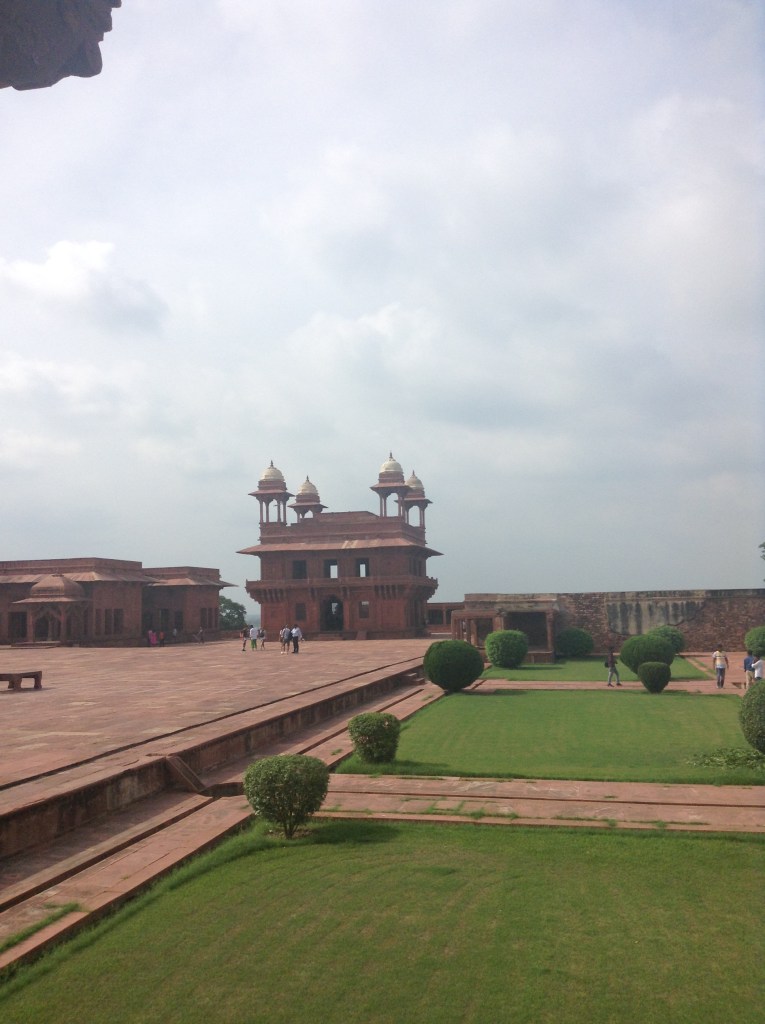
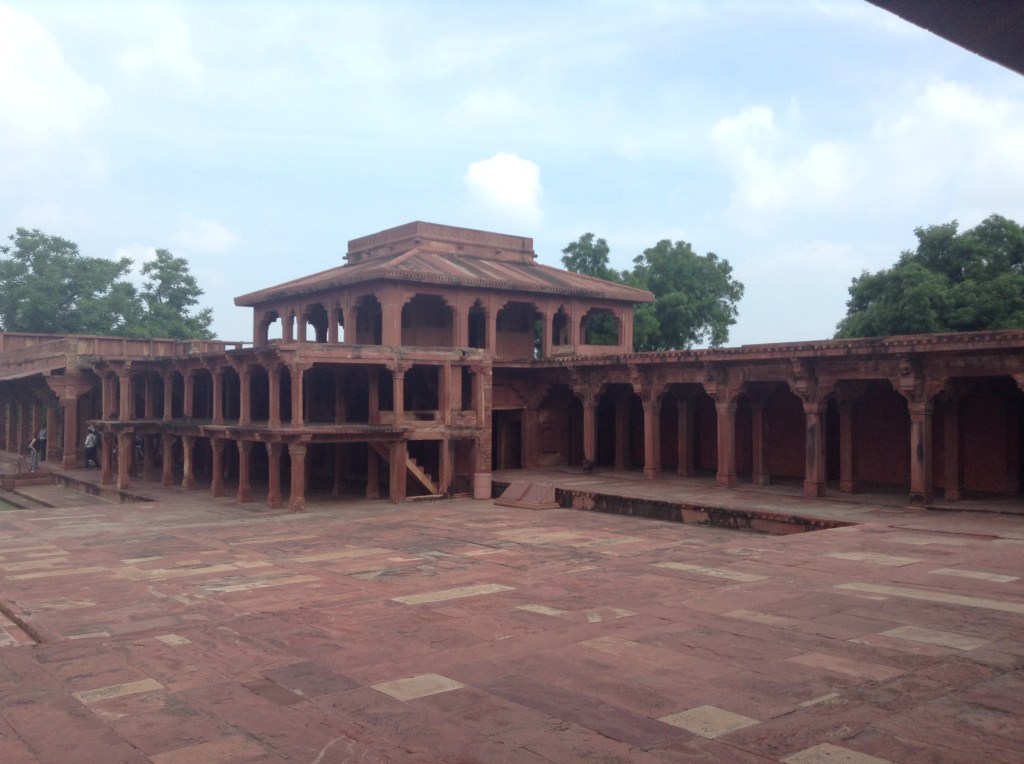
It sits a half an hour drive from the main city but is no less incredible a location to visit, with its red sandstone walls and endless procession of temples and palaces that catered to, not only the Muhgal Emporer at the time, but also his three wives. Each of which were of different religions so as to encourage inclusivity and diversity hundreds of years ago, among the people.
On walking around, despite the stifling August sun, the city was incredible to witness in person. Clever architectural design allowed for wind flow through the buildings so it stayed cool in the hot summer but still insulated in the colder winters and towers meant that it stayed well-fortified but stylish, with intricate gargoyles and flourished stone edges.
Despite this incredible sight, though, it’s unreal to discover that this ancient city was abandoned hundreds of years ago due to a water supply shortage and left to ruin at the mercy of graffiti over the years, up until it was recently granted World Heritage status.
So, on leaving the high, red, stony walls and wide palace gardens for the lighter city walls of Agra itself, we entered into the chaotic, yet colourful streets of the outer regions until suddenly, upon entering the inner city, the traffic and noise and bustle of cows and verspas carrying four people, disappeared. It was replaced by calm, clean streets lined with simple streetlights and flanked by beautiful hotels and artistic entryways, as if lining a strong central promenade.
The only downside to this lack of cars and emergence into the world or rickshaws and bicycles, was that we had to carry our larger bags a few hundred metres along the large paved road to our hotel which stood, surprisingly close to the outer walls of the Taj Mahal.
Yes. One of the seven wonders of the world was high on the list of things I wanted to visit before I die, so it was assured that we were going, the second we entered Agra.
After the long, hot walk to the hotel we spent an hour or so wandering the markets that lined the clean cobbled road. From silk scarves to small marble elephants, there was a plethora of things to buy and with the right amount of haggling, could be bought for the right price. Colourful patterend trousers hung from every hook, people bustled around glass cabinets filled with jewellery and t-shirts with ‘I heart Agra’ billowed in the evening breeze.
The quiet of the area is attributed to the fact that no polluting vehicles are allowed near the Taj Mahal due to past pollution affecting the structure through acid rain or air pollution that led to a need to restore the white colour of the Taj. This made, then, for an incredibly peaceful atmosphere walking the streets as the sun set to an orange sky and monkeys lumbered their way across the cobbles.
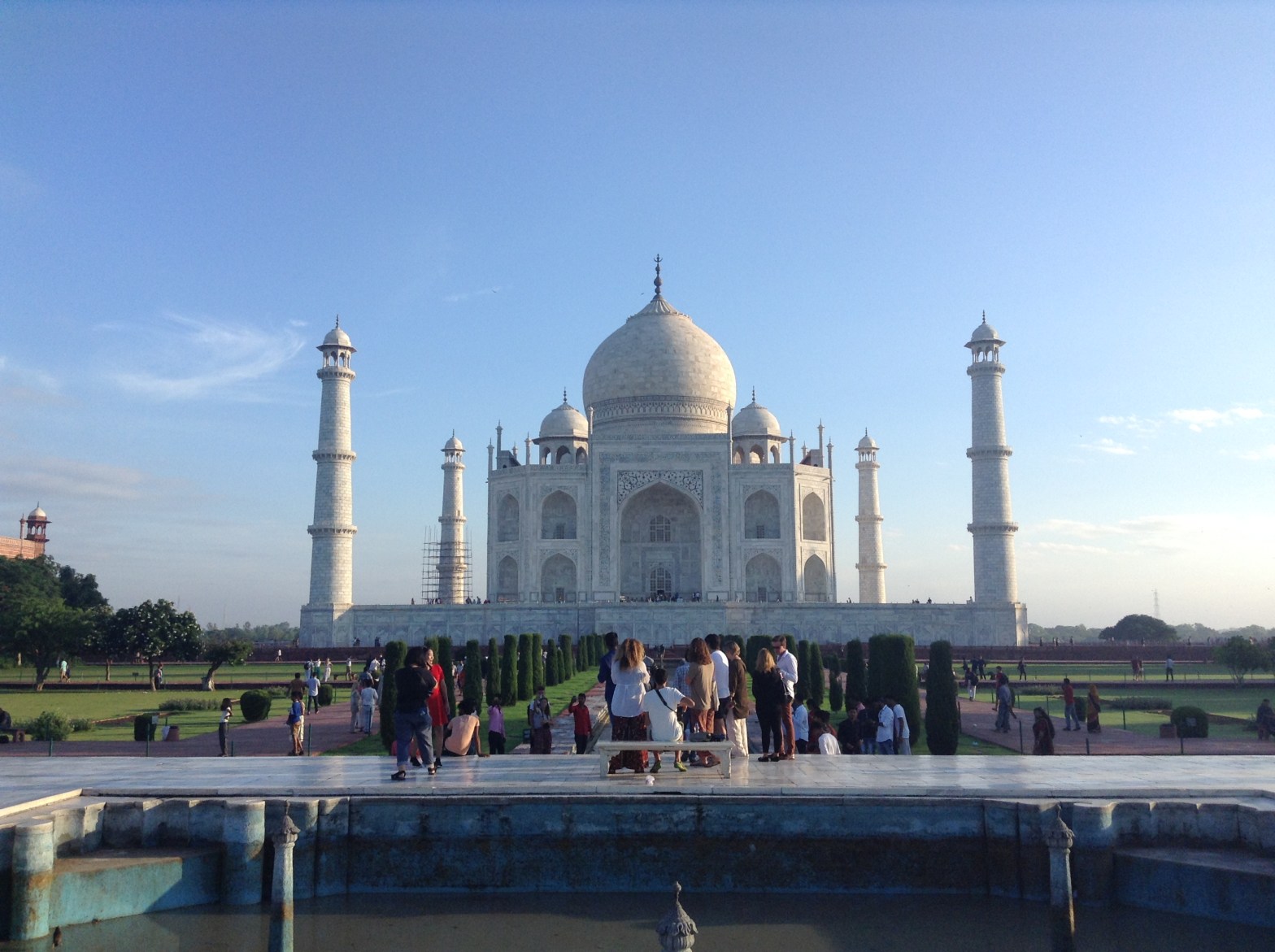
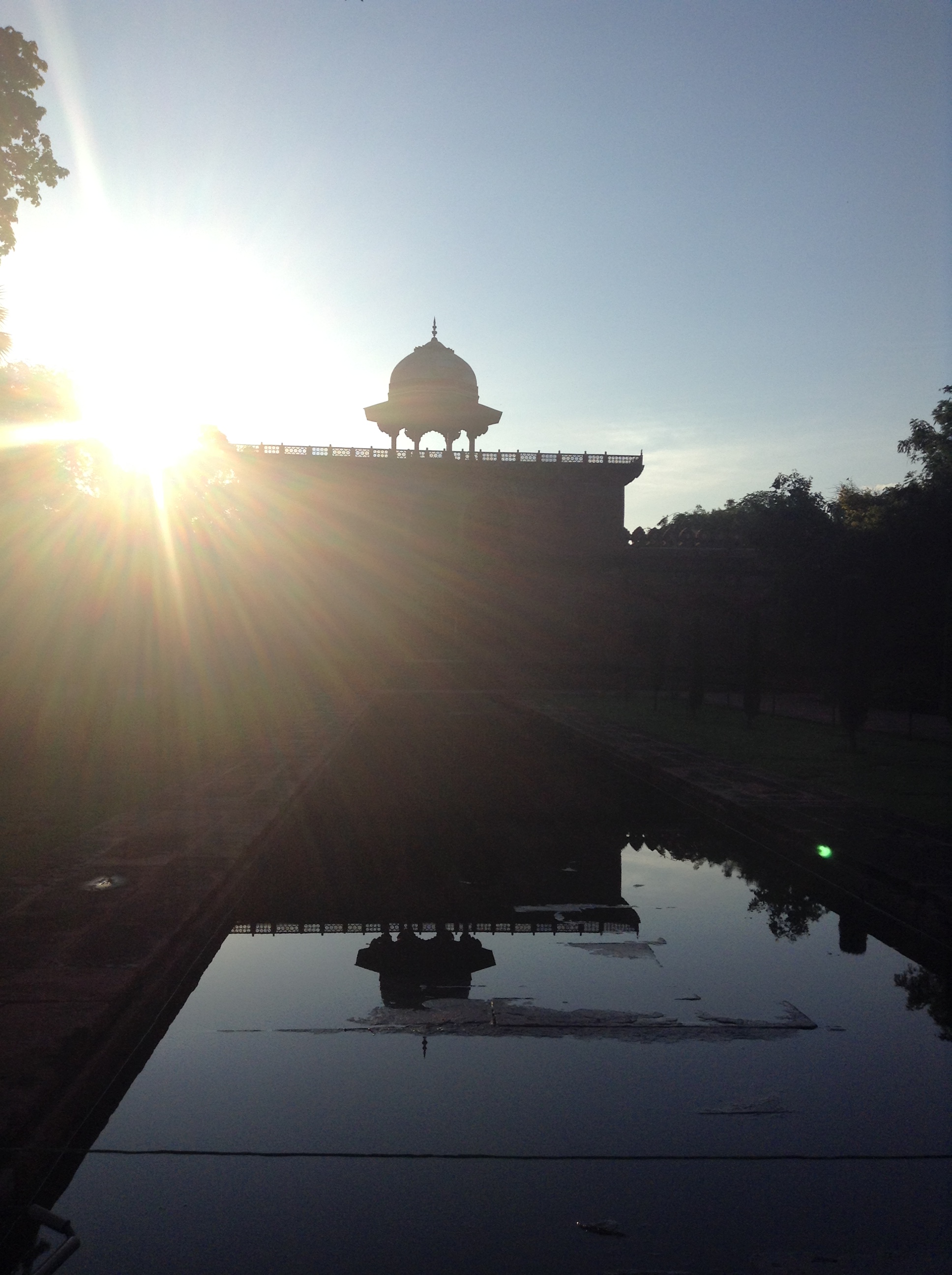
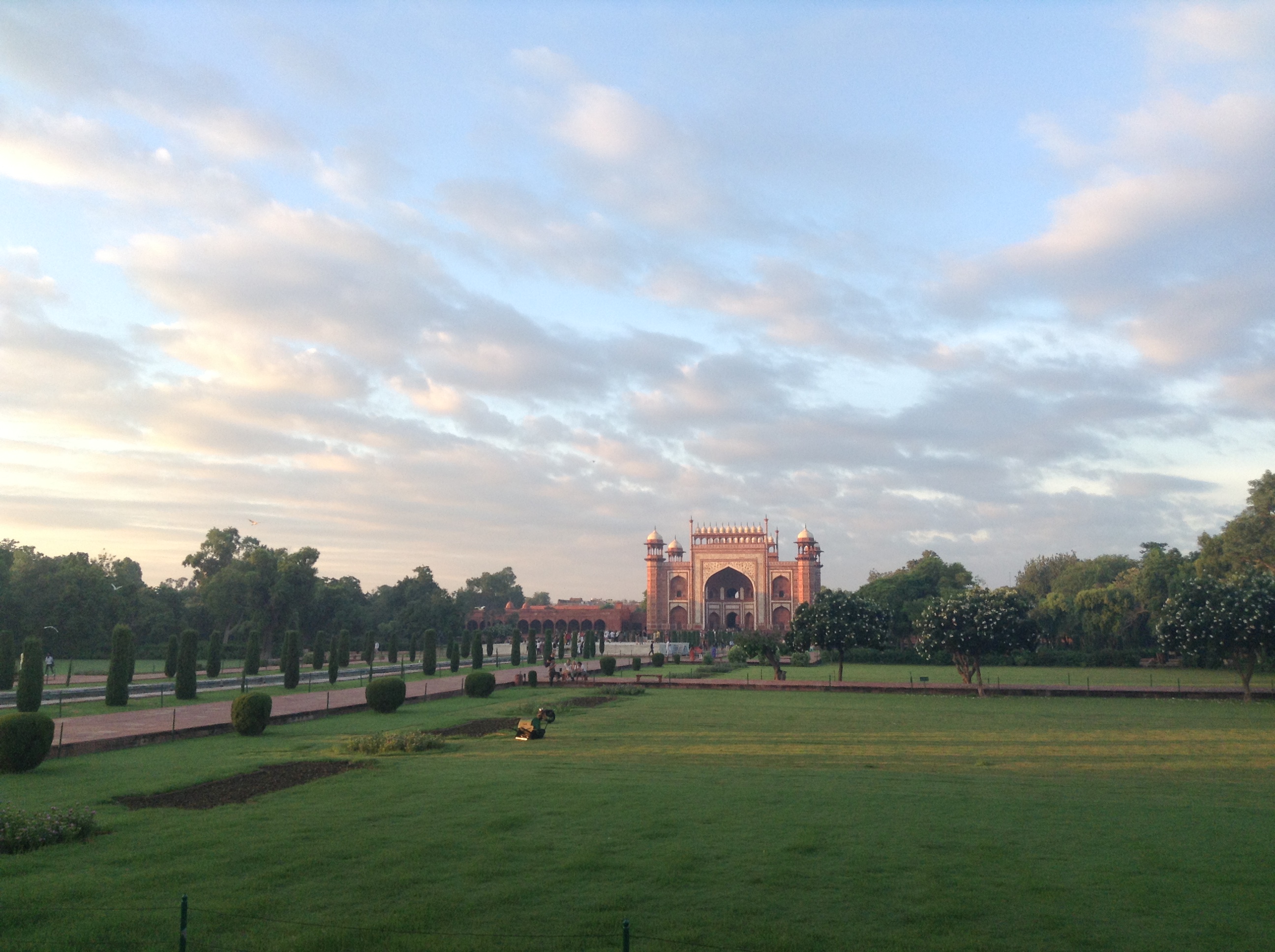
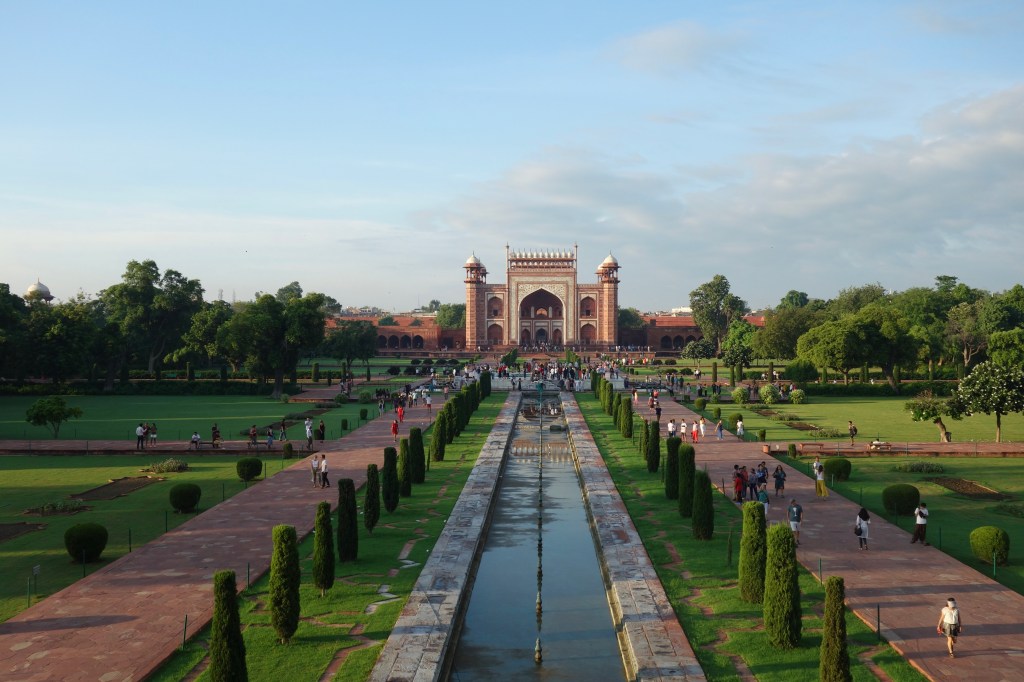
The next morning was an early, but necessary, wake up to stand in line outside the entrance to one of the seven wonders of the world. And several security protocols later, I was walking through the outer gardens towards the Darwaza (main gateway).
It was funny really how, after walking through a doorway barely big enough for two people, you emerge, to one of the most incredible sights you’ll ever see.
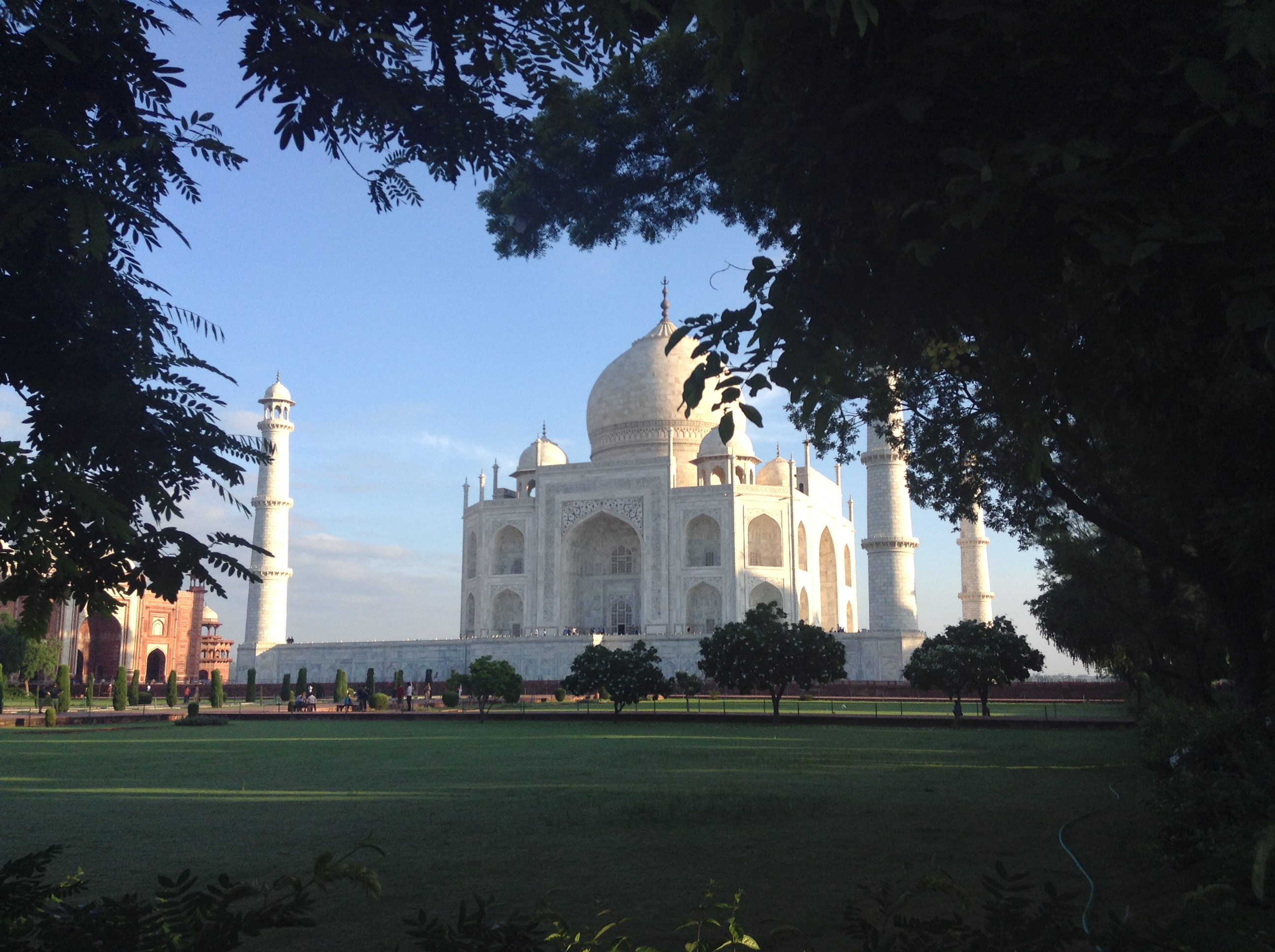
The Taj Mahal in all its glory, with towering white minarets and dome stretching skywards against the red-hued morning sky.
It was breathtaking.
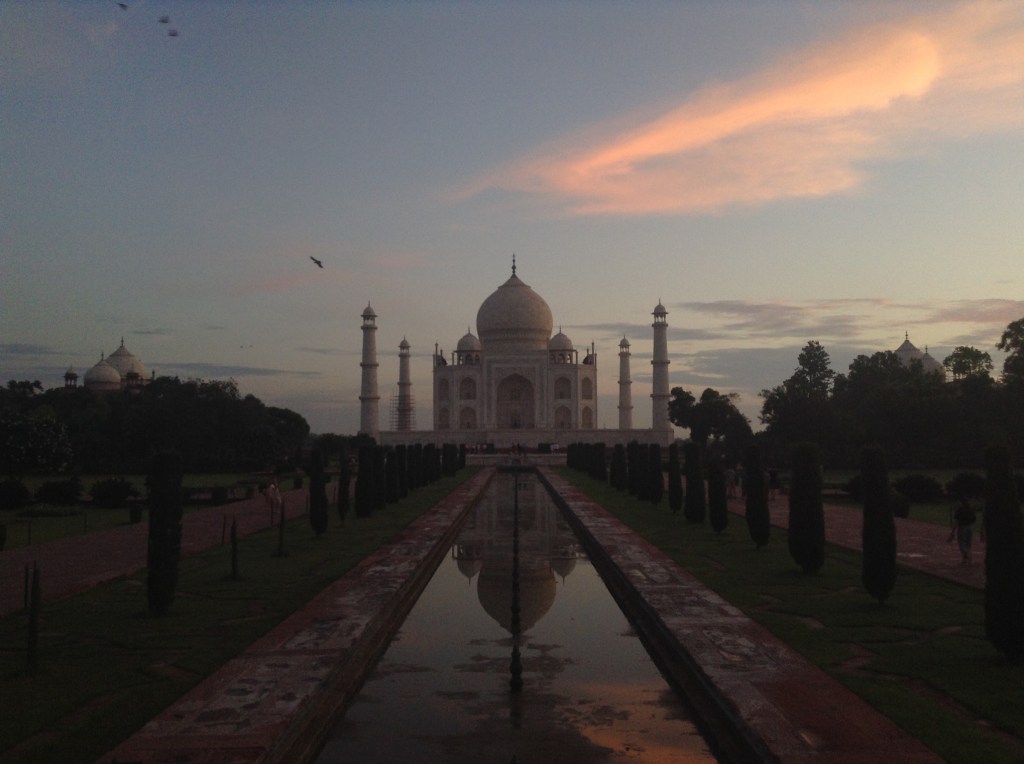
After taking a few photos, we followed a guide around the inner gardens which were rimmed with beautiful flowers and ornate benches. Trees emerged on path corners but nothing could distract from the enormous structure ahead that towered above us as we neared the entry into the Taj Mahal. At this point, the sun also decided to rise, illuminating the back of the domed structure, halo-ing the minarets and small towers of the mausoleum; it shone against the brightening sky.
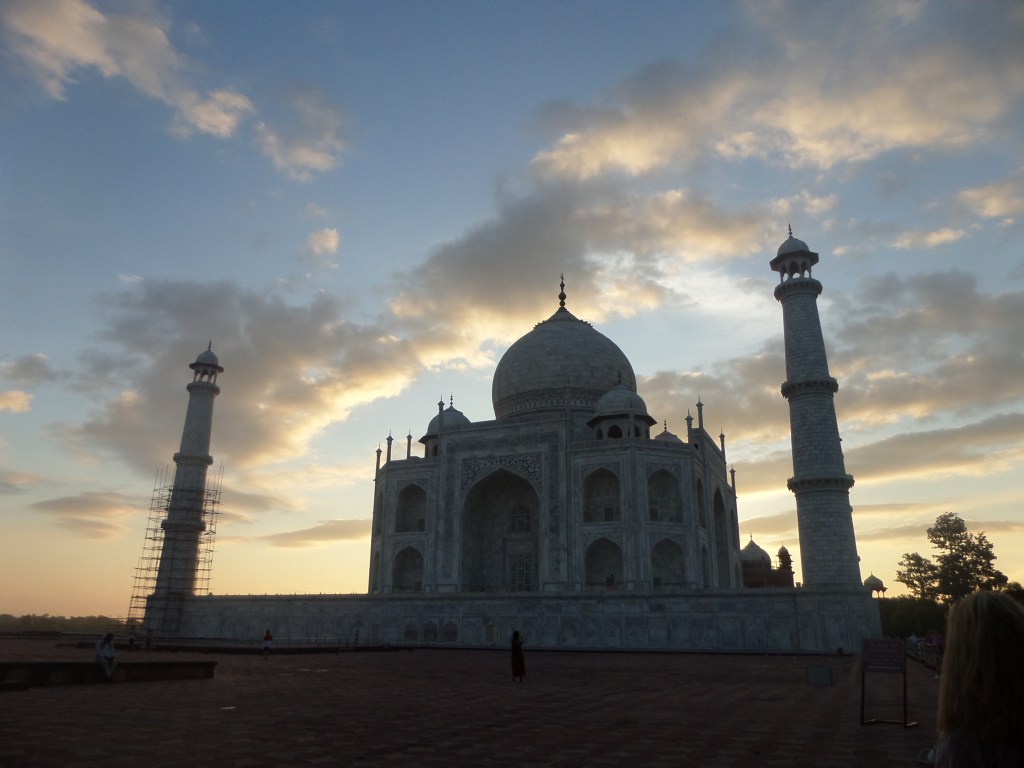
Upon entering – with shoe coverings worn – the inside was almost as impressive as the outside. We entered into a high-domed, circular room made of stunning white marble in which small rhinestones were inlaid; sapphires and emeralds. It was surreal being inside such an immense symbol of love; built over 400 years ago by the Mughal Emporer, Shah Jahan, for his wife as a tomb for her after her death and then it later ending up being his own final resting place.
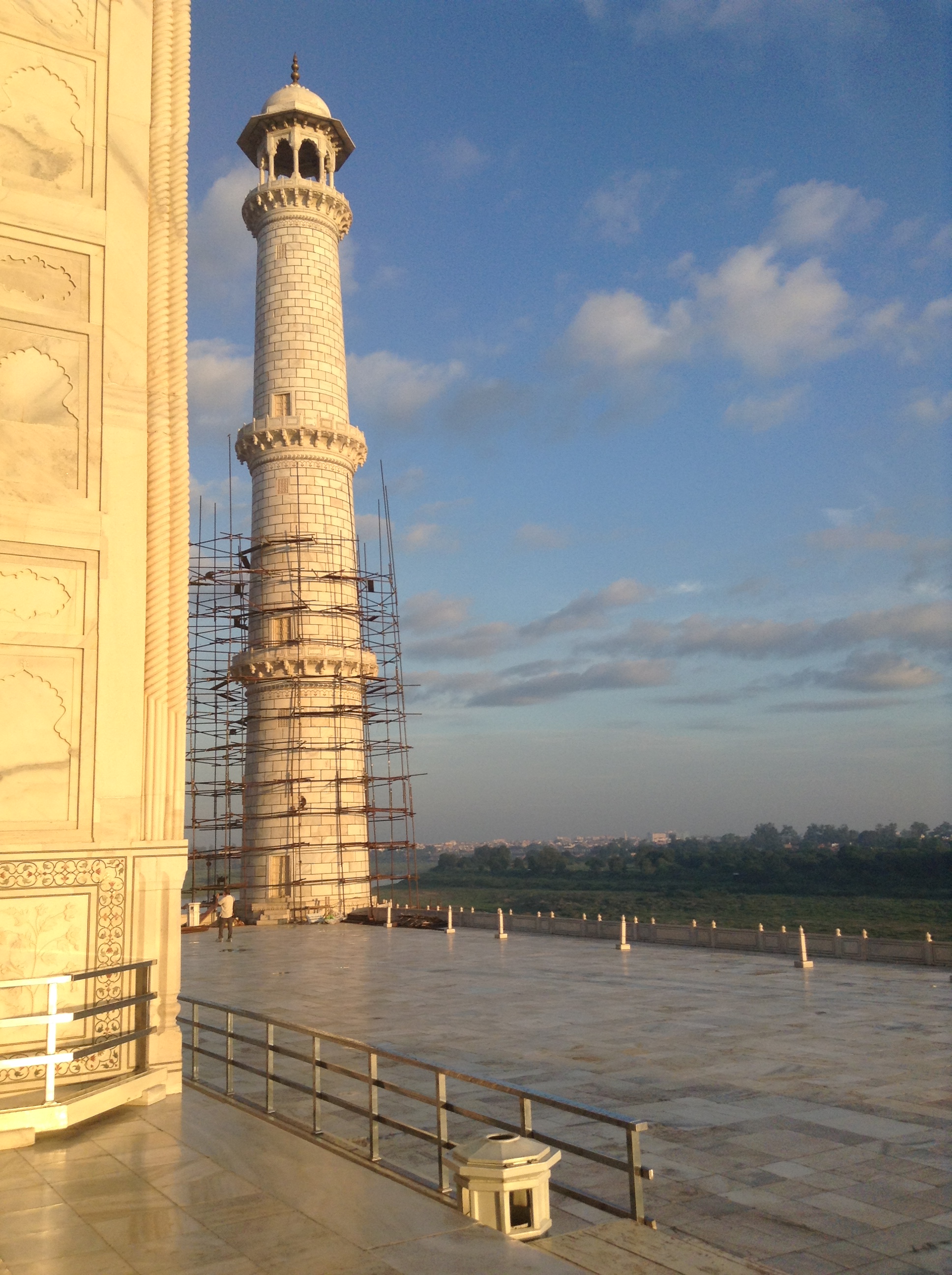
The sky appeared brighter once we’d left the inner space and headed outside to view the sun glinting off the Yamuna River while monkeys chattered away high up in the scaffolding of one of the minarets.
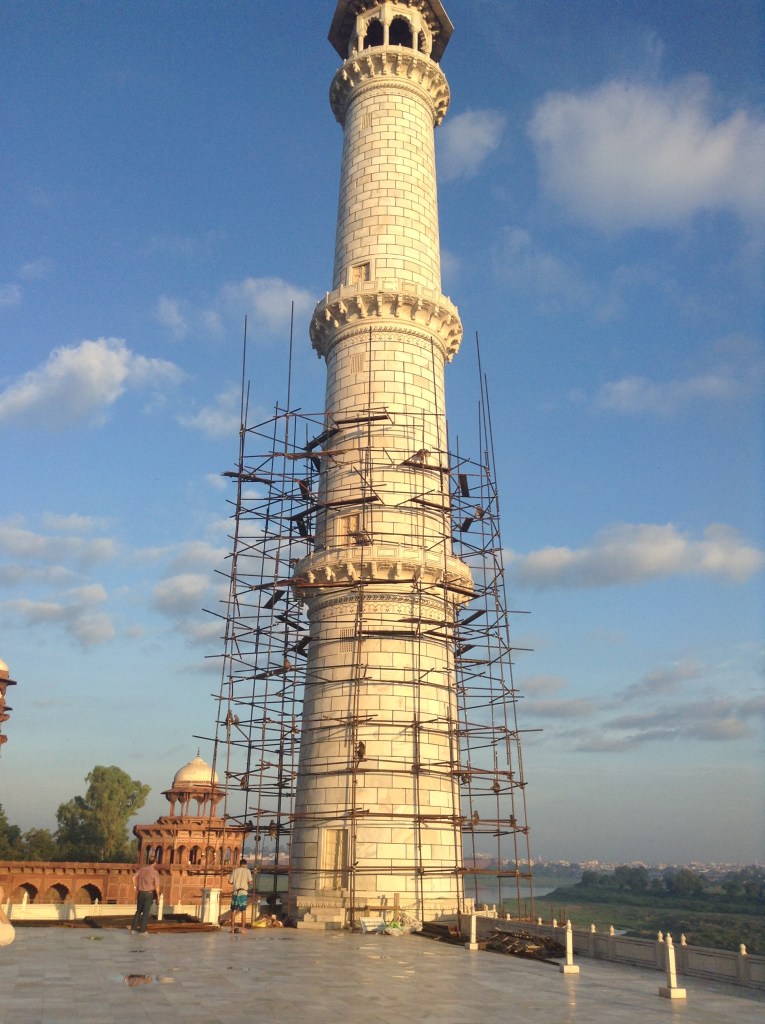
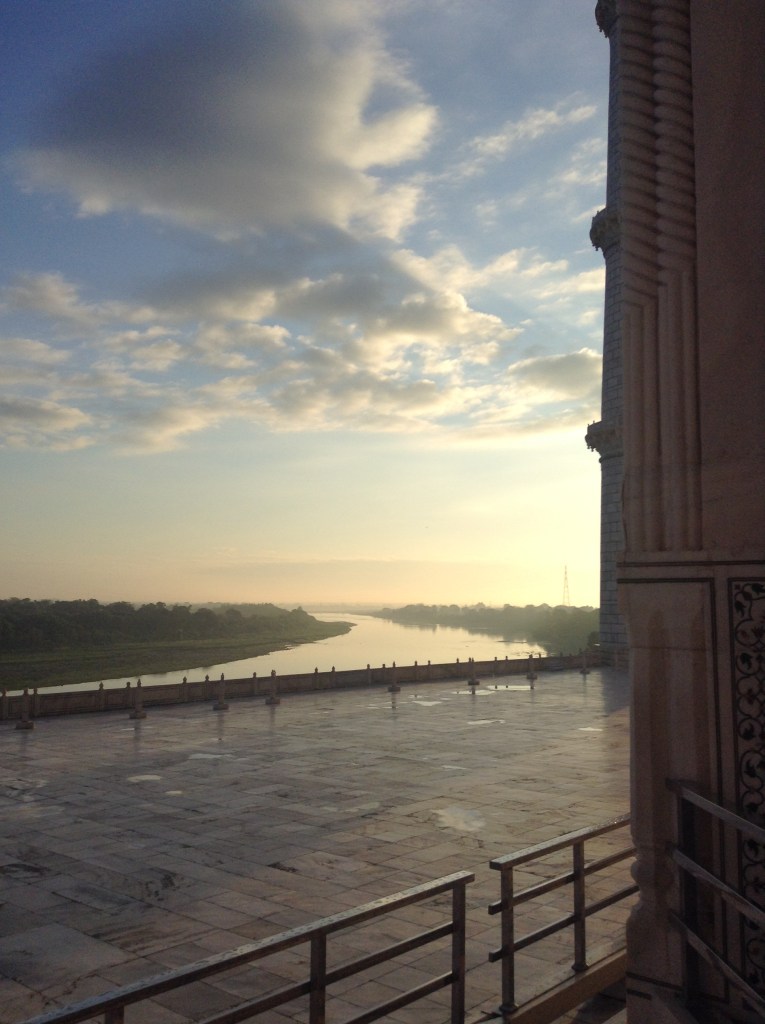
Just sitting there, in that moment, made me realise how lucky I was to experience this at such a young age. This monumental, architectural feat that is so old yet no less incredible, felt surreal to be sitting on at daybreak on an August morning.
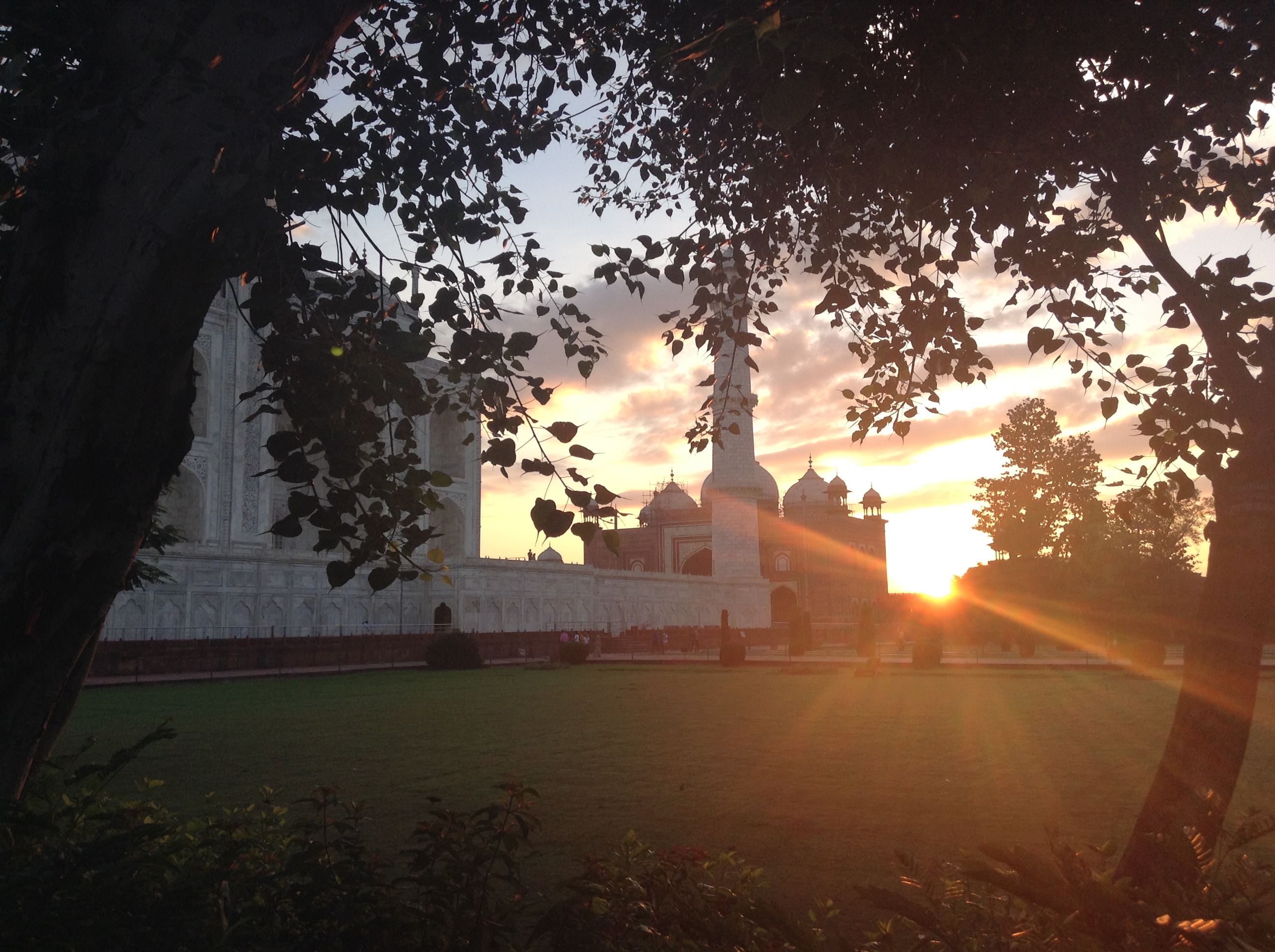
The rest of the day in Agra was spent witnessing the other main attraction of the inner city; The Agra Fort. Home of the emperors of India before Delhi became India’s new capital and which more closely resembles a walled city rather than a ‘fort’, the Agra Fort was also home to the luxurious prison that kept the Taj’s creator until his death once he was deposed after the structures’ completion.
The impressive red sandstone walls and inner palaces and gardens were incredible to walk through, with their grandeur, height, intricate carvings and details, and the fact that you could see the Taj Mahal from the parapet across the vast Yamuna River to the south-west.
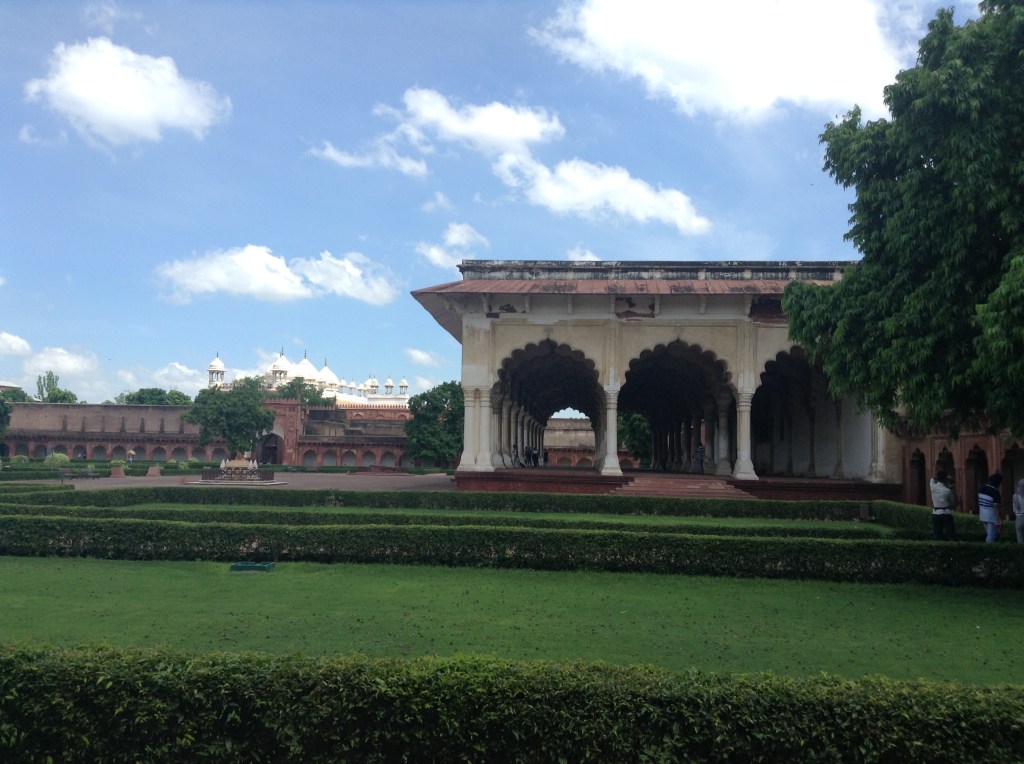
Once the day had ended however, it was time to seek out newer experiences after seeing so much of the past; which was how I happened upon Sheroes Cafe.
Sheroes, or ‘she-heroes’, was created as a charity safe-space for women who are survivors of acid attacks. These attacks often lead to facial deformities and injuries that cripple women for life, however, Sheroes is a place these women can find happiness and work again after being ostracised from their families or even from society itself.
On entering the colourful cafe, which had been restored recently with new bookshelves and tables, it was clear this was a unique hub of activism, creativity and a new lease of life to those who need it most. With it’s racks of t-shirts, brightly coloured walls filled with art and pictures of the women who had made this ‘hangout’ as welcoming as it is inspiring. The shelves were filled with books of all sorts from british classics to manuals on how to craft, while the upper levels sported beautiful hand-crafted earrings made from paper with cards to gift or small broaches, all hand made by the heroes themselves as a way to make money and explore their passions. This hub was an incredible place to discover and after a night of sandwiches (all from a menu with no prices because Sheroes believes in paying what you can), laughter and even dancing, as the women we’d met blasted local pop music from the radio and danced aimlessly for hours; it was truly an experience I will never forget.
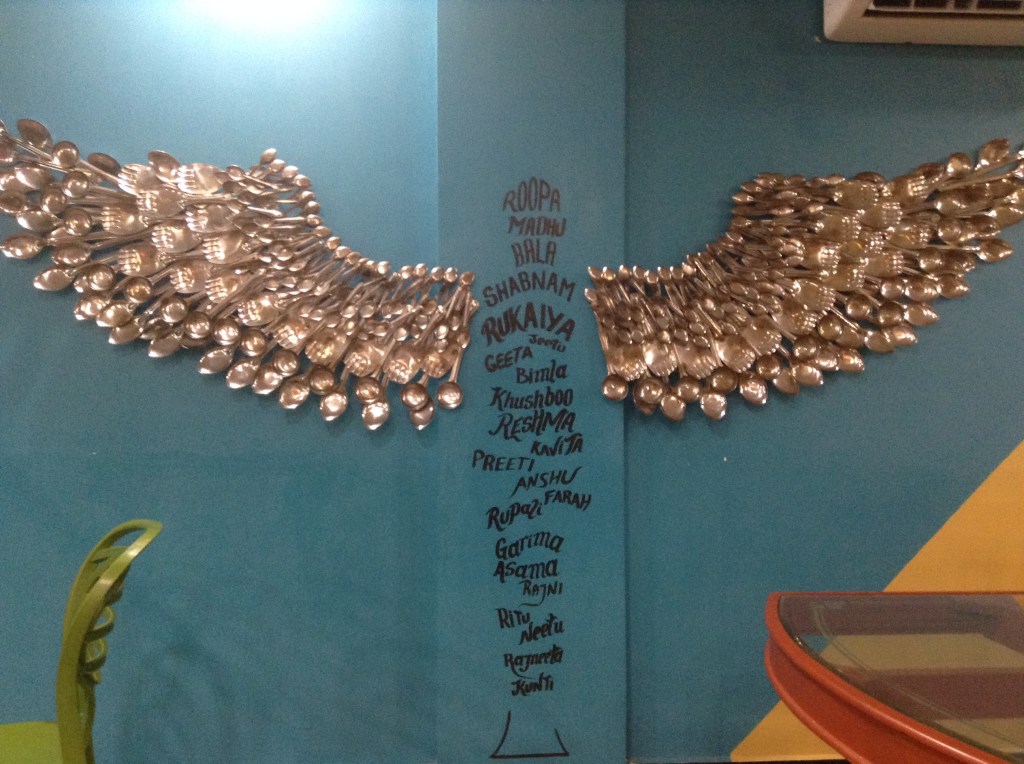
The positivity and inspiring courage of these women who have been so brutally attacked, have not only survived but thrived in a place created by them, for them so they can feel safe and earn a living in spite of a society that chooses to shame them as if they are responsible for their attacks. It is a true testament to the strength women can summon when they work together against injustice.
This cafe was possibly the best part of Agra (a very close challenge to the Taj Mahal) because it was a wonderful thing these women had created, and it is the creativity and welcoming attitude of the people here that makes Agra well wortha visit. It’s beauty, diversity, inspiring people and architectural wonders make it unlike any place I’ve visited in India.
And visiting one of the seven wonders of the world is pretty cool too.
 For Wanderers and Wonderers