
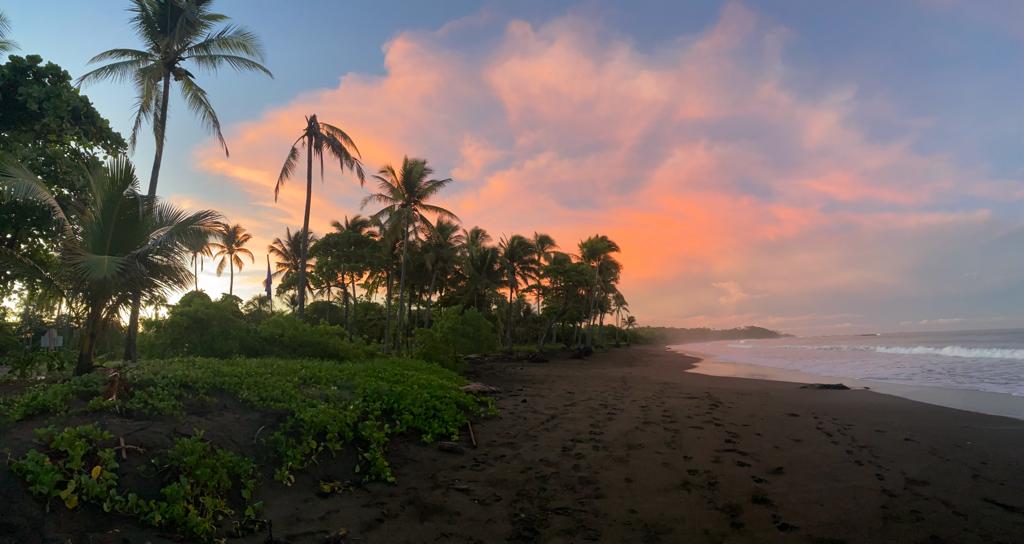
“I felt my lungs inflate with the onrush of scenery—air, mountains, trees, people. I thought, “This is what it is to be happy.”
– Sylvia Plath
Visiting a new continent entirely on my own is not how I thought I’d start my summer. I also didn’t think that I’d be shovelling sand on a beach and seeing an Olive Ridley turtle with my own eyes, but here we are.
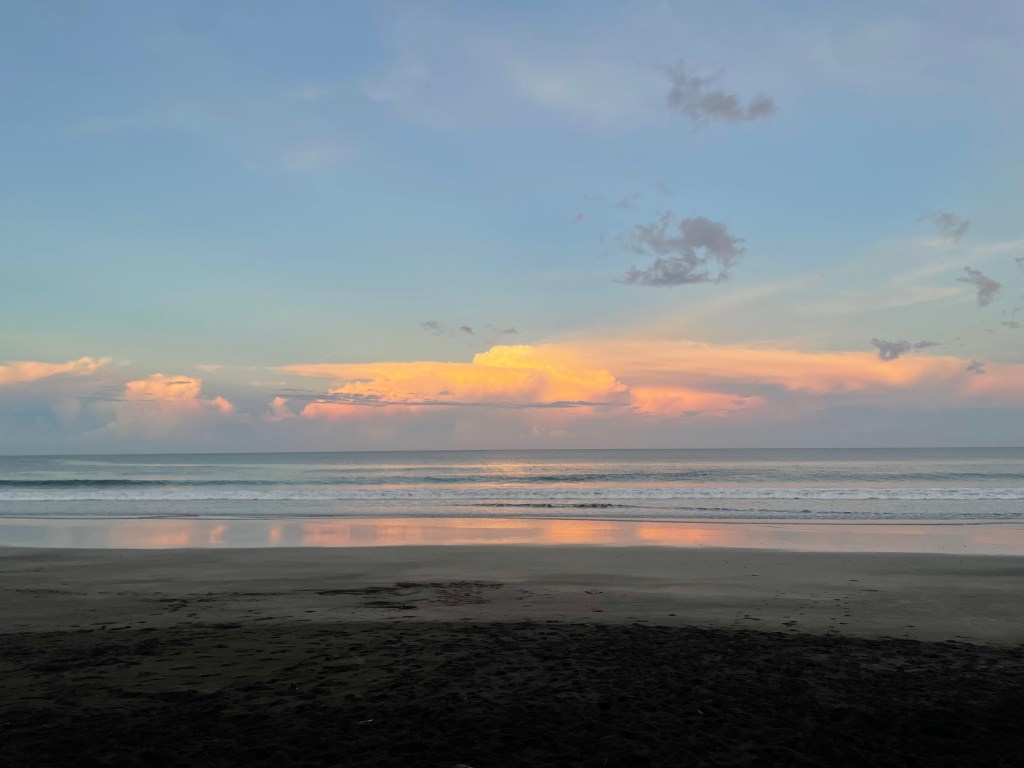
Junquillal, Costa Rica.
When I took my first step off the bus after a fresh bout of rain that left the dark asphalt steaming, I did not expect such a small village to emerge from the greenery on the roadside. There were several houses, some wooden, some concrete that lay directly by the roadside. Sounds from a small building site down the road pierced the humid air as I watched the bus pull away and I was left with the short walk to the project house I would be staying in for the remainder of my three weeks here.
It had been a fairly last-minute idea to go to Costa Rica. After endless scrolling online and a few dodgy websites later, I stumbled upon an international volunteer website, IVHQ, that hosted trips all over the world. More specifically, in South America. I had done a fair bit of reading about Costa Rica before and had seen how naturally beautiful it presented itself online. What I had not expected was how true that presentation turned out to be. Then, after a period of deliberation and my family questioning, if I was still sane to be going alone, I booked the trip and flights and started packing my insect spray.
The 2 flights and 12 hours it took to arrive in San Jose were interesting, to say the least. This was the longest I had ever flown alone so I was a little nervous, however, on arrival I was greeted by a man waving a flag with a smiley face on it and everything seemed to be working out.
On my third day in Costa Rica, after my orientation, location briefing and a lovely breakfast from my host mother, I was on my way north on the bus with a group of strangers I had just met at 5 am. We were all going to the same place, of course, and most of us were travelling solo, so I felt less daunted being in a strange country on a new continent surrounded by people who spoke another language. On the ride, I got to know my fellow travellers as I learned their countries of origin and what stages of life had led them here on a bus headed to Guanacaste. Then, after a brief stop in a service station that offered the entertainment of watching turkeys and various chickens run around the yard, we changed buses. The rain hammered down on the roof while we manoeuvred along potholed roads and overhanging palms rained down droplets through the open windows. I loved every second.
So, now staggering slightly under my heavy backpack, I stood and gazed up at the sloping roof and patterned tablecloths of the Verdiazul project house, while the howler monkeys chattered above. There was an old red truck parked in the driveway beside the house and a few other volunteers greeted us on arrival with friendly faces and questions about where we came from. It was beautiful.
Valerie, the resident biologist and co-founder of Veridazul came to greet us and introduced us to our duties as volunteers. Volunteers to help in the conservation of Turtles.
Yes, turtles!
I couldn’t quite believe I was living this dream of a job I had wanted to be a part of for so long.
From there, the days went slowly, which I relished. I never wanted to leave.
A typical day saw us getting up with the morning wake-up call of the howler monkeys and stray dogs that lived on our road before we blearily got dressed and headed over to the project house for a breakfast of fresh fruit, porridge and occasionally pancakes. The sun was usually blazing by this time though I knew by the afternoon it would be overcast before the inevitable monsoon-level downpour later and lightning that cracked across the sky in the darker hours. I never minded, though, since it always stayed consistent.
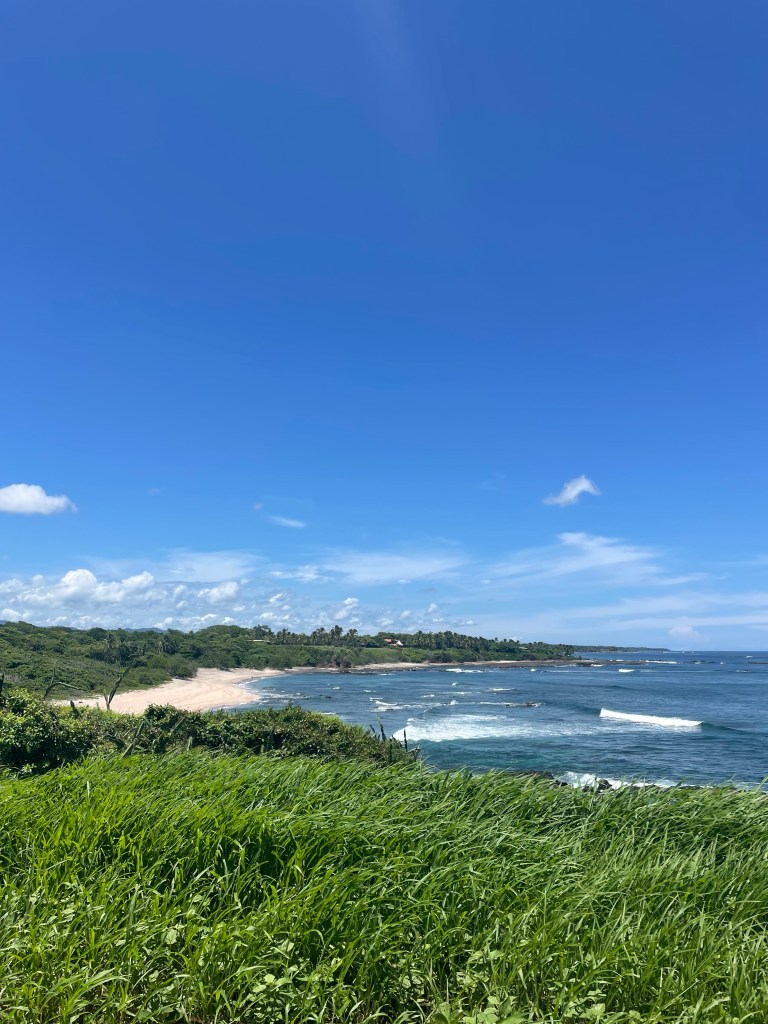
After breakfast, most of us would either head down to Playa Blanca – a beach that lay a short walk away, famous for its white sand opposing most other beaches that possessed black volcanic sand – or stay and read or nap in hammocks in the shade of the project house. When lunchtime swung around, we would eat the delicious food prepared for us by local cooks and then head to our tasks for the day. Most often this would consist of cleaning out and maintaining the Hatchery – a fenced area of the beach where turtle eggs would be protected from predators and poachers, thus helping them to gestate long enough to become baby turtles. We would spend a few hours each afternoon hauling buckets of sand out of the empty nests to replace it with fresh sand from the beach while sometimes talking to tourists and visitors about the project and how the Hatchery would give the baby turtles a better chance of surviving. This was often my favourite part as I felt like I was a part of something bigger. Something monumental that was helping the survival of a fragile species but also helping educate people on the lives of turtles and their breeding habits. Sometimes we would also conduct beach clean-ups to remove any possible obstacles for turtles when they did come to lay eggs. Then we sorted the rubbish into recycling piles since another key part of Junquillal is that the locals care about the environment. Valerie would often remind us of how differently the community felt towards the turtles before the project started and how many now cared for the cause of protecting the turtles and their environment.
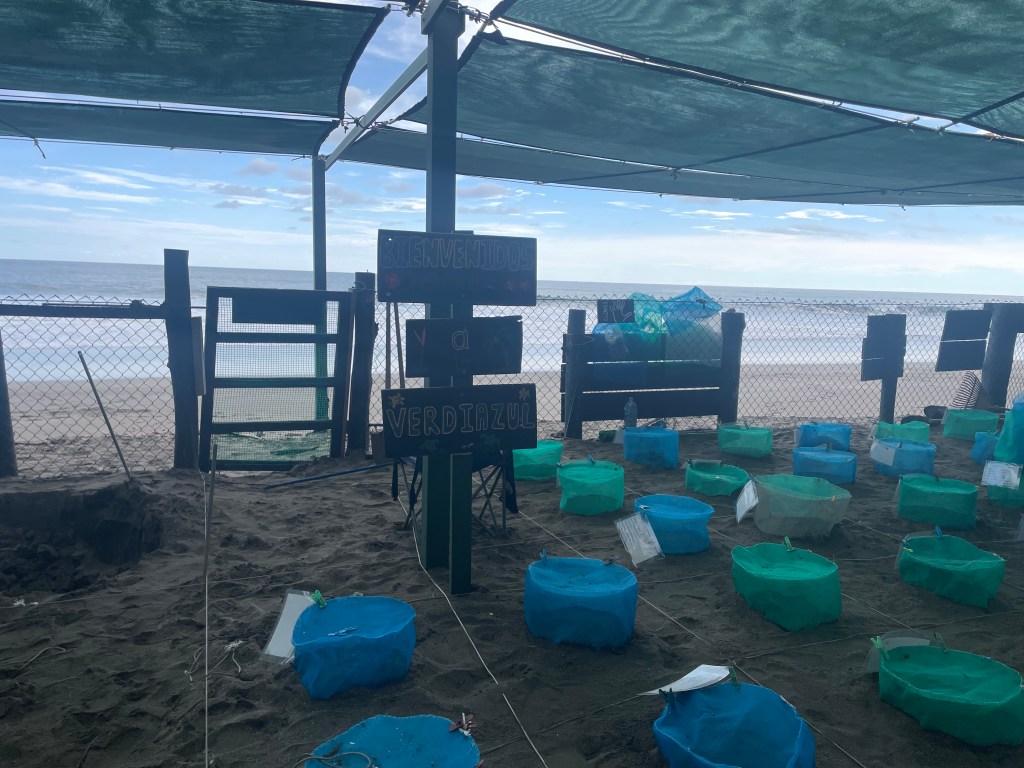
On other days, we would spend time selling merchandise to visitors to help keep the project funded and would help host school groups who would come to learn about the turtles. We would build team activities, make sand formations that would mirror a turtle moving up the beach and then dig fake nests to simulate the process of turtles laying eggs and how to find the nests afterwards.
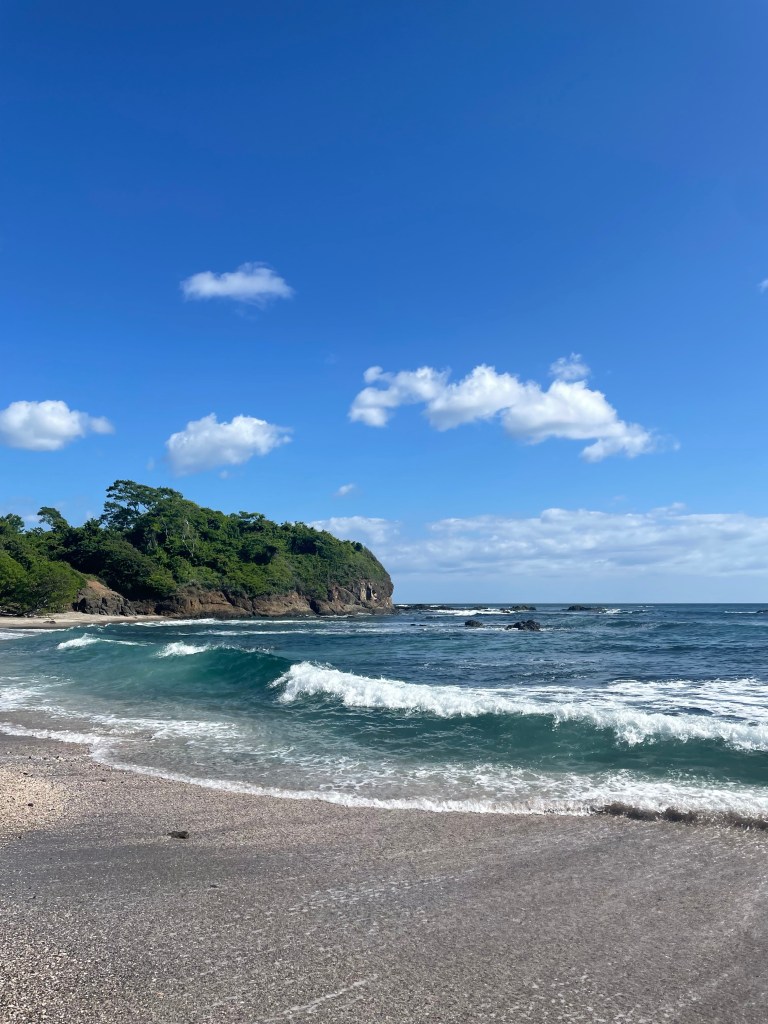
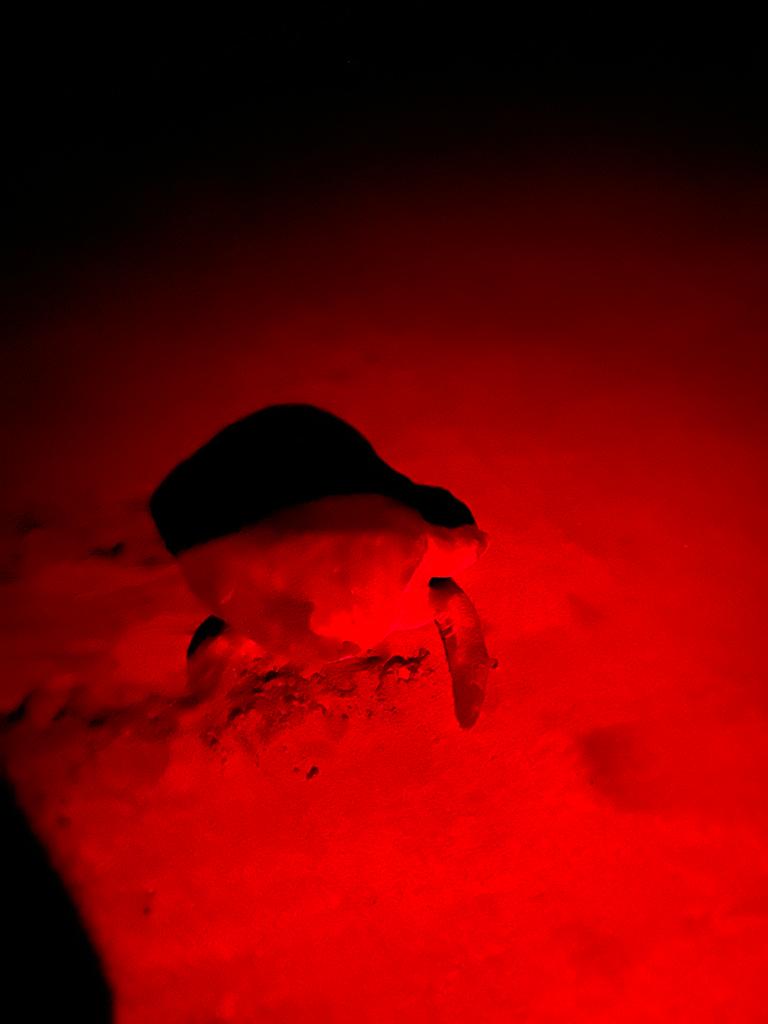
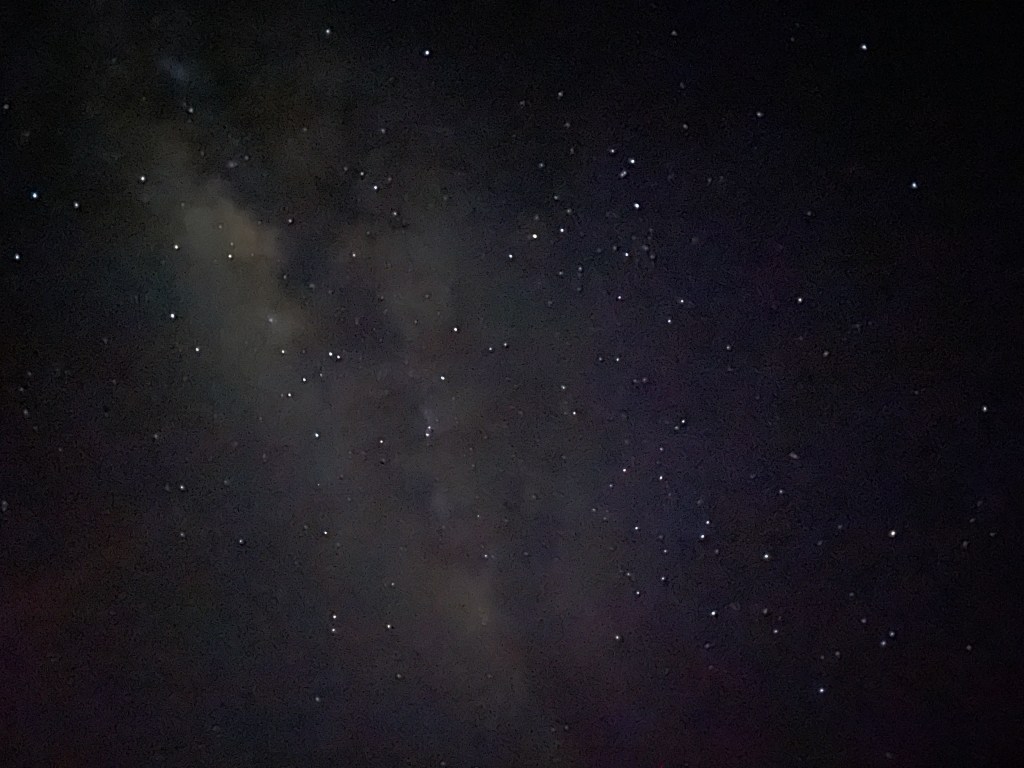
Not long after this activity, on a night patrol I had done with two of my housemates and one of the local project members, we began as was routine, to walk the length of Playa Junquillal (the beach on which the Hatchery stood). Most nights we would have patrol shifts for 3-4 hours in which we would walk up and down the beach to search for turtles’ impressions in the sand by moonlight in the hope of finding a nest we could move and place in our Hatchery, out of the way of possible predators or poachers. I didn’t mind walking in the darkness though. Walking underneath the Milky Way was better than any need I felt to see where I was going. On one such night, I heard a shout from ahead but couldn’t see much since we weren’t allowed torches with white light as it could damage the turtle’s eyes. By moonlight, I glimpsed the red light from our local leader bouncing off the shell of a full-sized turtle.
In a second, I started running through the sand and stopped short to watch as a large female Olive Ridley turtle finished digging the hole for her nest, laid her eggs, covered it up and speedily began her journey back to the ocean. I had no words. I was so overcome I nearly cried then and there because I had never seen a wild turtle with my own eyes. Let alone a full-sized one on a volcanic beach at 4 am on the Pacific coast of northwestern Costa Rica. Her rigid shell was full of patterns under the dim red light while her huge front fins dug into the sand, propelling her back towards the ocean. It was indescribable.
My fellow volunteers and I then slowly walked beside the turtle as she headed back into the waves. Within minutes she was gone. The idea that turtles are slow could not be more wrong. The whole exchange had taken no more than 5 minutes.
Then came the task of finding the nest. First, we had to use a stick to pierce the sand and find how deep the nest was before getting on our hands and knees and digging a hole deep enough to find where the eggs lay buried. My housemate found the first golf ball-sized egg and held it aloft in the torchlight as though she had just discovered the rarest of diamonds. From then on we took turns, with gloves on, to scoop the eggs out of the natural nest and into a bag which we would take back to the Hatchery to re-bury. I did not expect the eggs’ shells to have a soft consistency. They were somewhat squishy and therefore not easily breakable so it took little effort to scoop them into the bag. Then, once there were no more eggs to find and I had gotten over the reality of holding several turtle eggs in my hand, we headed back to the Hatchery.
I will never forget the pride I felt when we wrote the label for that particular nest and saw my name among those who had found it beside the number 89.
89 eggs. It was better than any award I had ever received.
The next morning, all I could hope for was a repeat of that feeling. The feeling as though I was dreaming. And I didn’t have to wait too long before it came again.
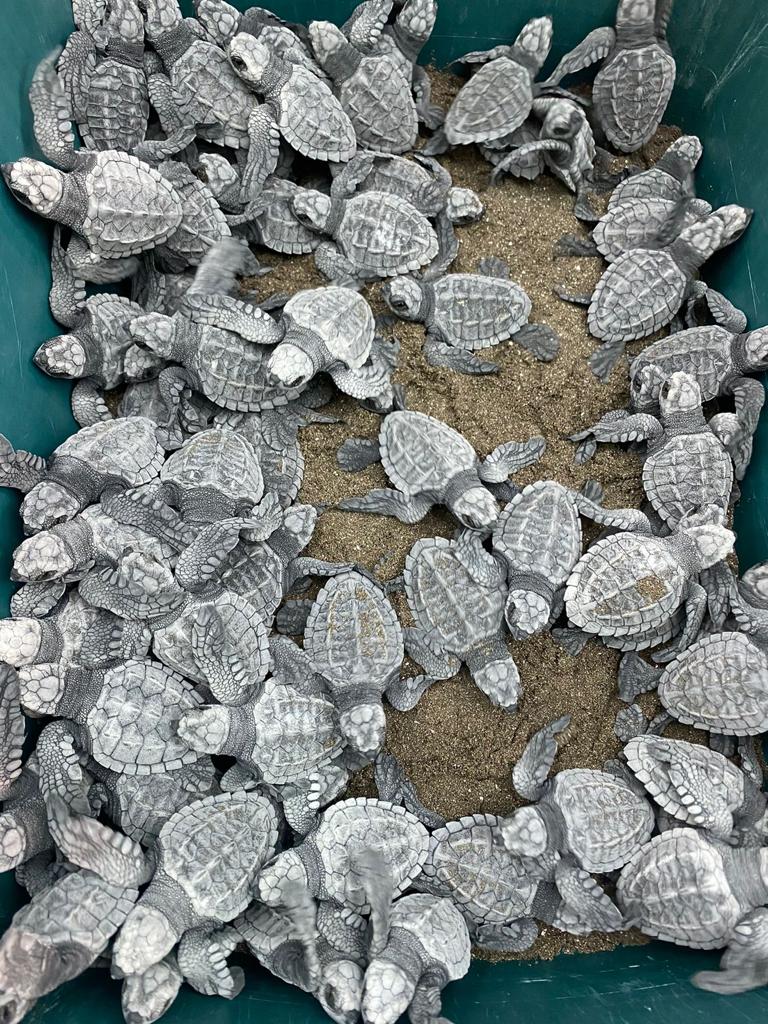
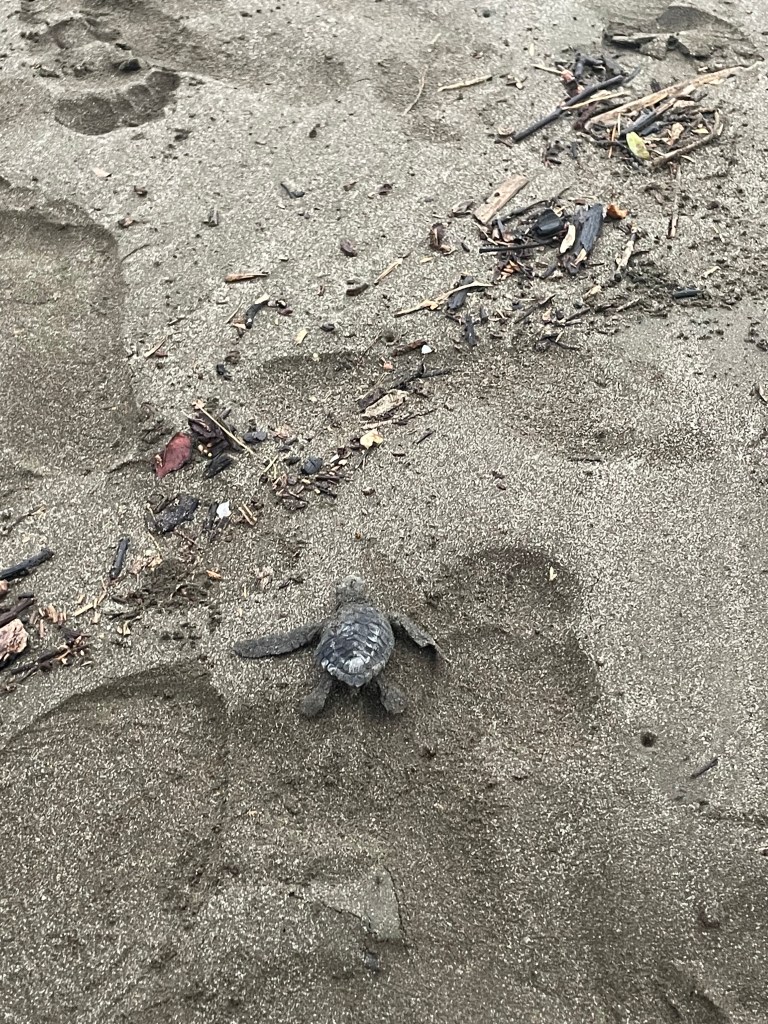
Not long into my second week, we released 95 baby Olive Ridley turtles along the coastline of Playa Junquillal. The experience of seeing 95 small turtles shuffle their way towards the ocean will remain burned into my mind forever. Their small bodies shifted to and fro as they struggled in and out of footprints and over driftwood to be swept away into the ocean current. And something about the idea that I helped them get there. There is no feeling like it.
Between these night shifts and days spent shovelling sand, there was quite a bit of free time. Almost too many moments, so I’ll summarise.
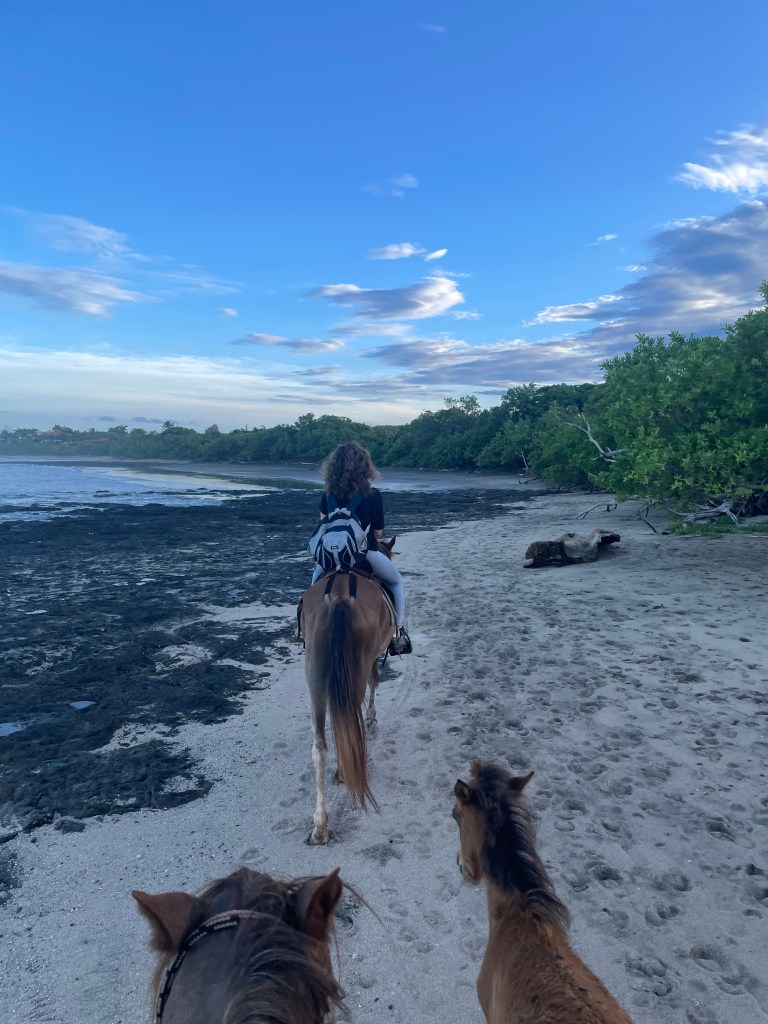
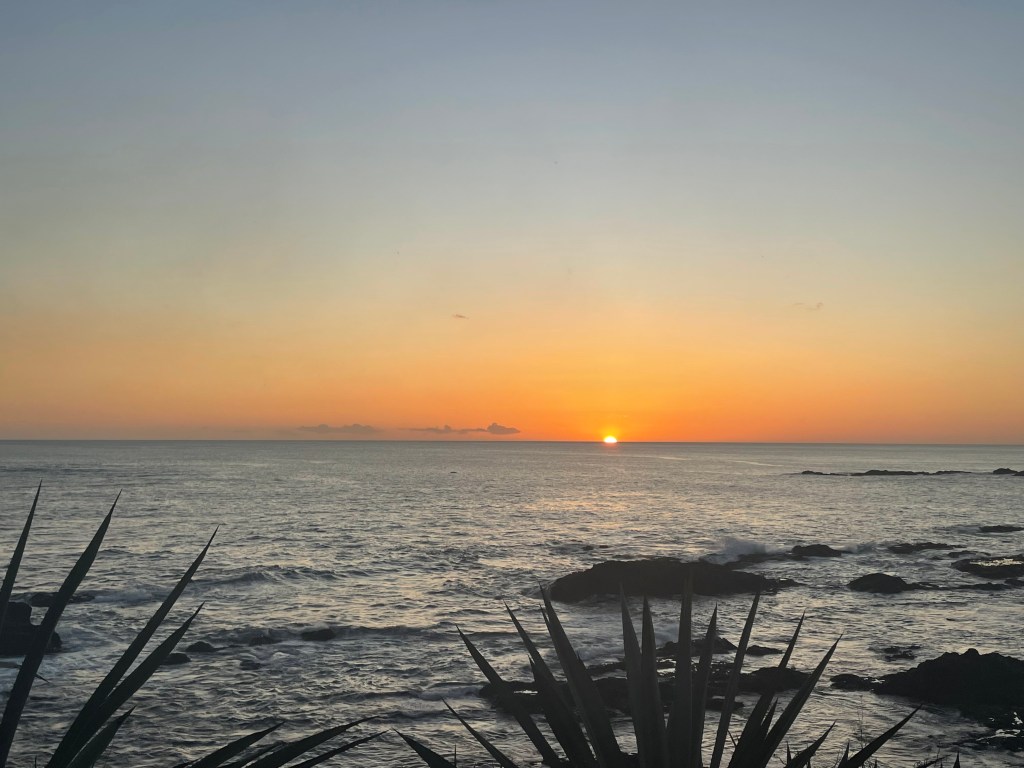
Towards the end of my second week, some of my housemates and other volunteers woke up at 4 am to go for a sunrise horse ride along the beach. We rode past vast black cliffs and down steep paths to where the ocean waves washed over the horses hooves. The foals came along too. They jumped and galloped as we did and I caught a glimpse of how incredible it must be to feel free like this. Freely galloping down a flat sandy beach with the sun rising over the morning tide and early surfers arriving to catch their first waves.
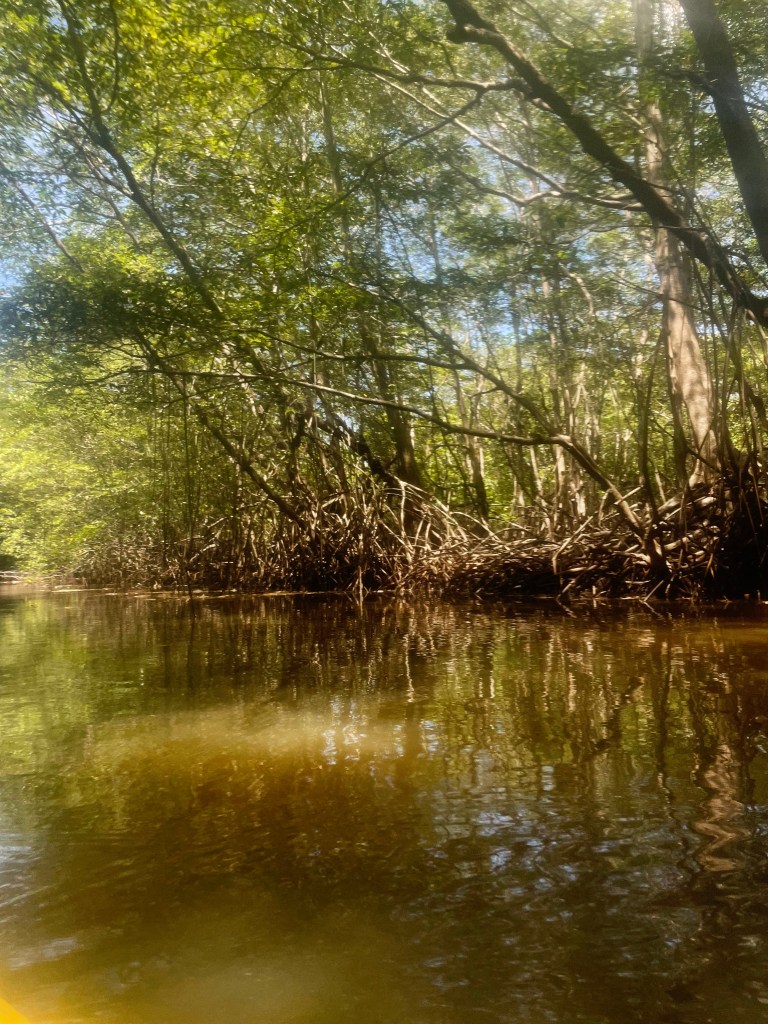
A few days earlier, I took part in a kayak tour of a mangrove swamp in which we spotted all sorts of bird species. Everywhere exposed roots rose in great twisting structures out of the murky water and trees brushed the heavens while many branches hung low over the river. Some you could even brush to the side like a curtain. The air was thick but surprisingly silent and through the shaded water, we encountered a black hawk, woodpeckers, kingfishers and even a baby raccoon. It was so peaceful just gliding along, the only disturbance being the distant sound of clams snapping closed.
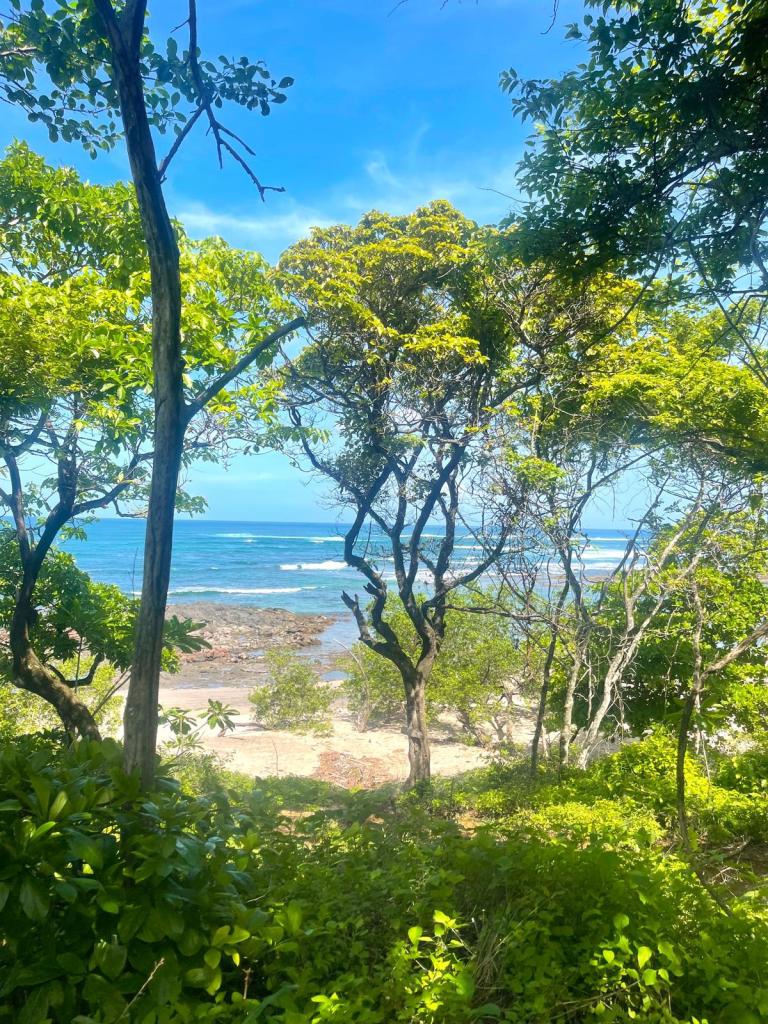
During my last two days, as I walked down the road from the project house to the beach, lush palms, giant trees and bright, almost neon, tufts of green grass accompanying me on my way, I felt a deep sense of sadness at leaving. To be leaving the glowing fireflies, turtles, green parakeets and living in sandals 24/7. Sure, there was the constant sand in every piece of clothing I owned, the howler monkeys beginning their chorus at 5 am no matter how little sleep I had gotten, the fear of being struck by lightning on our night patrols and the sweatiness of existing in 95% humidity. But there was an endless collection of things, feelings and moments that outweighed it all.
Since I was 16, I have kept a list of the greatest moments of my life. Moments when I say to myself, “There is nowhere in the world I would rather be than right here, in this moment, surrounded by this landscape and this feeling”.
There are only 10 moments on this list, and 4 of them are from visiting Costa Rica.
If that doesn’t tell you what you need to know, I don’t know what does.
And I’ll be going back as soon as I can.
Verdiazul Website – https://verdiazul.org
IVHQ Website – https://www.volunteerhq.org
 For Wanderers and Wonderers