
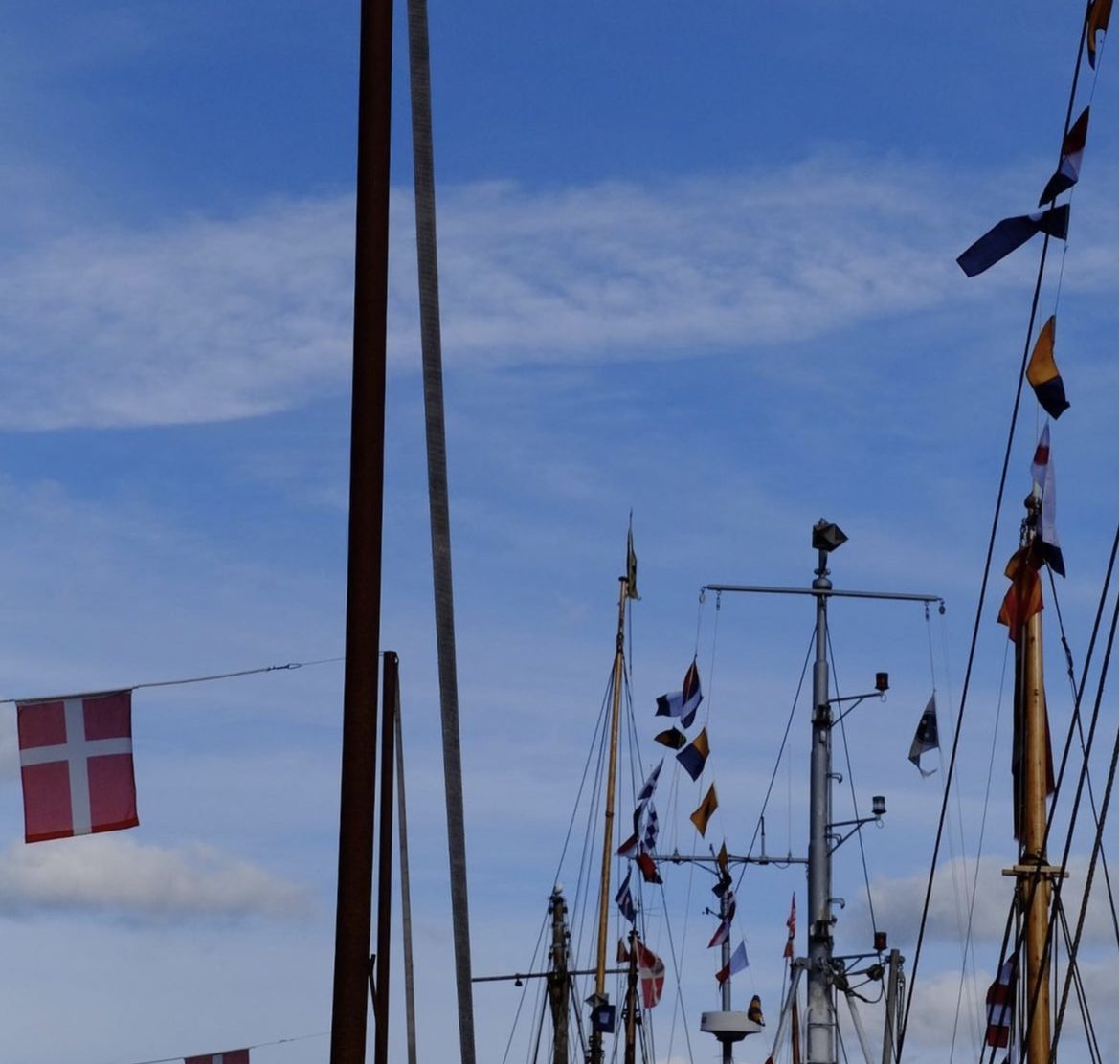
“we travel, some of us forever, to seek other places, other lives, other souls.”
– anais nin
I think over the past few years of my life I’ve changed a lot. From the rather long hiatus I took from writing this blog to starting University, to moving to a whole new place and trying desperately to establish new lasting relationships; I’ve learned that it’s hard to find things that last. Things that you never want to forget.
After the pandemic semi-ended and I had dealt with so many failed plans and disappointments regarding international travel I knew that something needed to be done. Something drastic. So I decided that to cure or at least distract myself from my declining mental health, I would decide to travel alone for a month and Interrail (travel by train) across Europe and Scandinavia in July of 2022.
Yeah, definitely drastic considering I only planned where I was going a week before I left.
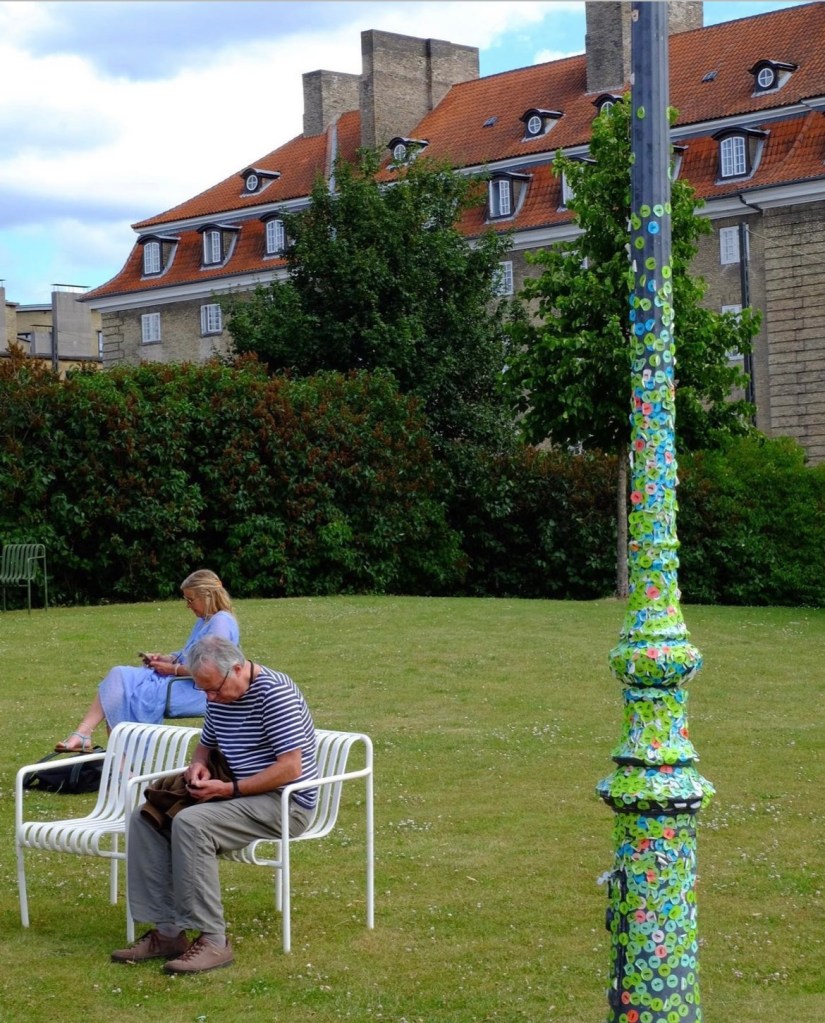
But the feeling of belonging began to return. I began to feel more like myself again which hadn’t happened in a long time. I began to see the beauty in the small things again. Strangers hugging in an airport; someone asleep under a tree in a sunny park; country farmhouses rushing past from cool train windows; rusted street signs; the way lampposts are shaped differently depending on which place you visit; a flower bush so vibrant it hurts your eyes. I began to feel that way again as I had the privilege to embark on this journey.
So here I was. Copenhagen. A city I had dreamed of visiting ever since my mum had told me stories of the architecture and the Danish way of life and Hygge. I was finally here on my third stop in my month-long Interrail trip.
With my monstrously heavy rucksack in tow, stepping off the train I had last boarded five hours ago in Hamburg, the towering wooden ceiling of the antique Central station with its chandeliers reminded me more of a cathedral than a station. The air outside was warm and filled with the smells of cars and hot dogs from the steaming stands near bike racks filled to the brim. This is the city of cyclists after all. Cycle lanes were bigger than most roads.
This part of town housed numerous buildings made of brick that stood tall next to the main road and the countless bridges leading to many of Copenhagen’s man-made islands. Within this stood a few glass skyscrapers and stone-clad buildings with large-paned windows as I wandered towards the river and my hostel for the next 5 days.
The Next House Hostel reminded me more of a boutique hotel than a cheap hostel with its highly modern architecture, indoor mini football pitch, cinema, gym and lounge area with bar and restaurant adjoining. The whole experience was surprising, to say the least considering some of the less reputable hostels I’d stayed in so far. The rooms were small, yes, but fitted with pod-like beds and a very nice private bathroom.
From the onset, this city is a great mish-mash of architectural styles that are so brilliant it is a requirement to visit it all to get the full experience. These styles are also not confined to one block but can vary from building to building; baroque-style stone apartments sit beside modern slanted glass office blocks. To find just one type you like isn’t possible because they all work so well together. If I had to choose though I would say the area near the harbour, Islands Brugge near the University of Copenhagen. Its stunning maroon brick blocks of flats covered in hanging plants and lush climbing vines give it an unspoken magic that is only exacerbated by the florist shops spilling out onto the street and small pottery studios hidden in sunken doorways. The whole block is so vibrant and full of life.
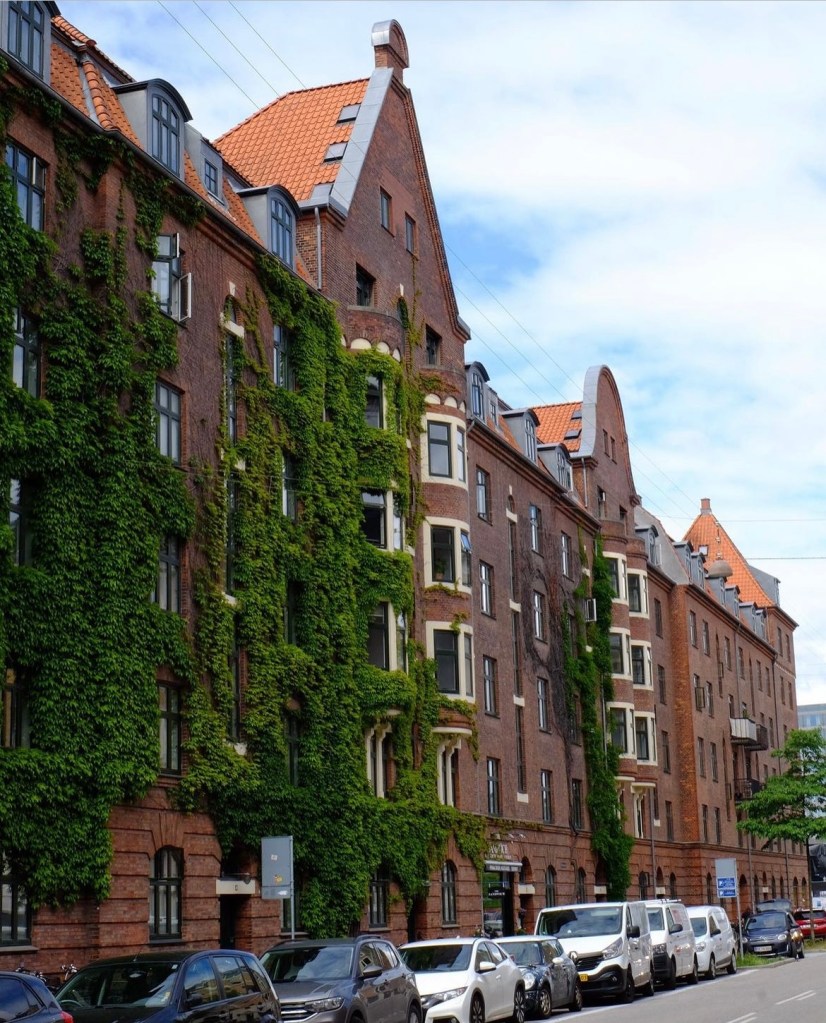
On my first morning, after a much-needed night’s sleep, I wandered over the bridge to Islands Brugge and found a small brunch place that served tapas-style breakfast with the best scrambled eggs I had ever tried. Wulff and Konstali was truly the loveliest breakfast and brunch restaurant so much so that I ended up going three more times during my five-day stay in Copenhagen. As I sat on a quaint pavement table, with my camera in hand, I felt this sense of peace. The area just seemed to emanate this brightness in the colours and clean-cut lines of everything but with the added wild element of the climbing vines and small roadside trees giving the area a warm and welcoming character. The perfect mix of old and new.
After a leisurely stroll across several more bridges and past more multi-storey building blocks of glass, brick, stone and steel I found my first canal and followed it towards the Museum of War and the rust-orange houses that lined the waterfront. Onwards to one of Copenhagen’s main shopping streets and past the grand tall spire of parliament. The height of everything was quite a surprise considering it wasn’t skyscrapers that dominated this city but great baroque and Renaissance works that tower over many of the smaller glass boxes making up the more modern architecture.
Onwards past more tree-lined residential streets and some busy intersections towards the botanical gardens and suddenly you’re on a different planet entirely. Colourful flowerbeds surrounded by high hedges and low-hanging trees take you on an inter-continental journey of the world’s plant species until you emerge onto an open grassy verge overlooking a sparkling pond and a large white greenhouse. This houses thousands of plant and butterfly species. There were also numerous sculptures and bridges and I began to wonder if there was ever a moment I wouldn’t be suspended over water. Even roads and city blocks were built over the water in clever floating communities of dark wood and glass.
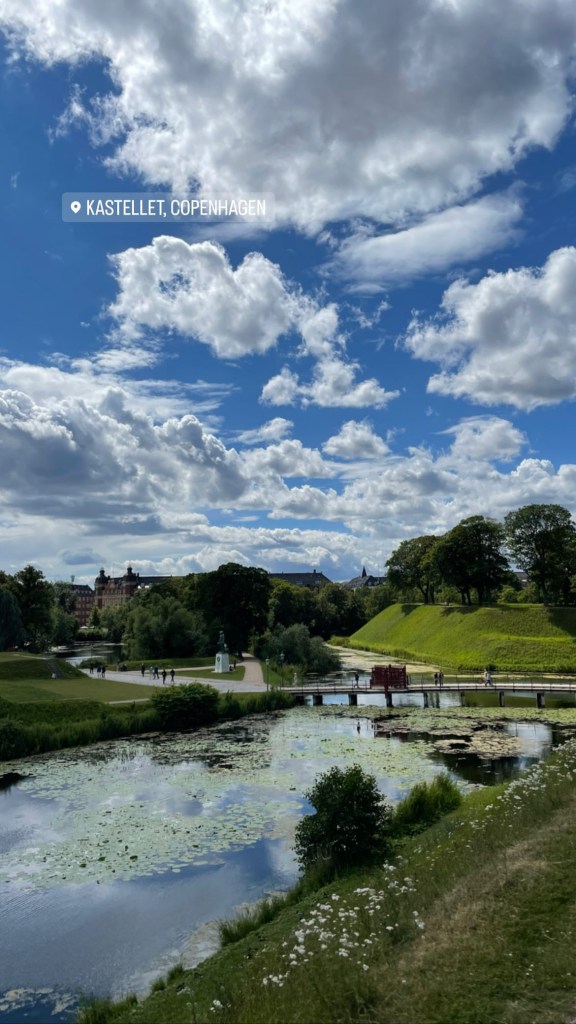
Eventually to the northeast, I wandered onto the site of the Kastellet. This castle and military compound is shaped like a five-pointed star and from above is exactly proportional, with water surrounding it on all sides bar a bridge connecting it to the city’s mainland area. It is an impressive feat of engineering with it still being a functioning military base and some remaining ramparts that used to encircle the city but are now only limited to Christianshavn. On one of the benches atop the ramparts, I eat lunch and enjoy the view of the seaplane terminal where bright red planes fly in and land having arrived from Aarhus or simply an aerial tour of the city from above. Of course, after visiting this incredible site, a quick visit to the Little Mermaid statue was necessary. Based on the 1837 fairy tale of the same name by Hans Christian Anderson, the small bronze statue depicting a mermaid becoming human has become an icon in its own right and attracts hundreds of visitors per year.
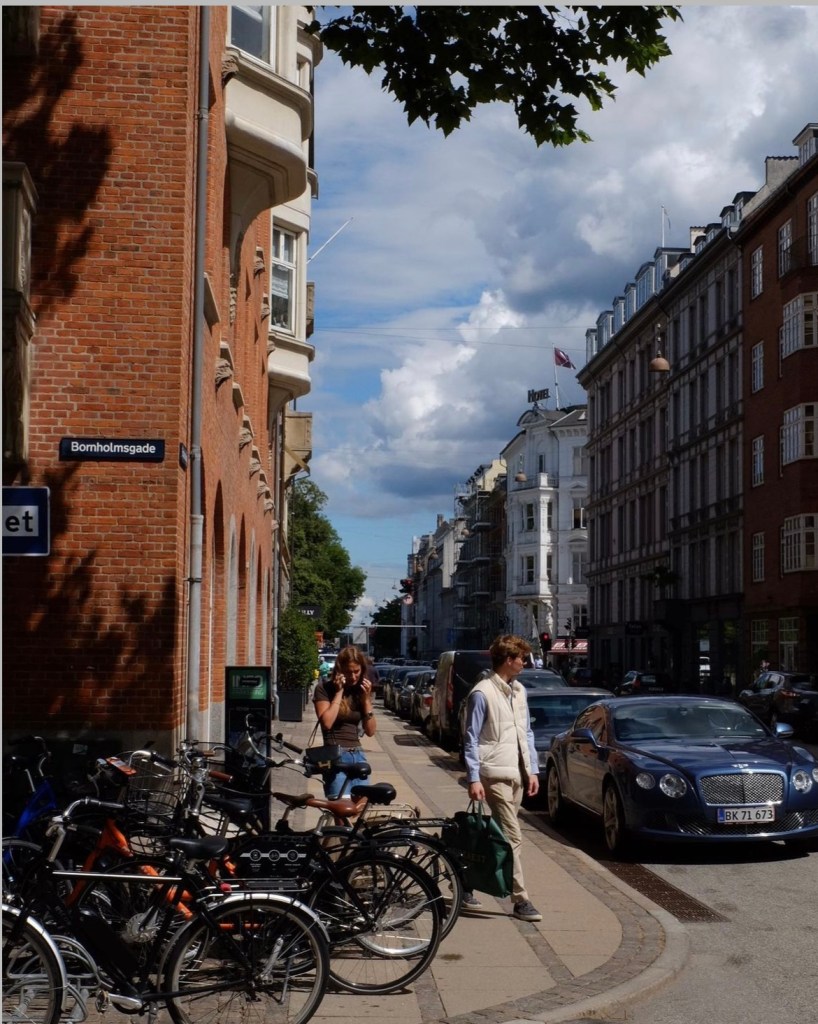
There really was nothing this city didn’t entertain and the best way to find it all was by bike. Admittedly on my first day, I walked everywhere, close to around 20km in total. However, by the next day, I had learned my lesson and hired a bike. The ease! The access! I had only dreamt of such bike infrastructure in the UK but Copenhagen was on a whole other level. There were separate traffic lights and car-sized lanes for bikes as well as whole parking garages just for bikes, so seeing the city from this easier mode of transport was truly what made my trip worthwhile. I would cycle across the same bridges I had walked over twice; three times but I didn’t care. I could now travel across this city as easily as driving but without the carbon footprint or paying for fuel. It was freedom of the purest kind.
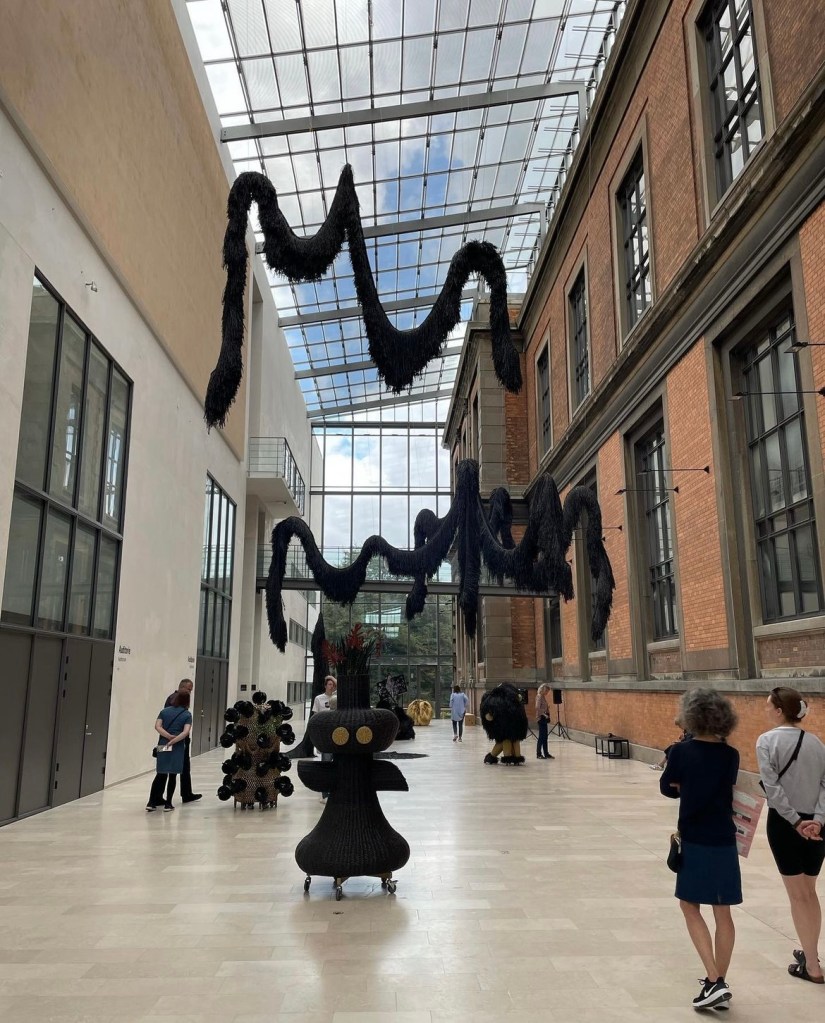
I cycled past bakeries, salons, restaurants and bookshops towards the Kastellet and finally reached the National Gallery. After locking my bike, I entered a vastly modern space with light wooden floors, white walls and glass ceilings from which hung various art pieces of wool and silk. I walked past exhibitions of historical art, tapestries six metres tall and surrealist sculptures of ceramic and metal. Then, outside again into the summer air. I found a park nearby in which to lie and read my book and eat grapes together with cheese from a local supermarket. Even the most basic supermarkets here sell fresh and delicious produce so that you’ll never be subject to stale bread or a bad pastry.
On my third day, I discovered why people from Copenhagen have such a high quality of life.
Lido’s. There were at least three in the vicinity of my hostel, so one morning I walked down early and jumped into the cool water despite it being June. There is nothing quite like it. Swimming in the river in the middle of a city for free and knowing you don’t have to worry about the waterways because they are kept so clean that you can swim in them. Of course, I did soon catch on why most people swimming only stayed for a short time; the jellyfish. Since it is seawater surrounding Copenhagen there is a high chance of jellyfish in the harbour areas, especially in summer, so I learned the hard way why several people were tasked with fishing them out of the lido and back into the open water. Though considering my innate fear of jellyfish there was something beautiful about the fact that we weren’t completely cut off from the wildlife in the harbour. At least that’s what my friend told me after I spoke to her about my ordeal.
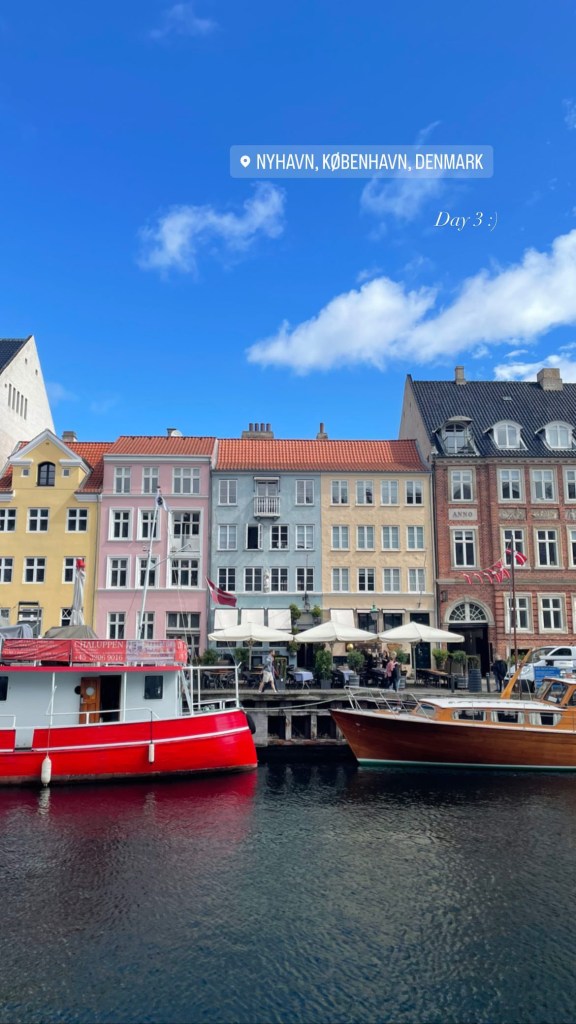
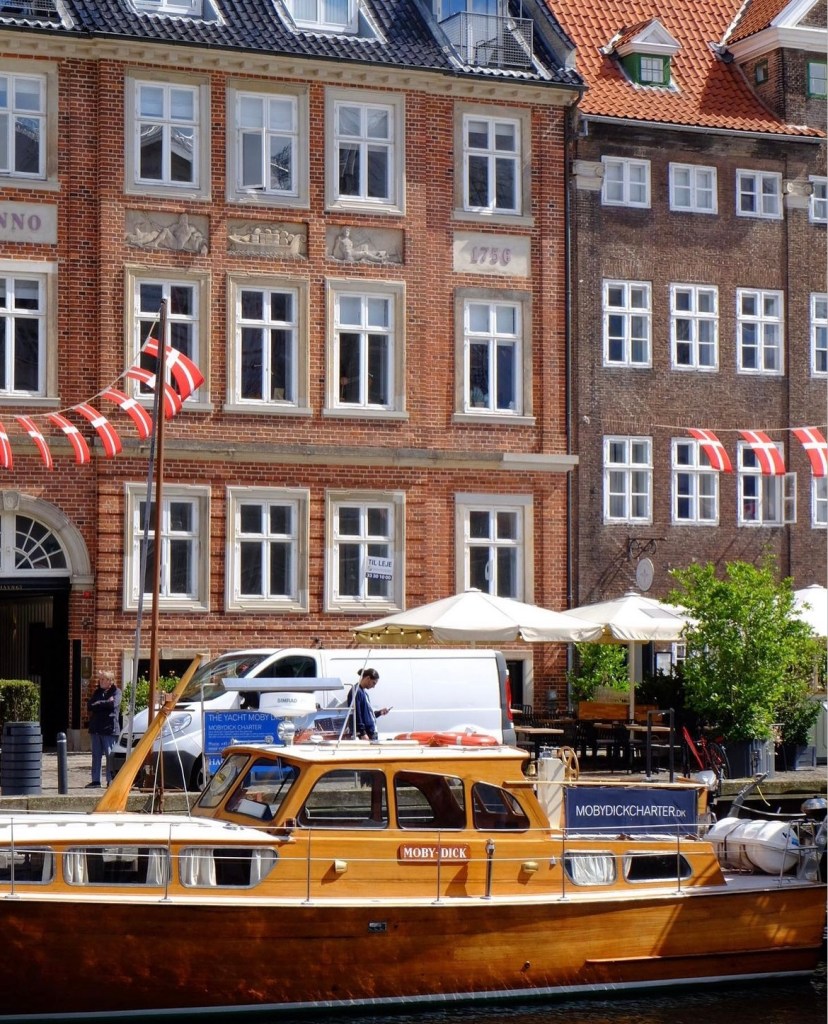
The next place I cycled to was Nyhavn which is arguably Copenhagen’s most famous canal street, purely because it encapsulates the essence of everything we might consider Danish; boats, canals, seafood and colourful houses. Although this isn’t exactly what made it so beautiful. All those things combined with the people enjoying a warm June evening sitting out on tables spilling onto the canal sides; and groups of families and friends enjoying an evening on their boats docked alongside the cobbled edges, were what truly gave this street its magic. I felt as though I had walked into a dream of what living a good life really meant. It is why that exact evening I came back to experience it at the golden hour. Despite the lack of space in the restaurants, it didn’t matter. I found myself a food stand, bought a French-danish-style hot dog and a glass of rosé from a nearby street bar and sat on the side of the canal, the flagstone as my picnic blanket and legs dangling over the edge. The evening sun was warm on my face and a Danish couple next to me sat chatting sharing a bottle of wine over a portion of chips, the melodic sing-song of the language floating into the air around them. On a wooden single-masted boat beside them sat a group of young adults sharing dinner and talking animatedly as small layers of Danish flag bunting fluttered above their heads. In the square behind me, someone plucked at the strings of a guitar as people sat and listened, eyes closed enjoying the music.
I remember writing in my diary that day: “I think I’ve found my favourite city in the whole world.”
 For Wanderers and Wonderers