Having your heart broken is a tremendous way to learn about the world.
– Dorothea
Santa Barbara 1979.
An old white car sits in a car park engulfed in flames while a mother and son look on from the window of a grocery store.
This kind of beginning of a film is rare. The rarest kind of intrigue that doesn’t require the usual conversation of – “Oh you just have to get into it a bit first before it picks up.” There’s none of that and that is why this film is classified as my third favourite film of all time. It’s witty, it’s beautiful, it’s heartbreaking and it evokes something real; that this could have been a real story even though it isn’t.
Dorothea and Jamie (Annette Bening and Lucas Jade Zumann) have this mother-and-son connection that is both envied and gladly not something I can relate to. They bicker and she worries about the length of his hair while he gets into stupid scrapes and wonders what it is like to love his older best friend. They live in an old colourful house filled with strangers and friends and falling down parts in constant repair, so it always resembles a building site in some area or another. It is also why I wish I could have grown up there.
The premise of the film speaks to parenthood and the everyday living of the late 1970s into the 80s, but more so it speaks to what it is like to have more than one role model and growing up surrounded by lots of different people. In the house there are more than just Dorothea and Jamie but also Abbie Porter (played by the one and only Greta Gerwig) and William (Billy Crudup) who serves as one of Jamie’s only male figures in the house. There is a beauty in the bohemian quality of living in this constantly changing house with various lodgers and guests such as the firefighters who helped put out Dorothea’s car, who she ends up inviting to dinner as a thank you. That is the kind of person she is and I love her for it.
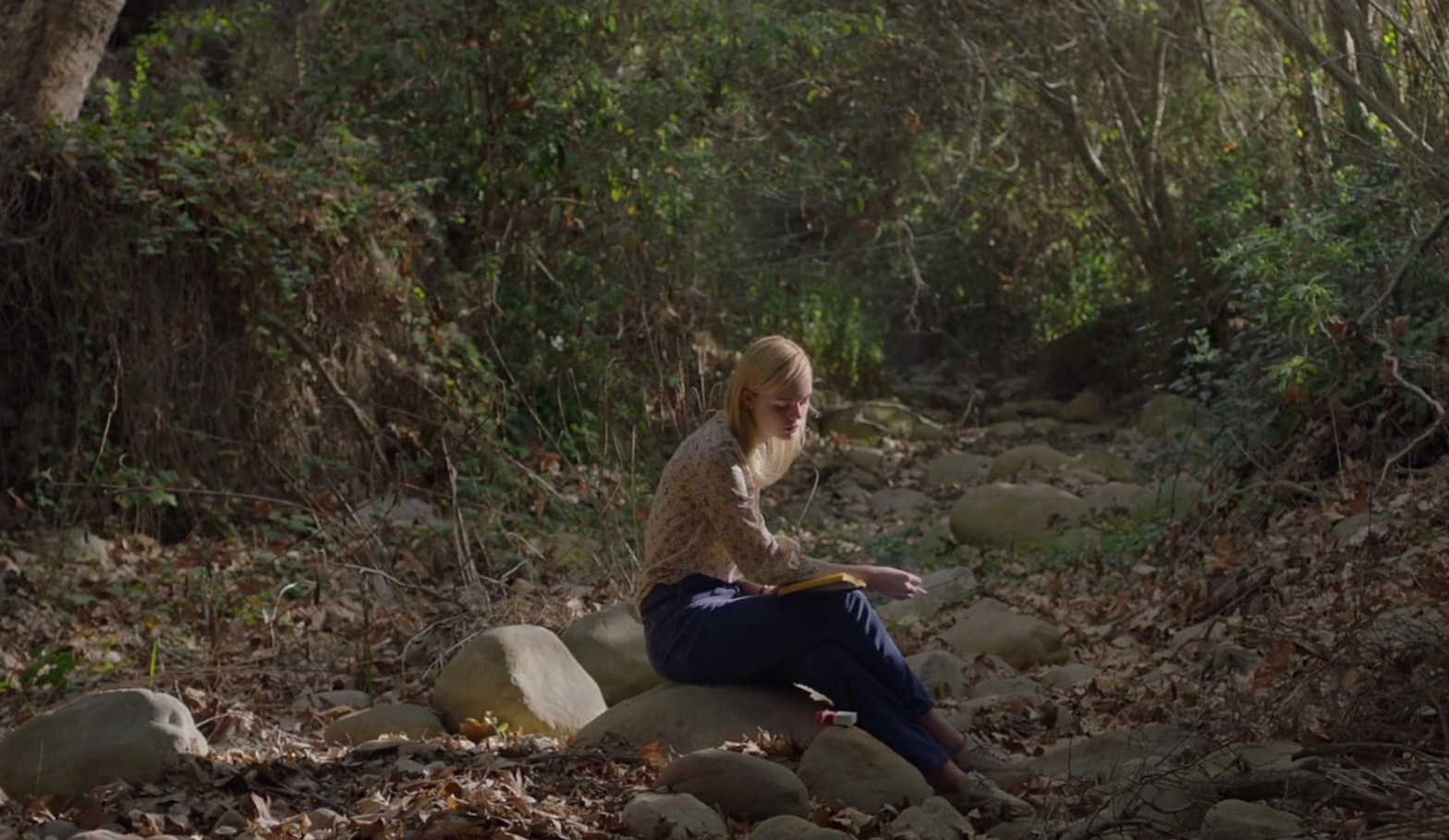
The cinematography deserves its moment as well because frankly, few come close to capturing the nostalgia and hazy lifestyle of 1970s Santa Barbara. All coastal living and long roads for skateboarding. The greens and blues of the ocean mix with the sandy buildings and crumbling remains in the forests nearby where Jamie and his best friend Julie (Elle Fanning) sit and talk about sex and what it means.
I love the boldness of this film. There is no cringing at a character bringing up something taboo because it’s something I wish I could do more often without that fear of being judged. Periods, patriarchy, issues with women’s health and the fear surrounding dancing without a care. It’s also discussions around sexual assault when you didn’t even know that’s what you’d call it yet, or making yourself pass out just because your friend found a fun way to wind yourself badly. There are so many ways this film speaks to the intrusive thoughts we have, but the ones that are justified and we all wish we could bring up at the dinner table. One of my favourite scenes, as a result, is when Abbie brings up the subject of periods at a dinner party and proceeds to make everyone say the word ‘menstruation’ because the fear around saying it aloud needs to be destigmatised.
The interest also lies in the reaction from Dorothea as she tells her to stop, showing how generational difference plays a part in this film and how the youth like to view themselves as radical when there are many things Dorothea has done that were radical in her generation. Being a single mother. Raising her son with the help of other women and feeling no need for a male father figure to help her. Asking William why he kissed her one evening in a bar and after his “I don’t know” response, telling him “I mean you don’t kiss a woman unless you know what you mean by it.”
This film is about coming-of-age but that doesn’t necessarily apply only to 15-year-old Jamie. There is so much growth achieved by all the characters. Abbie grapples with being diagnosed with cervical cancer and that her mother took prescribed pills that essentially gave it to her without her knowledge. Julie tries to stop sleeping in Jamie’s bed but can’t because it is her only safe place and hides the fact that most of the guys she’s slept with haven’t asked permission. William fixes cars in the front yard as well as fixes the house but can’t seem to fix the part of him that is lonely and turns to the only women nearby – Dorothea and Abbie – for comfort, which does little to help. Then finally, Dorothea struggles to find a way to connect with Jamie but also seems to place many of her preconceptions about men onto him. She understands that the world is changing around her and as a revolutionary in her generation, she tries to embrace it but ends up mostly reverting to what she knows. It is why she enlists the others to help her in raising Jamie.
Jamie is by far my favourite character though. He is 15 but he is worldly wise and unafraid of getting things wrong. He grows up surrounded by intelligent women and reads feminist literature before many had even heard of the intricacies of female pleasure or the downfalls of living under the patriarchy. He sees the women in this great house and their struggles and loves and hates and relates more to them than the only man in the house. He dances wildly with Abbie listening to punk rock and the Talking Heads at full volume. He sits and smokes cigarettes with Julie as she talks about her therapist mother and how fun it is to just be intimate with someone or no one at all. He notes down his mother’s stocks every morning over coffee, their cat sitting on her lap, and the routine remains no matter how many fights or misunderstandings they have. It’s poetic and beautiful and such a display of humanness that every time I watch those scenes it helps to remind me of the beauty in the mundaness of the everyday. Because often we don’t recognise that beauty when we are in our own such moments; the film helps to reaffirm this.
As the frames spin on, I watch words appearing over colourful frames telling of books films or prominent speeches that were made at the beginning of the 1980s. Mike Mills is unique in this way as a director and filmmaker because his films also feel like a lesson. A life lesson and how people lived it or how these pieces of media framed life at the time. Or maybe they are just put there to inspire someone to read a book on feminism or watch that speech by Jimmy Carter that impacted a nation. But these tidbits we are fed as the audience, remind us that this film is from real time and that these events likely happened at some point to some person or family.
When Jamie and Julie run away to fulfil his plea of going up the coast somewhere, away from everything, Dorothea, Abbie and William give chase in Dorothea’s newly fixed white VW Beatle. They hurtle down the Californian coastline towards a motel where everything will be reconciled but they don’t know it yet.
Dorothea and Jamie’s heart-to-heart in a field nearby is a masterclass in communication without really saying much. Jamie fires at her that Julie should be here to talk to him instead of Dorothea to which she conveys her worry at losing him. He then confesses that he thought her attempt at bringing other people into raising him, meant that Dorothea could no longer ‘deal’ with him. She doesn’t deny it but says that she only wanted for him not to end up like her. Or at least to end up happier than her. Then he says he thought it was enough just being the two of them, and she gets the clarification she needs that all he needs is her. They recognise the similar need in each other to understand that they aren’t meant to understand each other fully. That there is space for mystery because we are all people who make decisions that don’t make sense but do in a moment. Just one moment where we needed to get away, as Jamie did.
Then begins my favourite scene. The dingy motel room turns into a dance floor as Dorothea tunes the radio to the dulcet sounds of “After Hours on Dream Street” by Sandy Williams. The group dances together and changes partners as the song goes on. The only sound is the muted trumpet of the song filling the space with warmth and light and acceptance and that things may be imperfect but that is okay. Abbie dances with Julie, William expertly leads Dorothea and Jamie sits on the bed, a smile on his face while watching the people he is closest to in life, in this moment. And it is one he will not soon forget.
The ending scenes are a rollercoaster of emotions and sudden truths. Jamie with his freshly bleached blonde hair holds onto the open car window, as Dorothea speeds up so his skateboard gathers momentum along the coastal highway. The scene moulds and blends into colours as though speeding through time itself. Life fast-forwards.
Then we see Dorothea climbing into a biplane and soaring high over the Santa Barbara coastline, the joy on her face lighting her up from the inside. In the same breath, Jamie now narrates how she will die in a few years from cancer due to all the smoking, but also how she will meet a man who will stay by her side until that happens. Jamie also narrates how he will go on to have a family and a son and that trying to describe what his grandmother was like will be impossible.
I think that’s one of the best ways of being remembered. Impossible to describe because the person you were was so large and diverse and different all the time, that you became more of a feeling than a person. Or maybe it was more about how you made others feel.
Either way memorable, as this film will always be to me.
 For Wanderers and Wonderers