The water here is bluer than the holiday brochures of Mediterranean all-inclusives and Caribbean cruises. Even better, there are more sheep, too.
So, I couldn’t help but gasp aloud as we rounded the next bend and another bay appeared glittering with bright turquoise water, the sand underneath a pristine white.
The land that the water crashes against is lush and green, with rocky erratics dotting the landscape. These large boulders left behind after the last glacial period outnumber even the few houses of the permanent residents that inhabit this island.
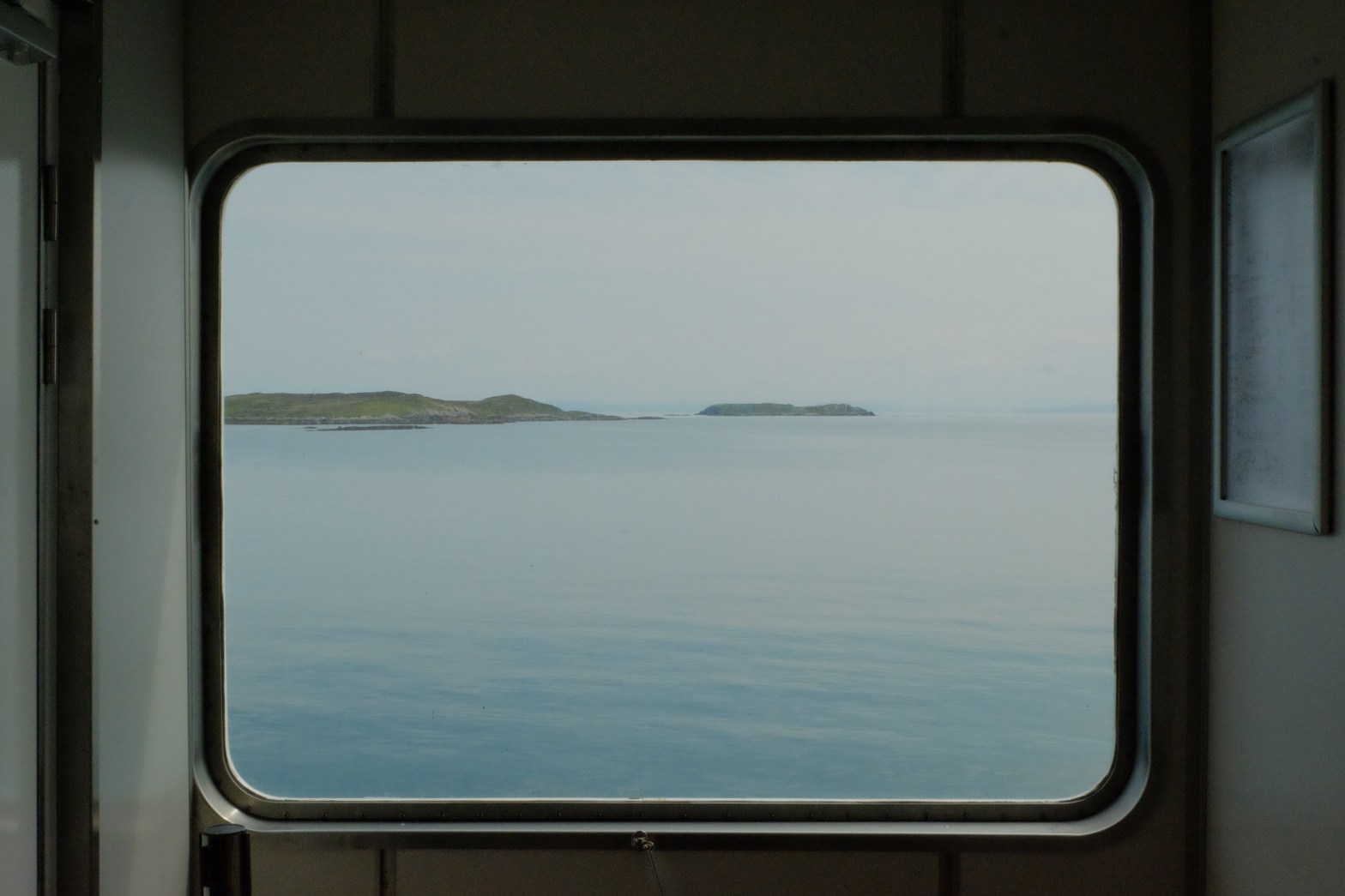
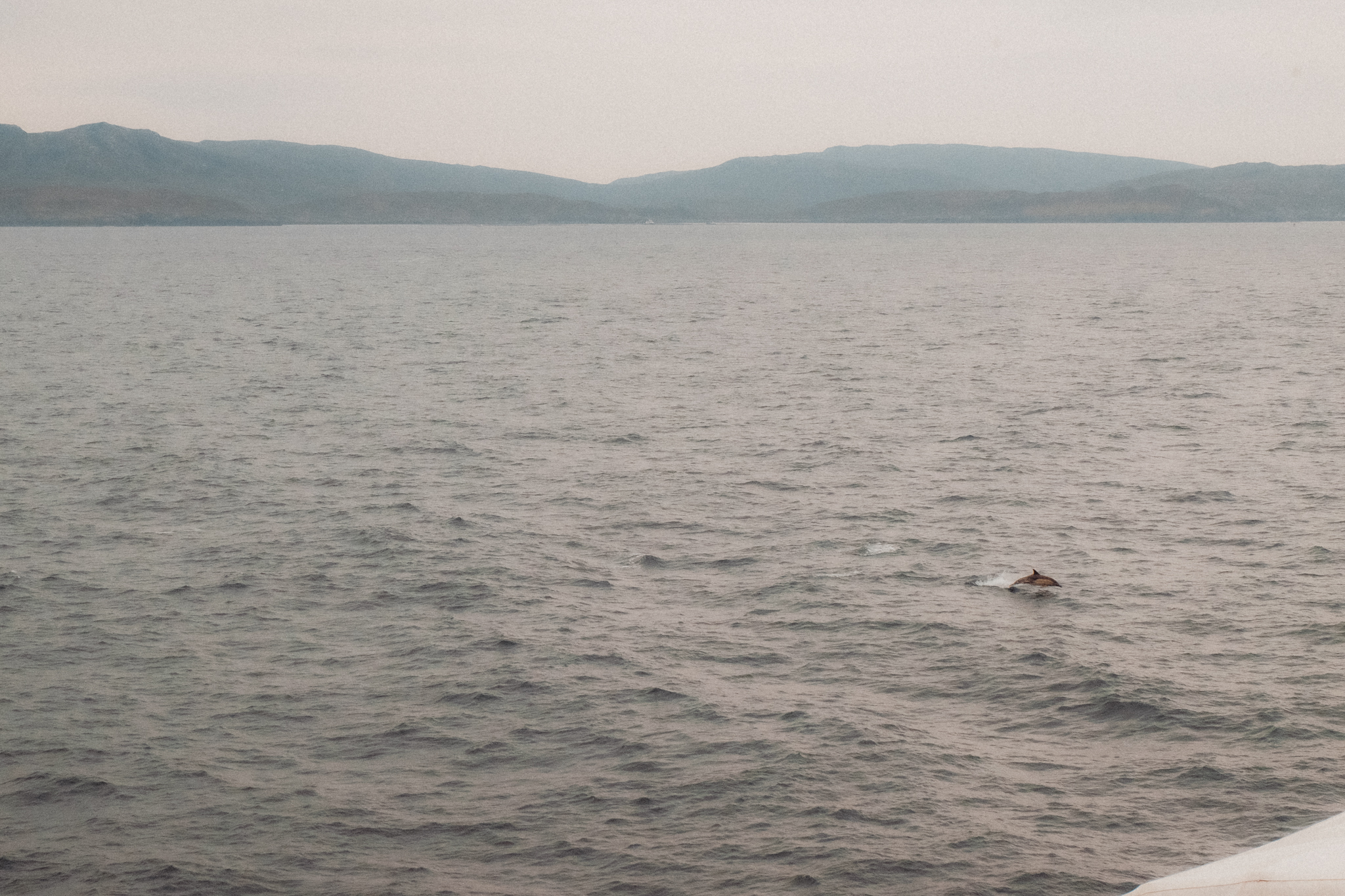
For years, I have wanted to come here. I had heard stories not only of the water but of the wildlife, and the ferry ride from the mainland didn’t disappoint. Three pods of dolphins and a lone minke whale dodged and weaved beneath the frothing wake of our vessel, and on the horizon floated the ghostly, yet jagged, outlines of the Isles of Skye, Rum and Canna.
However, do not be deceived. The sun is rarely a common visitor here, but the grey skies lend their own calming blanket to this brown and green landscape, dotted with shocks of purple heather.
Uist marks a significant portion of the Outer Hebrides. It’s long, lengthy span stretching north to Harris and Lewis and south to the Isle of Barra is frequented by many a walker or cyclist traversing the Hebridean Way – a route of between 150 to 185 miles from Vatersay to the Butt of Lewis. Or you can go by road, which was my method of travel.
Uist through the lens of van-life was a constant discovery of surprisingly well-paved roads to dirt tracks and friendly campsites alongside rainy beach park-ups. All in all, a diverse experience.
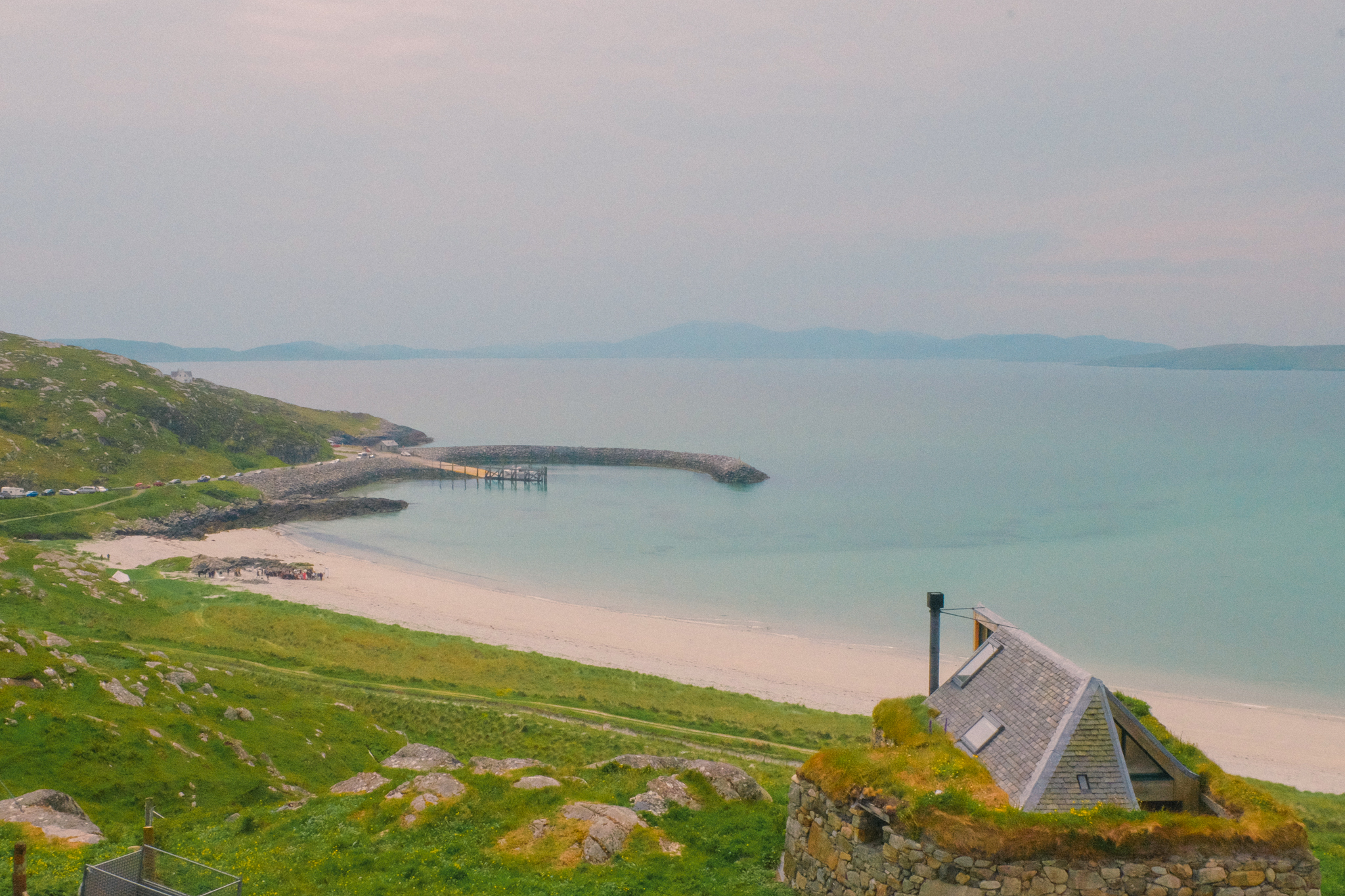
The southern Isle of Eriskay boasted the beginnings of the beaches and crystal clear waters I had been promised. There are few better views I have had when having lunch.
Heading northwards past the remnants of the Cladh Hallan Roundhouses, I walked along the blustery shores of Kildonan beach. The smell of seaweed pierced the air, and I wondered if I would have to keep wearing a woolly hat in June.
The fields here often stand empty but those that aren’t boast many inland lochs and marshes. Others have sheep grazing within but often outside of the fences, so I relentlessly kept a watchful eye on the road for any quick footed strays.
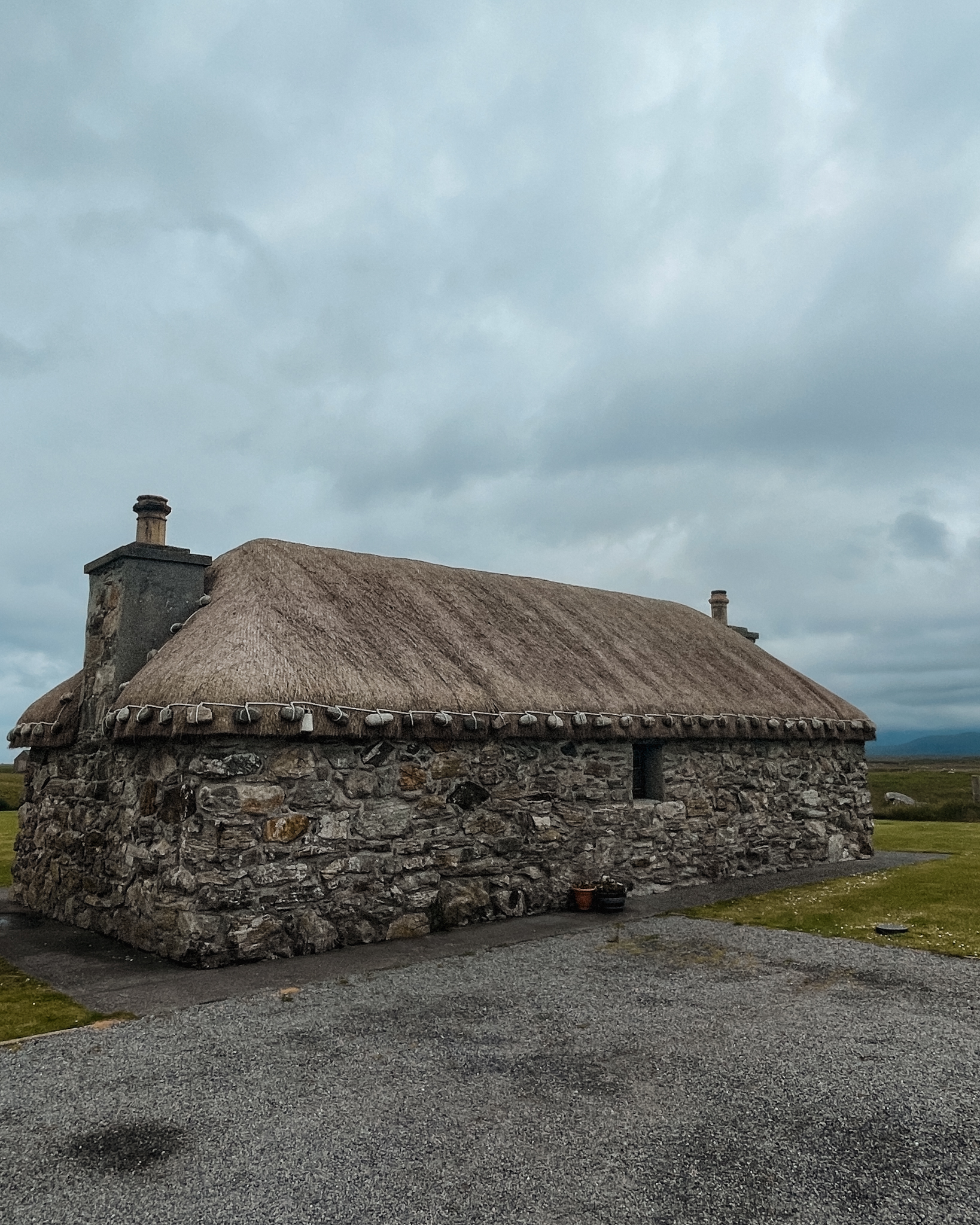
On the way to the Hebridean Jewellery Cafe – one of South Uist’s few attractions – I drove past a series of holiday cottages decorated in the traditional thatched style of the past. The lightly coloured thatch lay in neat and clean segments with smaller stones hanging at the base to keep the roof weighed down and intact.
The first stop for the night, however, was a campsite on the southern shore of Benbecula, Uist’s middle peninsula separating the south from the north. The friendly owner greeted us with a cheerful wave and the wonderful news that the showers here were free to use, no coins needed.
It really is the little things :).
The campsite was small but fully equipped, and I cooked with the windows of the van open as the sky grew dark and the clouds scattered, leaving a reddish-orange sunset. After brushing my teeth, I knew little sleep would be had as I received hopeful updates from my Northern Lights App that there was a high likelihood around midnight.
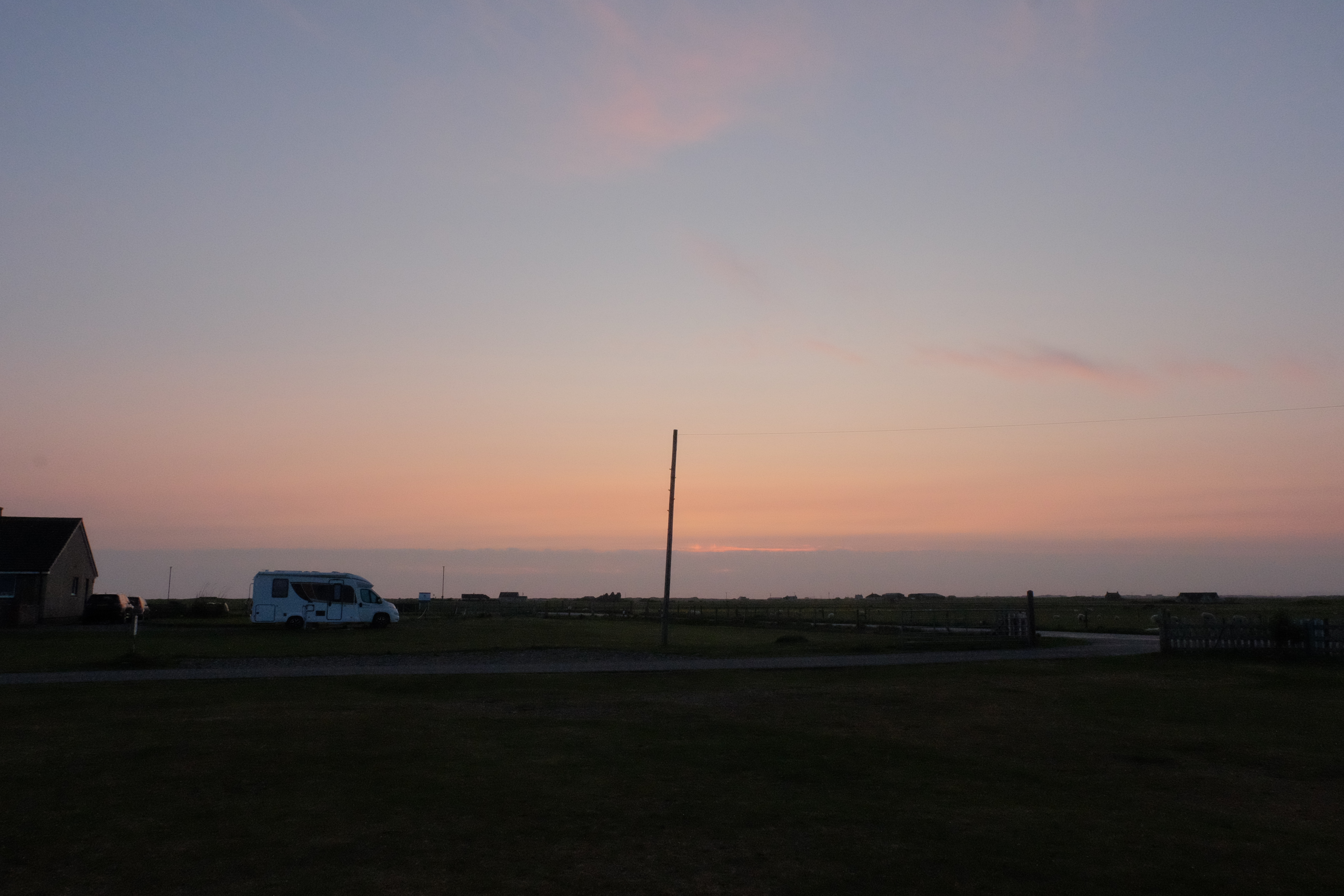
No luck. By the morning, I was tired and a little downtrodden at the lack of visible solar flares; however, the weather quickly switched things up.
Sun!
Uist in the sun was another world entirely. From the beach, I could see all the way over towards South Uist and the mountains on the eastern coast, including the tallest, Beinn Mhòr, which literally translates to “big mountain”.
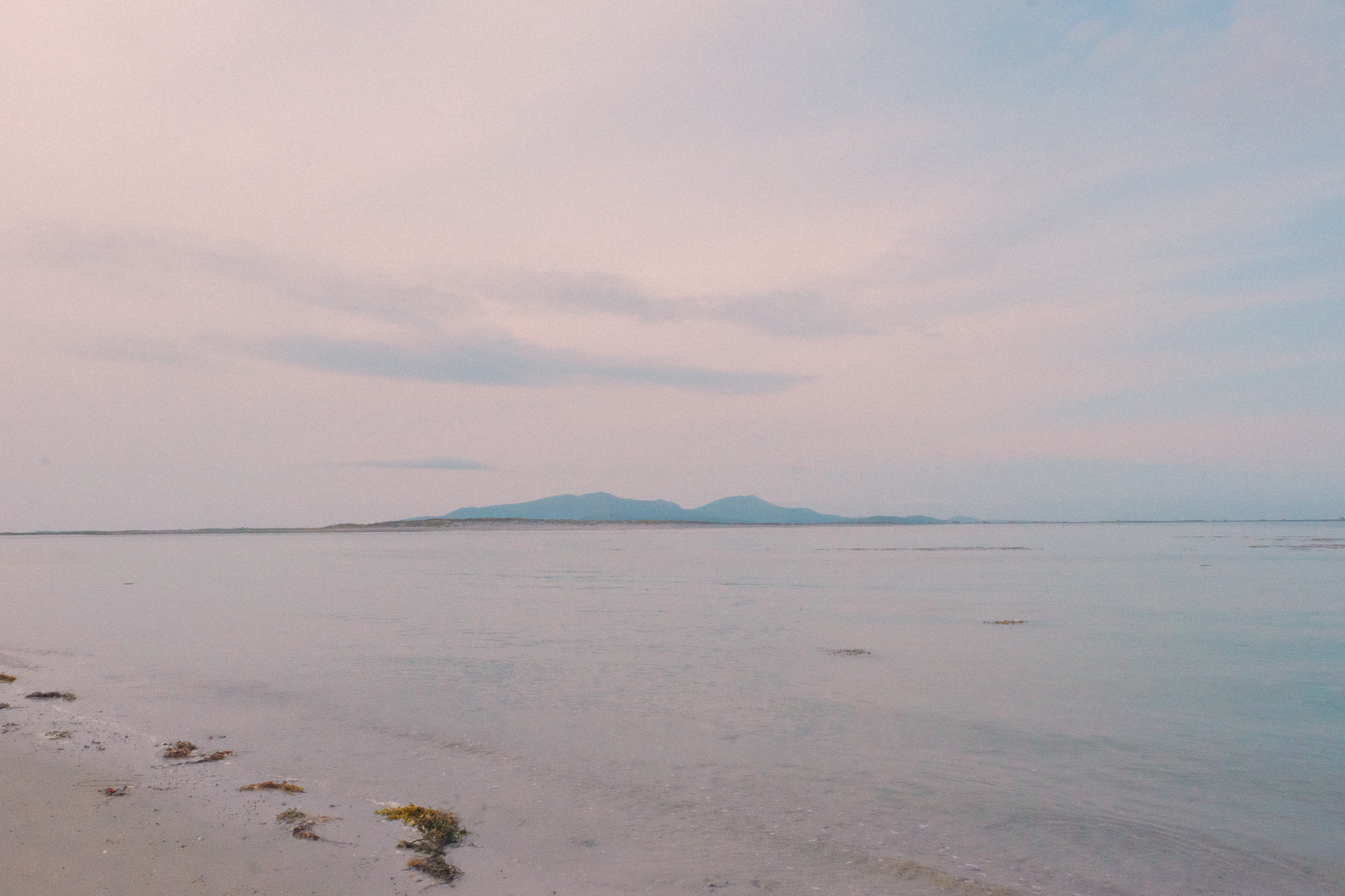
Once the van was packed up and the bedding stored, the drive north became less land-based and more a drive on causeways over lochs, rivers and ocean inlets. North Uist is much less of a solid land structure and more an archipelago of islands and connected landmasses.
In the sun, however, and the woolly hat now abandoned in favour of sunglasses, driving across these causeways felt like driving on the roof of the world. Blue reflected in blue and interspersed with bits of green and grey, and the horizon blended with the ocean surface as the van wound its way northwards again.
The next stop was the Balranald Bay Nature Reserve. The perfectly U-shaped bay was rimmed with white sand and flanked by grassy dunes. When walking towards the headland, I felt jealousy flare at the houses nearby and those that could live here permanently. Instead, though, I let the gratitude at visiting this part of the world wash over me, as I dipped my toes into the lapping waves.
Now, I am quite the avid cold-water swimmer, but even I had to admit that this was cold for a sunny June day. The North Atlantic rarely warms to a reasonable temperature. Either way, it was a nice wake-up call, and once I turned around and headed back towards my mobile home, I glimpsed the first evidence of the famous machairs the other visitors I had met on the ferry had told me about.
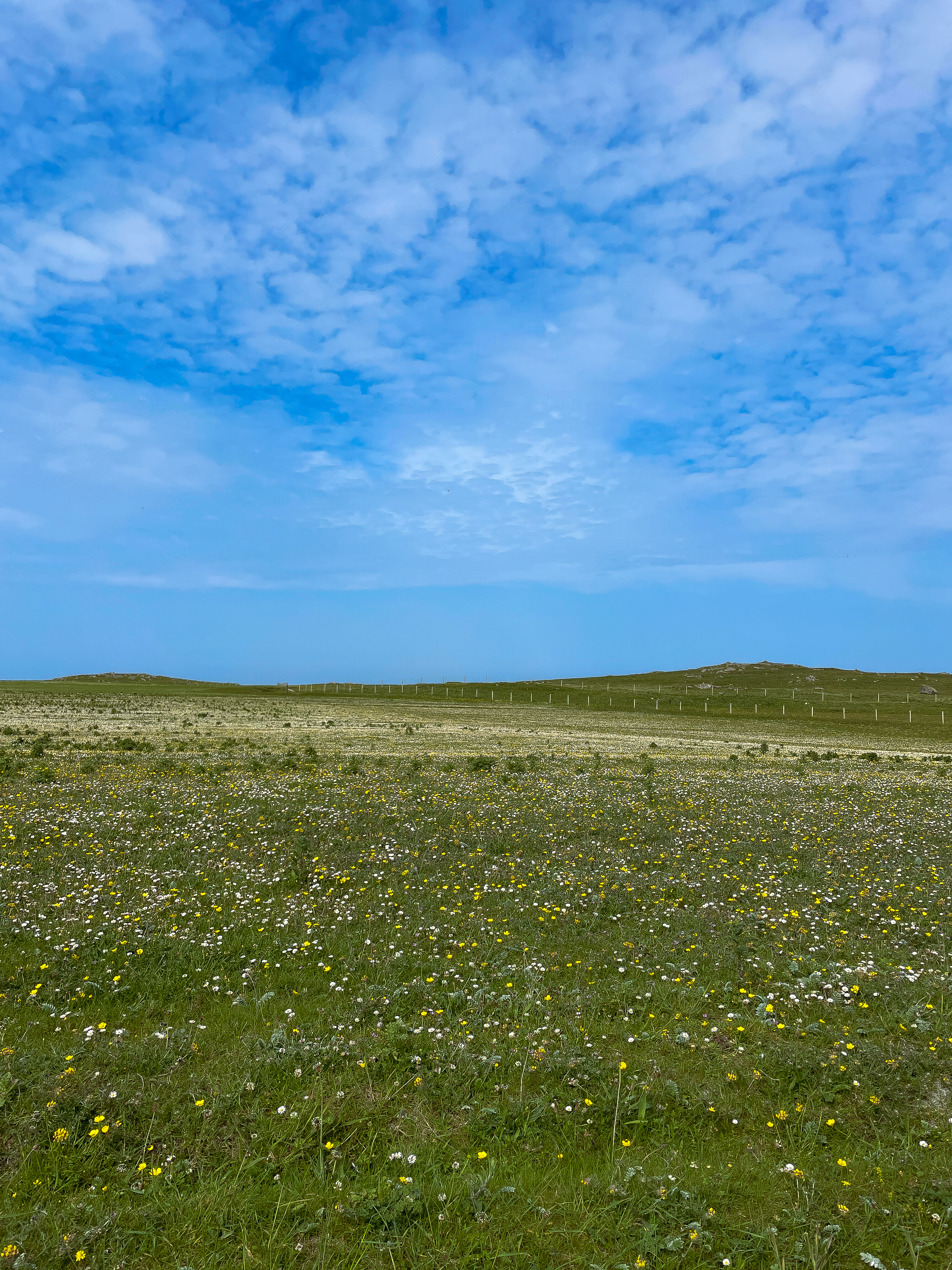
Machairs are fertile, low-lying grassy plains often used for grazing cattle, but I found their main characteristics to be an abundance of wildflowers, endless buttercups and daisies growing all over. It truly was a blanket of white and gold that shone in the mid-afternoon sun, and a place I imagine would be lovely to lie down in. Perhaps instead of ocean bathing, I would try machair bathing.
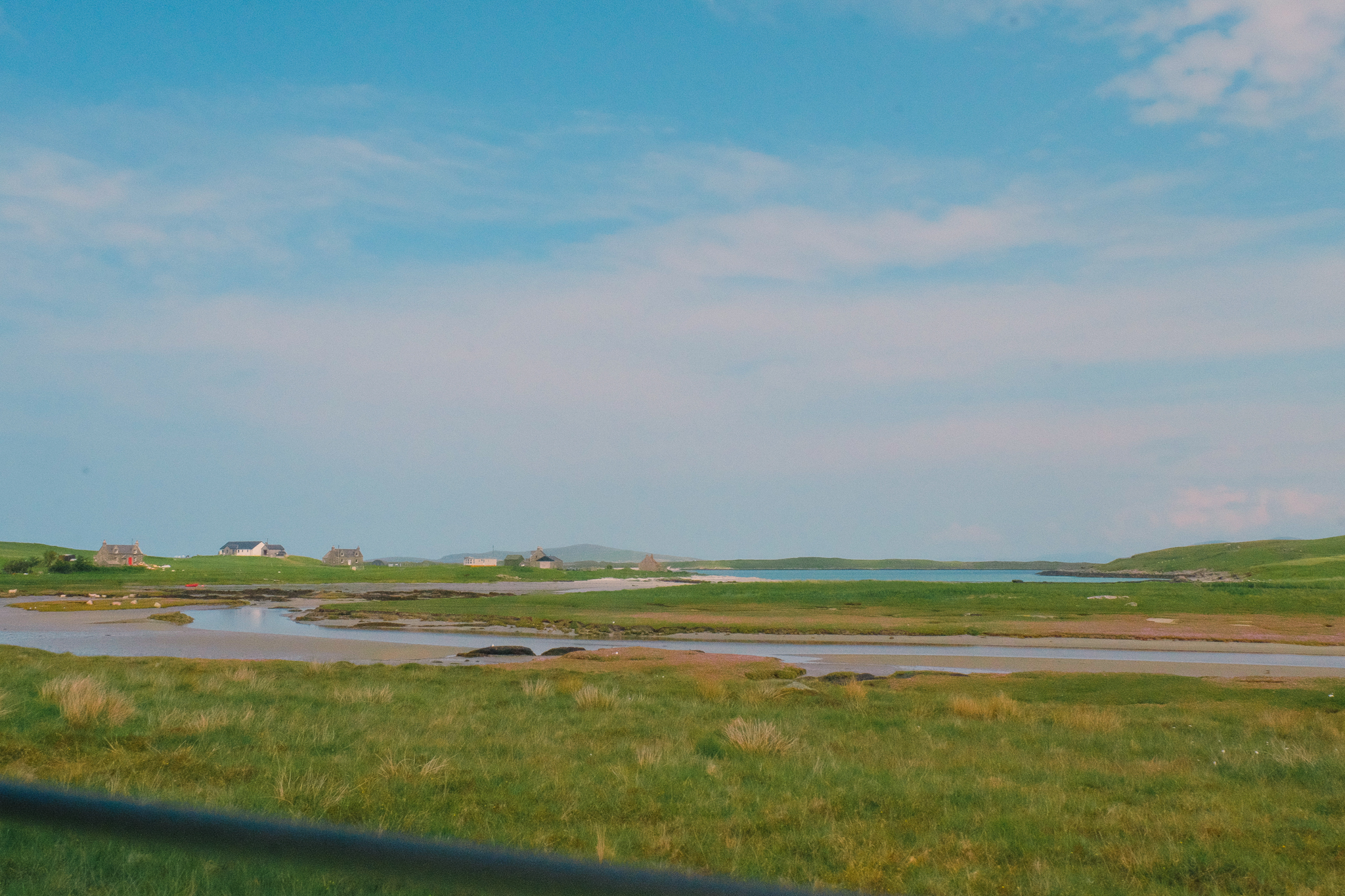
On the road up to North Uist’s final peninsula, Berneray, I looked out at the passing houses and felt like I was watching a very different lifestyle from the past unfold.
In recent years, the Isles have struggled with a loss of young professionals moving away to the mainland for better opportunities with jobs and education. There is still evidence of the crofting lifestyle that dominated the centuries of life here with livestock farming, fishing and now tourism feeding the local economy. However, there is also an influx of new inhabitants building modern houses against the Uist backdrop, their hulls of steel, wood and glass starkly contrasting the older stone houses of the 1800s and the rendered homes of the 1960s and 70s. It truly shows the evolution of life here, even if so much remains untouched.
On the long beaches on Berneray and North Uist, without another living soul around, you could imagine being the only one left on earth. The peace can be both unsettling and deeply calming. For me, it remained much of the latter throughout my time in Uist.
While the landscape and wildlife of not just the ocean, but also the constant presence of kittiwakes, guillemots, corncrakes, and a few puffins, made this Island a new experience each day. And with each stop in a small cafe, rare supermarket or campsite, the people could not have been more welcoming.
Along the roadsides weren’t just the fluffy bodies of sheep but also small honesty boxes filled with locally made food, cakes and artwork to buy in small quantities. A true-to-life testament to appreciating the collective kindness that thrives on this Isle.
That’s the kind of place Uist is.
A mix of colours, lives and wildlife that constantly changes yet also remains frozen in time. A natural marvel of mountainous hills, wide open beaches with no end and green and blue seas foaming onto rocky headlands.
And it’s only a boat ride away, with a few dolphin friends to accompany you if you’re lucky.
 For Wanderers and Wonderers