
“Time spent in India has an extraordinary effect on one. It acts as a barrier that makes the rest of the world seem unreal.”
– Tahir shah
Leh is somewhere you may not know exists if you only focus on the famous names of places around the world. But this makes it no less notable and incredible a destination to visit.
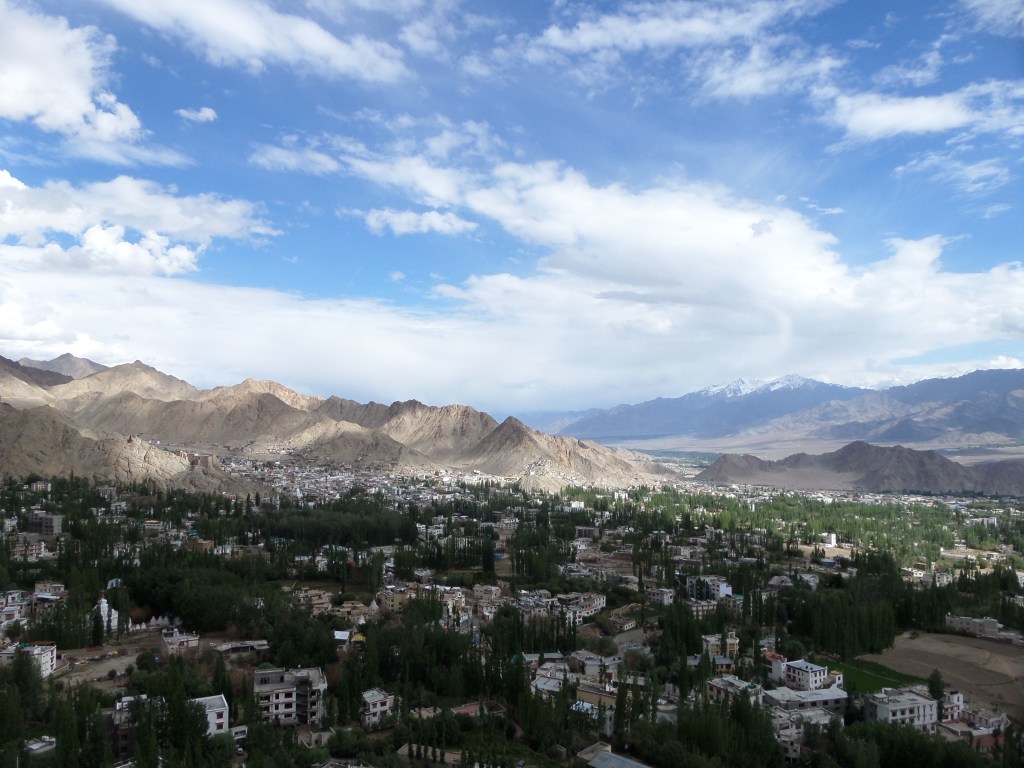
This city, or district as it is sometimes categorised, is the largest in the region of Ladakh, India; home of mountain climbers and culture seekers alike. It is surrounded on all sides by the stunning but dizzyingly tall north-Indian Himalayas which you soon realise are much taller than you think when you find that Leh sits at an altitude of 3500m already. Flying into Leh is another experience entirely, though. Mountains, snowcapped and spikey spread out in all directions, interspersed with glaciers and wide sandy valleys; although until you witness the green oasis of Leh below you, you won’t see any sign of civilisation for miles around.
From touchdown on the small airstrip on the valley floor to arrival through the doors of the miniature airport, after filling out visa and details on a small slip of paper in pencil; it’s out the door to greet the first taste of the Ladakhi experience. Small taxis.
India is famous for many things, including the infamous tuk-tuks you may have seen in that one ‘Best Exotic Marigold Hotel‘ film that you may have stumbled onto on TV. These taxis felt similar except they had windows, doors and roof racks that precariously balanced our luggage and were bound only by fraying bungee chords so each twist and turn on the dusty road, we journeyed along, was as exciting as looking out the small windows and seeing bright green trees, bushes and sandy white houses flying past.
It’s the little things here, such as less attention to the regulations we are so enshrined by in western-world lives, the amount of animals roaming free and the friendly calls of “Jule” (joo-ley) welcoming you to this beautiful city that imitates a lush, green Eden in contrast to the surrounding barreness of the mountainsides and river-cut valleys.
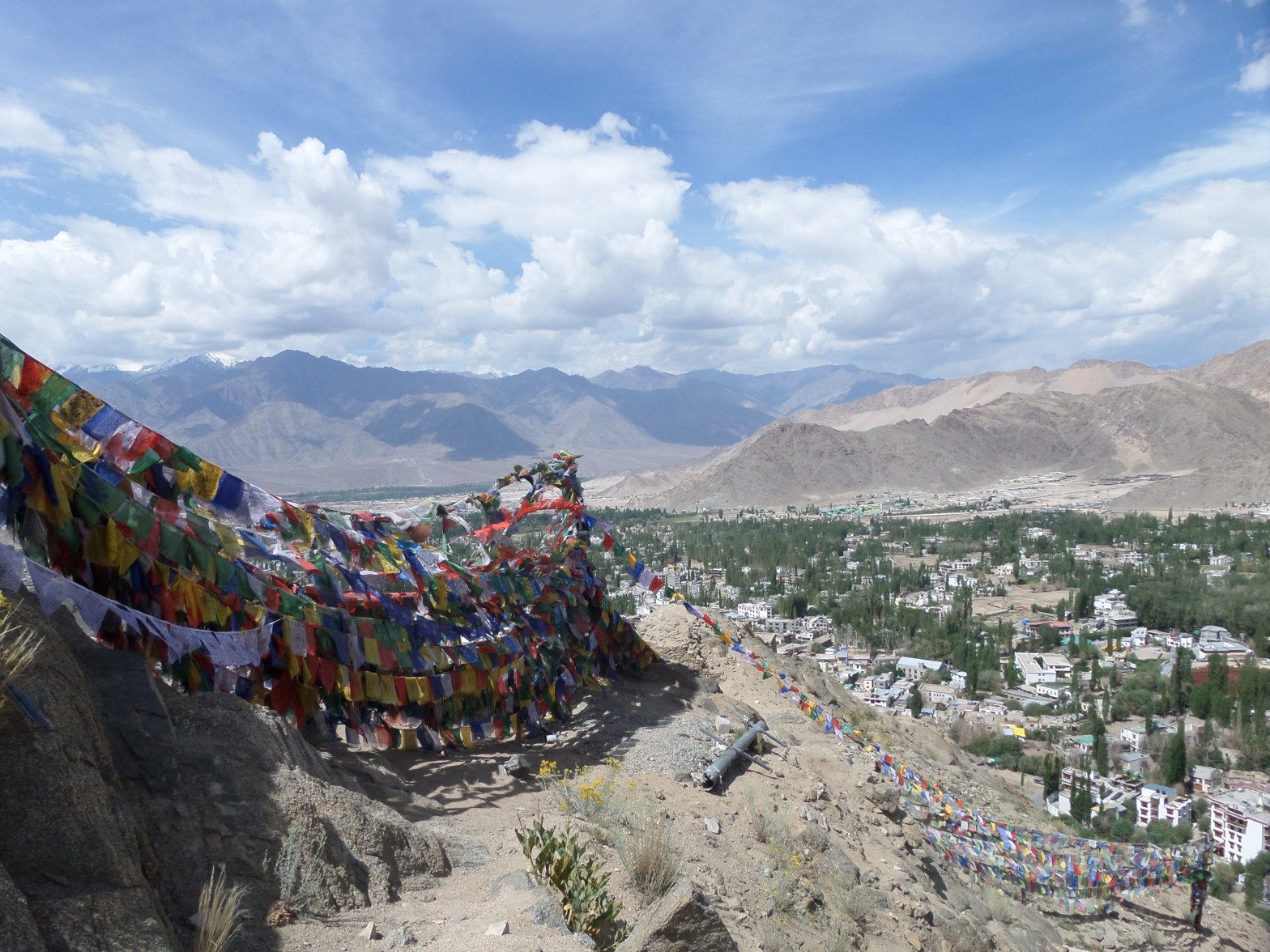
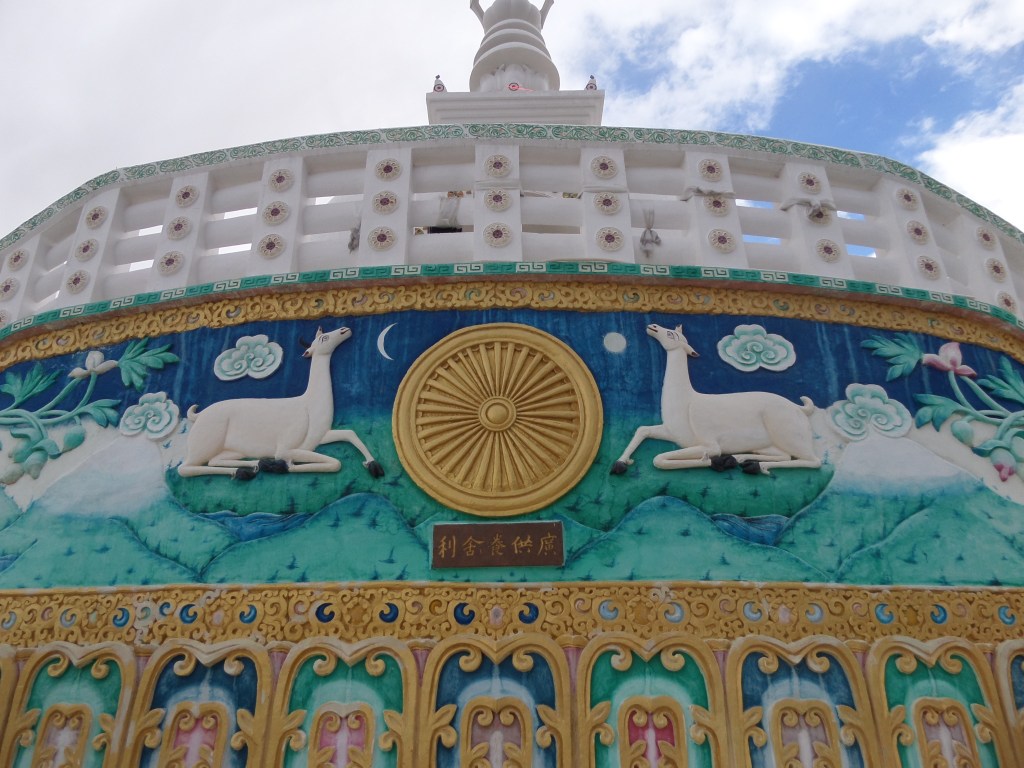
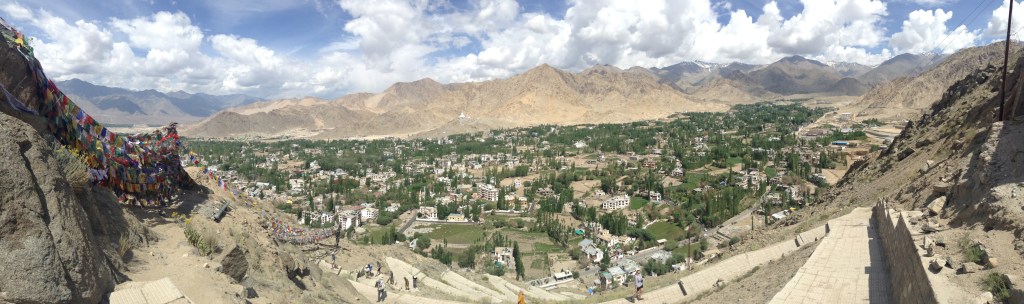
Whitewashed Stupa’s connected by colourful strings of prayer flags share spiritual messages into the mountain breeze as you huff and puff you’re way up the many stone steps to the Stupa’s colourful sides. On arrival you then fully begin to appreciate the view from the top and the sense of completeness you feel walking clockwise around the whitewashed, domed feature with adjoining Gompa (Tibetan Buddhist monastery) and rocky outcrop leading up the jagged mountaintop a few hundered metres up.
Leh is unlike anything you’ve seen before.
As many larger Stupa’s can sit high above the city and offer the best views, especially if you’re willing to get up before sunrise, you start to realise just what life is like in this remote city.
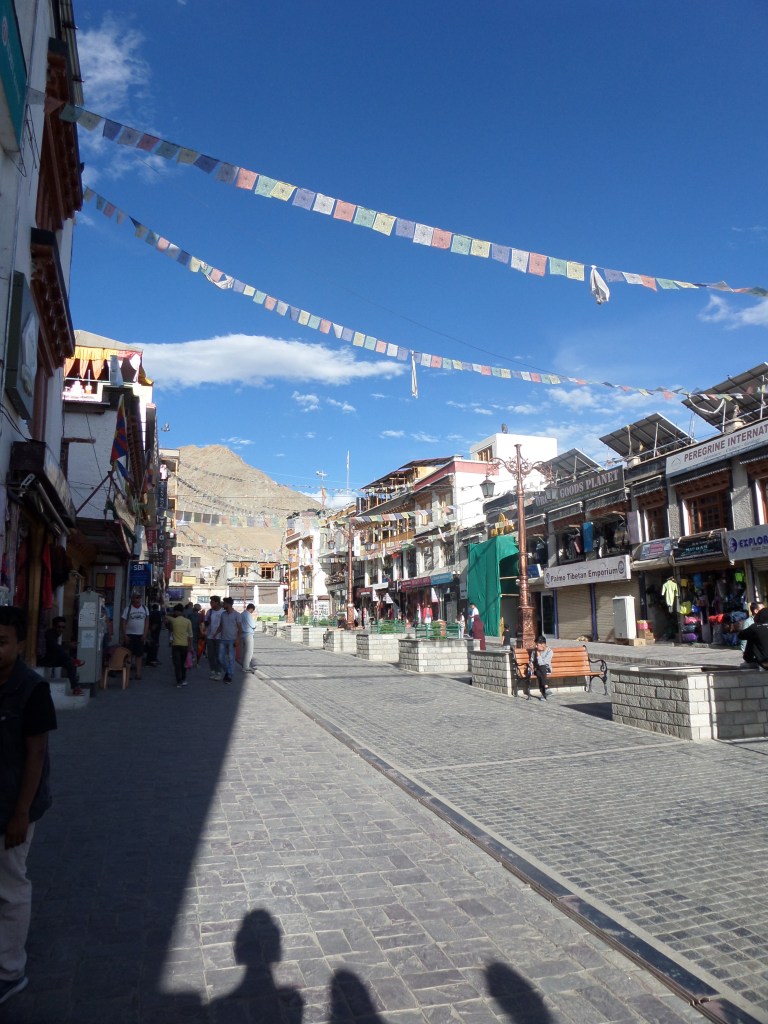
Sandy, crumbling, white houses and buildings lie dotted in-between green trees and shrubbery while water canals direct the river through the city to cleverly irrigate the many barley fields while the distant trundle of taxis, trucks and vans transport goods too and from the markets in the central pedestrian area and the army base located further north of the city. Once you’re adjusted to the altitude here and you find breathing easier, a walk along the streets of Leh reveals shops with all types of clothing, from Kashmir scarves, trinket souvenirs and prayer flag vendors to expert walking shops selling brands from North Face to Berghaus. Buying fresh fruit is a given in Leh if you have a minute to spare looking at the colourful building frontages, rooftop restaurants and people sitting on pavements offering everything from shoe repairs to Henna art.
Around most corners or in front of hotels or guest-houses you’ll find prayer wheels which, when spun clockwise, promise good-luck mantras as you wander the pathways next to the blue-white glacial river that, despite the summer heat, remains as cold as ice.
Visiting Leh in the summer is the ideal time since the tourist season only lasts from mid-July to early September and most toursits come for the chance to climb the Himalayas that stay snow covered year-round but are only traversable in August.
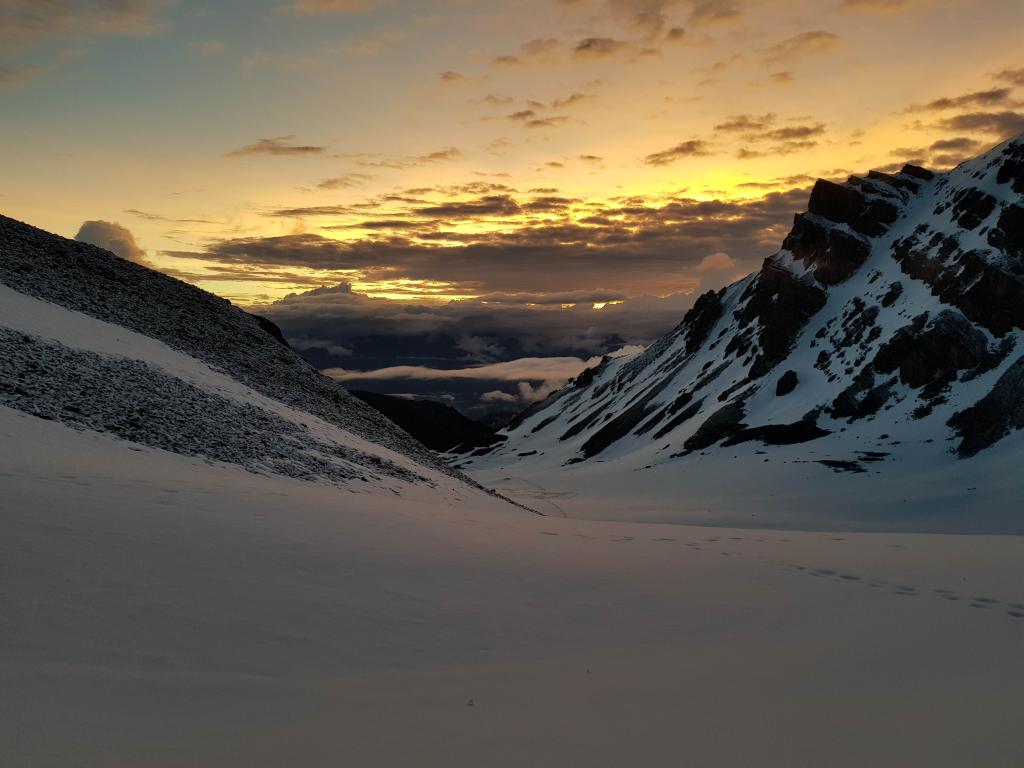
The greatest feeling in the world, from my experience, is being 5000m up on a mountainside and being able to create snow angels in mid-August. It feels so incredibly bizarre but you relish it because you may never get that chance again.
One of the best parts of the city, I find, is people-watching.
While sitting on a small table outside an ‘English Bakery” selling traditional Ladakhi chai sweet tea and croissants, you can see men on their way to work on their street stalls, selling prayer flags, candles, miniature singing bowls to tourists or heading to the Tibetan refugee market you can find beautiful stones on chord necklaces or earrings for sale, displayed on colourful cloth tables. You can see bare-footed Europeans and Americans on the search for breakfast after a night out, guitars strung over their shoulders and arms covered in Henna, drawn by women sat on the street a few yards away as you hear all manner of languages: French, Spanish, Italian, German. You might see an older, friendly American couple that ends up joining you for breakfast where you learn their life story and their dream to travel Ladakh by motorbike, since they’re so easy to hire in Leh and motorbike tours are very popular along the twisted mountain roads.
You might even see cows walking by your table as they are considered holy animals and cannot be touched or owned, so they run free, hooves clacking on the cracked tarmac.
Whether you’re an early or a late sleeper, the 5am call to prayer is worth waking up to (a minority of India’s population are Muslim), followed by a sunrise walk up the famous Shanti Stupa to walk around it barefoot before heading into the central pedestrian area of the city to send postcards from the post-office and buy fresh oranges for later in the day when the tempature varies at a comfortable 30 degrees with cooler evenings and nights in the summer.
Food is another reason why Leh is such as incredible place. Local specialities such as chai sweet tea (masala chai) are common alongside the more commercialised tandoori pizza places and European-style restraunts.
Besides food, the people are one of the best things about Leh. Ladakhi people speak their own language which differs a lot from traditional Tibetan and Hindi but is nonetheless friendly when their word “Jule” stands for “hello”, “thank you”, and “goodbye”. Shop owners, especially if you are a tourist, will call out to you as you walk by their shops offering goods and clothes which can be haggled for if you’re willing while children wave and tell you “hello”! if you pass by a school playground. Ladakhi’s are also famous for their ecological lifestyles as they redirect glacial rivers to irrigate crops, save water by having long-drop toilets which help to recycle human waste into compost and provide eco-friendly laundry services.
There a many reasons to love Leh. From the incredible landscape it sits in, to the local people and the mindset people have when visiting: live sustainably to keep the landscape clean and beautiful, since Leh was untouched by western-consumerism, let alone foreign visitors until the early 1970’s.
This mountain oasis is truly one of the most incredible places I have ever visited as it gives you the perfect sense of escapism once you arrive. People live in a completely different way to the western lifestyle that some are used to, with less worries about the menial things in life and more focus on the spiritual, making sure to retain the cultural and keep alive the magic that the Himalayas, Stupas, along with the Gompas and prayer wheels give to any lucky visitor.
It feels surreal once you arrive and leaves you yearning to return when you depart.
So, Jule.
 For Wanderers and Wonderers
Great article Hannah. Makes me want to pack a bag of and travel there, following in your footsteps. Xxx
LikeLiked by 1 person
Fantastic… Looks fun.
LikeLike